What Is a Contingency Fee in New York? Everything You Need to Know
Hiring a lawyer can feel expensive before you even know whether your case will succeed. That is one reason people often ask about contingency fees in New York. Instead of paying a lawyer by the hour or handing over a large retainer upfront, a contingency fee arrangement usually means the attorney gets paid only if money is recovered for you.
You may have heard the phrase “no win, no fee,” and while that gives you the basic idea, there is more to understand. The percentage, case expenses, settlement, and what happens if the case doesn’t succeed should all be clear before you agree to anything.
What Is a Contingency Fee?
A contingency fee is a payment arrangement where a lawyer’s fee depends on the outcome of the case.
Rather than charging you for every hour spent reviewing documents, making phone calls, preparing paperwork, or appearing in court, the attorney agrees to receive a percentage of the money recovered on your behalf.
This type of arrangement is commonly used in cases involving personal injury, wrongful death, and certain other claims where the client is seeking financial compensation.
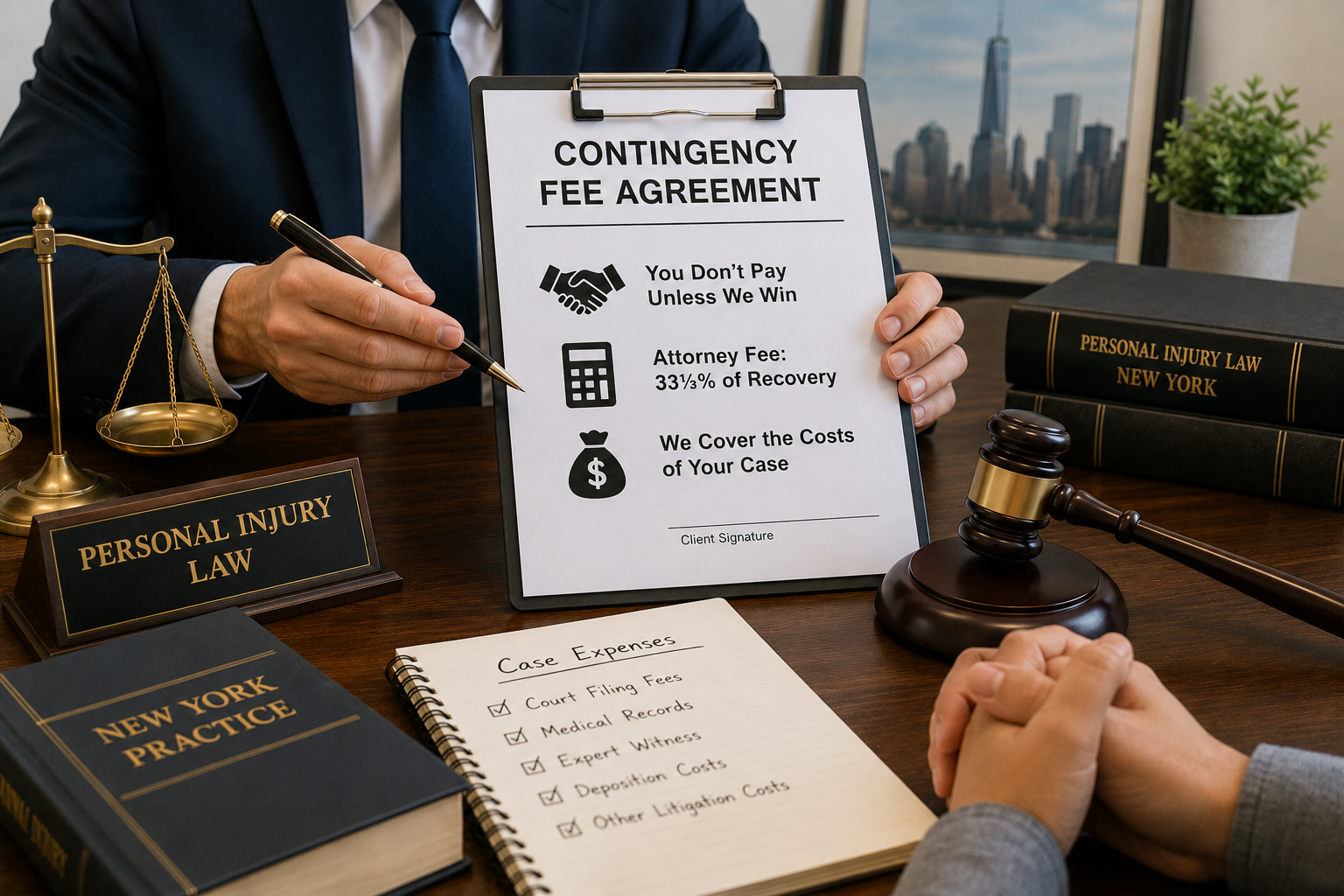
For example, if your attorney agrees to a 33⅓% contingency fee and your case results in a $90,000 recovery, the attorney’s fee would be $30,000 before considering how case expenses are handled.
The exact calculation can depend on the agreement and the type of case.
Do You Pay Anything Upfront?
Often, you don’t pay the attorney’s contingency fee upfront.
That’s one of the main reasons contingency arrangements can be helpful for someone who has been injured or is dealing with another financial claim. You may already be dealing with medical bills, missed work, repairs, or other expenses.
Instead of adding a large legal bill to that list, the lawyer takes the financial risk of working on the case with payment tied to the recovery.
But don’t assume that “no upfront fee” means there are absolutely no costs. Your agreement should explain how expenses and other charges are handled.
New York’s Rules of Professional Conduct require lawyers to communicate the basis or rate of their fees and the expenses for which the client will be responsible. Lawyers also cannot charge an excessive or illegal fee.
How Is the Contingency Fee Calculated?
This is where people should slow down and read the agreement carefully.
A contingency fee is generally calculated as a percentage of the amount recovered, but the exact percentage and calculation method can vary depending on the case and applicable New York rules.
For certain personal injury and wrongful death claims, New York court rules establish fee schedules for contingent attorney compensation. The applicable rules can depend on the type of claim and the judicial department involved.
So rather than assuming every New York lawyer charges exactly the same percentage, ask the attorney to explain the calculation in your particular case.
It is also important to ask whether case expenses are deducted before or after the attorney’s percentage is calculated.
That detail can change the amount of money you ultimately receive.
What Happens If You Lose the Case?
This is one of the first questions you should ask.
With a true contingency arrangement, the attorney generally does not receive the agreed contingency fee if there is no recovery.
However, that does not automatically mean you will never have any financial responsibility.
There can be expenses connected with investigating and pursuing a case, such as filing fees, medical records, expert witnesses, court reporters, or other litigation costs.
Your written agreement should explain who is responsible for those expenses if the case is unsuccessful.
Don’t be shy about asking this before signing. It is much easier to understand the arrangement at the beginning than to discover unexpected costs later.
What Types of Cases Use Contingency Fees?
Contingency fees are most commonly associated with cases where the client is trying to recover money.
Examples can include:
- Car accident claims
- Truck accident claims
- Motorcycle and bicycle accident claims
- Slip-and-fall cases
- Serious personal injury claims
- Wrongful death claims
- Certain medical malpractice cases
- Some other civil claims involving financial recovery
Not every legal matter works this way.
For example, criminal defense, many family law matters, estate planning, and other legal services are generally handled using different fee arrangements.
The lawyer should tell you what payment structure applies to your particular case.
Why Would a Lawyer Agree to a Contingency Fee?
At first, it can seem strange that a lawyer would spend months or even years working on a case without collecting an hourly fee.
The reason is that the lawyer is taking a financial risk.
If the case produces a recovery, the attorney receives the agreed percentage. If there is no recovery, the attorney may receive no contingency fee.
The lawyer therefore has an incentive to evaluate the strength of the case before agreeing to represent someone.
That doesn’t mean every case is guaranteed to succeed. It simply means the attorney is accepting a different type of financial arrangement.
What Should Be in a Contingency Fee Agreement?
Don’t rely on a verbal promise.
Your agreement should make the important financial details clear, including the scope of representation, the fee arrangement, and expenses you may be responsible for.
New York requires written engagement information in many attorney-client arrangements, and a written retainer or engagement agreement should explain the legal services being provided, attorney fees, expenses, and billing practices when the applicable rules require it.
Before signing, look for answers to questions such as:
- What percentage will the lawyer receive?
- How is that percentage calculated?
- Are expenses deducted before or after the fee?
- Who pays case expenses?
- What happens if the case is unsuccessful?
- What happens if the case settles?
- What happens if the case goes to trial?
- What happens if I change lawyers?
- Will another lawyer or law firm receive part of the fee?
These aren’t minor details. They can affect your final recovery.
Can You Negotiate a Contingency Fee?
Sometimes.
A lawyer may have a standard fee arrangement, but it is reasonable to ask questions about the percentage and how expenses are handled.
The attorney also has to follow New York’s professional conduct rules. Under Rule 1.5, a lawyer cannot charge an excessive or illegal fee, and several factors may be considered when determining whether a fee is reasonable.
You don’t need to feel uncomfortable asking, “Can you walk me through exactly how the fee will be calculated?”
A good attorney should be able to explain it in plain language.
What If You Disagree With the Lawyer About the Fee?
Sometimes disagreements happen.
Maybe you believe the percentage was calculated differently than you expected. Maybe you disagree about expenses. Or perhaps you believe the amount being charged isn’t what you originally agreed to.
New York has an Attorney-Client Fee Dispute Resolution Program that can help resolve many eligible disputes between attorneys and clients involving legal fees and costs. Depending on the circumstances, the program provides arbitration or mediation.
Not every dispute qualifies, so the specific facts and type of case matter.
Frequently Asked Questions (FAQs)
Is a contingency fee the same as a free lawyer?
No. A contingency fee means the lawyer’s payment is tied to the recovery in your case. The attorney may receive an agreed percentage if money is recovered. You should also ask about case expenses because those can be separate from the attorney’s fee.
What percentage do New York lawyers charge on contingency?
There isn’t one universal percentage for every case. Certain New York personal injury and wrongful death matters are subject to applicable court rules and fee schedules, while other cases may have different arrangements. Your attorney should explain the exact percentage and calculation method before you sign the agreement.
Do I pay my lawyer if there is no settlement?
If the agreement is a true contingency arrangement, the attorney generally does not receive the contingency fee when there is no recovery. However, you should check the agreement carefully because responsibility for case expenses can be handled separately.
What should I ask before signing a contingency fee agreement?
Ask about the percentage, how it is calculated, case expenses, what happens if you lose, and whether the percentage changes if the case goes to trial. Make sure you understand the agreement before signing it.
Final Thoughts
A contingency fee can make hiring a lawyer much more accessible, especially when you’re already dealing with medical bills, lost income, property damage, or the financial pressure that often comes after an accident.
But “you don’t pay unless you win” is only the beginning of the conversation.
The percentage matters. The way expenses are calculated matters. What happens if the case goes to trial matters. And knowing who is responsible for costs if there is no recovery matters too.
If you’re considering a contingency fee lawyer in New York, take the time to read the agreement and ask questions before signing. A few minutes spent understanding the fee arrangement can save you from a much bigger misunderstanding later.