Immigration in Rochester: Laws, Rights and Legal Options
Immigration questions can become complicated very quickly. A person may be trying to apply for a green card, protect a family member, renew work authorization, respond to an immigration notice, or simply understand what could happen after an encounter with immigration authorities. For people dealing with Immigration in Rochester: Laws, Rights and Legal Options, it is important to understand that most immigration matters are governed by federal law, while New York also provides protections and resources for immigrant communities.
Rochester residents do not have to figure everything out alone. There are attorneys, nonprofit organizations, and state-supported programs that can help people understand their options. The right legal path depends heavily on a person’s immigration history, family relationships, applications, prior court proceedings, and other individual facts.
Immigration Law in Rochester Is Mostly Federal
Immigration status, visas, green cards, naturalization, asylum, deportation proceedings, and many other immigration matters are handled under federal law. Agencies such as U.S. Citizenship and Immigration Services (USCIS) administer many immigration benefits, while immigration courts and other federal agencies handle different parts of the immigration system.
That means someone living in Rochester generally follows the same federal immigration rules as someone living elsewhere in New York. USCIS provides online tools for checking case information, filing applications, finding forms, and accessing other immigration resources.
New York law can still matter greatly, particularly when it comes to employment, housing, access to services, discrimination, and the relationship between local law enforcement and federal immigration authorities.
Know Your Rights When Dealing With Immigration Authorities
People sometimes assume that having an uncertain immigration status means they have no legal rights. That is not the case.
The New York Attorney General’s Office maintains guidance covering several areas of immigrants’ rights, including workplace issues, discrimination, immigration enforcement, housing, and immigration-services fraud.
New York also has specific protections involving immigration enforcement at state courthouses. Under New York State law and a federal court order, ICE generally cannot make a civil arrest in or on the property of a New York State courthouse, or while someone is traveling to, remaining at, or returning from court, unless ICE has a warrant signed by a judge.
If someone receives an immigration-related notice, arrest, or court document, ignoring it can create serious problems. Speaking with a qualified immigration attorney can help determine what the document means and what deadlines may apply.
What Legal Options Might Be Available?
There is no single immigration solution that works for everyone. Depending on the circumstances, a person may potentially have options involving family-based immigration, employment-based immigration, asylum or other humanitarian protections, adjustment of status, naturalization, or immigration court relief.
For someone already involved in immigration proceedings, the strategy can be very different from someone who is simply preparing a first application.
This is why a consultation should focus on the person’s complete immigration history. Previous applications, visa denials, entries into the United States, arrests, prior removal proceedings, and even information given to government agencies in the past may affect available options.
Finding Legitimate Immigration Legal Help in Rochester
Choosing the right person to help with an immigration matter is important. New York’s Attorney General warns that only licensed attorneys and representatives accredited by the U.S. Department of Justice are qualified to provide immigration legal advice or representation.
Someone calling themselves a “notario” is not automatically authorized to provide immigration legal advice. New York also regulates non-attorney immigration service providers and limits what they are legally allowed to do.
Rochester residents who need assistance may also find legal-service organizations through the New York Courts’ Seventh Judicial District resources. The court lists organizations including Empire Justice Center, Legal Assistance of Western New York, and the Legal Aid Society of Rochester.
New York’s Office for New Americans also connects immigrants with free services and legal resources through its statewide network. Its New Americans Hotline provides referrals and information in more than 200 languages.
Be Careful With Immigration Scams
Immigration cases can make people especially vulnerable to anyone promising a quick solution. Be cautious if someone claims to have a special relationship with USCIS, guarantees a green card or work permit, promises a specific court result, or asks for urgent payment through unusual channels.
The New York Attorney General specifically warns immigrants not to sign blank forms, to review documents before signing, and to be suspicious of anyone guaranteeing a particular immigration result.
USCIS also warns that no private person or organization has a special connection that allows them to guarantee an immigration outcome or faster processing.
What Should You Bring to an Immigration Consultation?
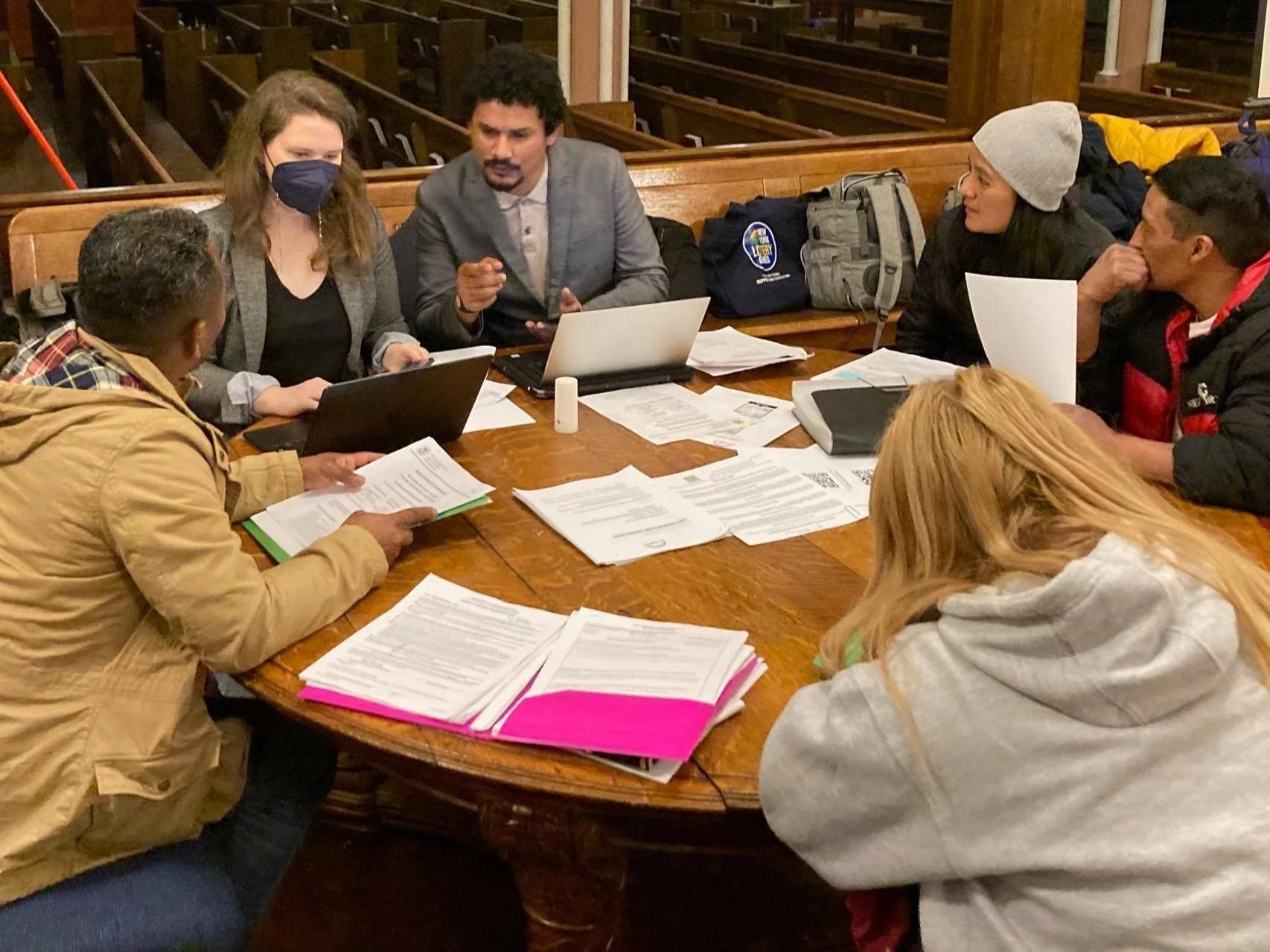
If you meet with a Rochester immigration attorney, bring as much relevant documentation as possible. This could include passports, visas, green cards, employment authorization documents, USCIS notices, immigration court papers, marriage or birth certificates, previous applications, and correspondence from immigration agencies.
It is also helpful to prepare a basic timeline of your immigration history. Be completely honest with the attorney, even about information you think may be embarrassing or unfavorable. An attorney needs accurate information to identify potential legal issues and available options.
What If You Cannot Afford an Immigration Lawyer?
Cost should not automatically prevent someone from looking for help. New York provides information about organizations that may offer free or reduced-cost legal assistance, depending on eligibility and the type of case. The New York Courts also directs people seeking legal help toward resources such as LawHelp and local legal-service organizations.
The Office for New Americans is another resource for referrals to immigration-related services. Its hotline can be reached at 1-800-566-7636.
4 FAQs About Immigration in Rochester
1. Does Rochester have its own immigration laws?
Most immigration status and deportation matters are governed by federal law rather than Rochester city law. However, New York State and local policies can affect areas such as employment, housing, discrimination, public services, and cooperation with federal immigration enforcement.
2. Can an immigration lawyer help with a green card application?
An immigration attorney may be able to advise you about eligibility, prepare or review an application, communicate with immigration authorities, and address complications. The appropriate approach depends on your individual immigration history and circumstances.
3. Where can Rochester residents find free immigration legal help?
Possible resources include the New Americans Hotline, local nonprofit legal-service organizations, and organizations listed through the New York Courts. Eligibility for free services varies by organization and case type.
4. What should I do if I think an immigration service provider scammed me?
Keep copies of contracts, receipts, messages, applications, and other records. New York’s Attorney General provides information about immigration-services fraud and accepts complaints involving unauthorized or fraudulent immigration services.
Final Thoughts
Immigration law can feel overwhelming because a seemingly small detail in someone’s history may change the legal options available to them. For Rochester residents, understanding the difference between federal immigration law and New York protections is an important starting point.
Whether the issue involves a green card, citizenship, work authorization, family immigration, asylum, detention, or an immigration court case, getting information from a qualified attorney or accredited legal representative can help you understand the process before making an important decision. Immigration rules and enforcement policies can change, so current official information should always be checked for the specific situation.