New York Employment Laws Every Worker Should Know in 2026
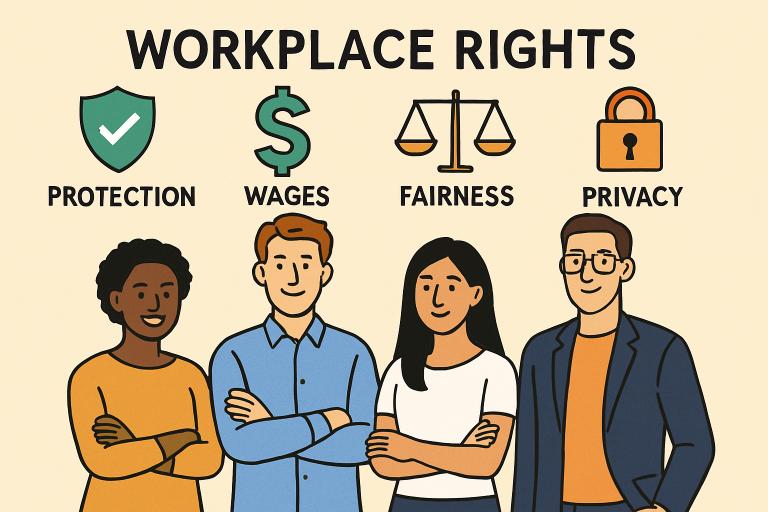
New York workers have a wide range of legal protections covering wages, overtime, paid leave, discrimination, workplace safety, and retaliation. But employment law can be confusing, especially when the rules depend on where you work, what kind of job you have, and whether you work for a private employer or the government.
In 2026, New York’s minimum wage is $17 per hour in New York City, Long Island, and Westchester, and $16 per hour in the rest of the state. Workers may also have rights involving overtime, paid sick leave, workplace safety, discrimination, and protection from retaliation.
Here are some of the important New York employment laws and worker protections to understand in 2026.
1. New York Minimum Wage in 2026
Minimum wage depends on where you work.
As of January 1, 2026:
- New York City: $17.00 per hour
- Long Island: $17.00 per hour
- Westchester: $17.00 per hour
- Rest of New York State: $16.00 per hour
Different rules can apply to tipped workers and certain industries.
If you believe you’re being paid less than the legal minimum, keep your pay stubs and records of the hours you worked.
2. Overtime Pay
New York generally requires covered workers to receive overtime at one-and-a-half times their regular rate for hours worked over 40 in a workweek. Some workers are exempt from overtime requirements, so job duties and compensation can matter.
For example, if a covered employee normally earns $20 per hour, overtime may be paid at $30 per hour.
Employers generally cannot avoid overtime simply by asking employees to work additional hours “off the clock.”
3. Paid Sick Leave
New York employees may be entitled to paid sick leave under state law, although the amount and certain conditions can depend on employer size and other factors.
Workers should understand their employer’s leave policy and keep track of available sick time.
New York’s worker-protection framework includes paid leave among the important employment rights enforced by state agencies.
4. Workplace Discrimination Is Illegal
New York workers have protections against employment discrimination based on legally protected characteristics.
Depending on the applicable law, prohibited discrimination can involve factors such as:
- Race
- Religion
- Sex
- National origin
- Disability
- Age
- Sexual orientation
- Marital status
- Military status
The New York Attorney General identifies discrimination protections as an important part of the state’s worker-rights framework.
Discrimination can potentially involve hiring, firing, compensation, promotion, assignments, scheduling, or other employment decisions.
5. Sexual Harassment Protections
Workers have legal protections against workplace sexual harassment.
Harassment can involve unwanted sexual comments, conduct, advances, requests for sexual favors, or other inappropriate behavior that violates applicable law.
Employers have responsibilities regarding workplace harassment, and employees may have options for reporting unlawful conduct.
If you experience harassment, preserve relevant emails, text messages, workplace communications, and other documentation.
6. New York Protects Workers From Retaliation
One of the most important rights workers should know is protection against certain forms of retaliation.
An employer generally cannot retaliate against an employee for exercising rights protected by labor laws, such as reporting certain wage violations. The New York Department of Labor specifically identifies retaliation protections as part of its wage-and-hour enforcement program.
Retaliation can potentially include:
- Termination
- Demotion
- Reduced hours
- Punishment
- Unfavorable scheduling
- Other adverse employment actions
However, not every workplace disagreement is legally considered retaliation. The timing and circumstances matter.
7. New York Is Generally an At-Will Employment State
Many private-sector employees in New York work under the at-will employment system.
That generally means an employer doesn’t need to provide a good reason to terminate an employee, unless a contract, collective bargaining agreement, or specific law provides greater protection.
But at-will employment does not give an employer permission to fire someone for an illegal reason. For example, an employer cannot lawfully terminate an employee because of protected discrimination or certain protected workplace activities.
8. Final Pay After Leaving a Job
When employment ends, workers are generally entitled to receive wages they have already earned.
The New York Attorney General states that an employee is entitled to outstanding wages no later than the next regular payday after employment ends.
If you believe your final paycheck is missing wages, compare the check with your time records, pay stubs, commissions, and other compensation documents.
9. Meal Breaks and Rest Periods
New York has rules concerning meal periods and rest requirements for certain workers.
The exact requirements can depend on the industry and type of work.
For example, certain factories, stores, hotels, restaurants, and other employers have requirements involving a full day of rest during each calendar week.
Workers should not assume that every employee follows exactly the same break schedule because different rules can apply to different occupations.
10. Salary Transparency
New York’s pay-transparency requirements are another important issue for workers and job seekers.
Covered employers must provide compensation information in job advertisements, and the rules can also apply to certain promotion and transfer opportunities.
This gives applicants more information about potential compensation before spending time going through the hiring process.
When reviewing a job posting, look at the entire compensation range rather than focusing only on the highest number advertised.
11. Workplace Safety
Workers have the right to a workplace that complies with applicable safety and health requirements.
New York’s Department of Labor identifies workplace safety and health as a major area of worker protection.
Safety concerns can involve:
- Unsafe machinery
- Chemical exposure
- Construction hazards
- Lack of protective equipment
- Dangerous workplace conditions
- Heat exposure
- Inadequate safety training
New York has also implemented additional protections for certain industries. The Retail Worker Safety Act, Fashion Workers Act, and Warehouse Worker Injury Reduction Program are among the worker-safety laws that have been in effect since 2025.
12. Workers’ Compensation
If you are injured while performing your job, you may be entitled to workers’ compensation benefits.
Depending on the circumstances, workers’ compensation can provide medical treatment and wage-related benefits for qualifying workplace injuries.
Report workplace injuries promptly and preserve medical records and accident documentation.
Construction workers and workers in other high-risk industries may also have additional legal rights depending on how the accident occurred.
13. Wage Theft Is Against the Law
Employers generally cannot legally withhold wages that employees have already earned.
Wage violations can involve:
- Unpaid overtime
- Minimum-wage violations
- Illegal deductions
- Unpaid commissions
- Off-the-clock work
- Failure to pay required wage supplements
The New York Department of Labor investigates wage complaints and can help workers pursue unpaid wages.
Keeping your own records of hours worked can be extremely useful if a wage dispute develops.
14. Independent Contractors Have Protections Too
Being called an independent contractor doesn’t necessarily mean that you have no workplace protections.
New York has specific rules governing worker classification, and certain industries have additional requirements.
The classification can affect minimum wage, overtime, workers’ compensation, unemployment benefits, and other rights.
If you believe you have been incorrectly classified as an independent contractor, it may be worth getting legal advice.
15. Freelance Workers Have Payment Rights
New York also provides protections for qualifying freelance workers.
For certain freelance arrangements totaling $800 or more, the hiring party must provide a written contract containing required information and make timely payment.
If you’re working as a freelancer, keep:
- Contracts
- Invoices
- Emails
- Payment records
- Project records
- Proof of completed work
These documents can become important if payment is delayed or disputed.
What Should You Do If Your Employer Violates Your Rights?
If something doesn’t seem right at work, don’t immediately delete messages or throw away documents.
Instead:
1. Keep records.
Save pay stubs, schedules, emails, text messages, and other relevant documents.
2. Track your hours.
Maintain your own record of when you started, finished, and took breaks.
3. Review your employment documents.
Check your offer letter, employment agreement, handbook, or union contract.
4. Report problems appropriately.
Depending on the issue, you may be able to contact your employer, union, New York Department of Labor, or another government agency.
5. Watch for retaliation.
Keep records of changes in your schedule, pay, duties, or employment after making a protected complaint.
6. Consider speaking with an employment attorney.
A lawyer can help determine whether your situation involves wage theft, discrimination, retaliation, harassment, wrongful termination, or another legal issue.
What If You Are Fired for Complaining?
Being fired after making a complaint doesn’t automatically prove illegal retaliation.
However, the circumstances can be important.
For example, if an employee complains about unpaid overtime and is terminated shortly afterward, the timing may become relevant when evaluating a potential retaliation claim.
New York specifically prohibits employers from retaliating against workers for certain protected activities.
The exact protection depends on what the employee reported and which law applies.
What About Mass Layoffs?
New York’s Worker Adjustment and Retraining Notification (WARN) Act applies to covered employers and certain covered mass layoffs and business closings.
For covered situations, employers may be required to provide workers with at least 90 days’ notice before a plant closing, mass layoff, or other covered reduction in employment.
There are specific coverage requirements and exceptions, so not every job loss qualifies as a WARN Act violation.
Frequently Asked Questions
1. What is the minimum wage in New York in 2026?
As of January 1, 2026, the basic minimum wage is $17 per hour in New York City, Long Island, and Westchester, and $16 per hour in the rest of New York State. Special rules apply to some tipped workers and industries.
2. How many hours do you have to work before overtime in New York?
For most covered workers, overtime generally applies after 40 hours worked in a workweek and is paid at one-and-a-half times the regular rate. Certain workers are exempt.
3. Can an employer fire you for complaining about unpaid wages?
An employer generally cannot retaliate against a worker for exercising rights protected by New York labor laws. Whether a particular termination is unlawful depends on the circumstances and the law involved.
4. Can an employer fire you without giving a reason in New York?
In many private-sector jobs, New York follows at-will employment, meaning an employer generally does not need good cause to terminate an employee. However, termination for an illegal reason—such as certain forms of discrimination or retaliation—is prohibited.
5. What should I do if my employer violates my rights?
Document what happened, preserve relevant employment records, and consider contacting the New York Department of Labor or an employment attorney depending on the issue.
Final Thoughts
New York employment law covers much more than just minimum wage.
In 2026, workers should understand their rights involving minimum wage, overtime, paid leave, discrimination, harassment, workplace safety, retaliation, final pay, wage theft, and worker classification.
The rules can also change depending on your location and industry. For example, a worker in New York City may have different protections from someone working in another part of the state.
If you believe your employer has violated your rights, don’t rely only on a verbal conversation. Keep records, save evidence, and learn which law applies to your situation.