Can New York Employees Be Fired for Using AI at Work?
AI has quickly become part of everyday work. Employees may use it to brainstorm ideas, summarize documents, draft emails, organize information, write code, or simply get unstuck when they are staring at a blank screen. At the same time, employers are becoming more careful about what workers put into AI tools and how those tools are used.
So a reasonable question is: Can a New York employee be fired for using AI at work?
The short answer is yes, an employer may be able to fire an employee for using AI, but there is no general New York rule that makes every AI-related firing automatically legal. New York is an at-will employment state, meaning employers generally can terminate an employee at any time, with or without cause, as long as the termination isn’t prohibited by law or an employment agreement.
What matters is why the employee was fired, what the employer’s policies say, how the AI was used, and whether another legal protection is involved.
Can Your Employer Ban ChatGPT or Other AI Tools?
Yes, an employer can generally establish workplace rules about technology employees may use.
For example, a company might have a policy saying:
- Don’t use personal AI accounts for company work.
- Don’t upload confidential company documents to AI tools.
- Don’t enter customer information into public AI systems.
- Don’t use AI to write certain legal or financial documents.
- AI-generated work must be reviewed by an employee.
- Employees must disclose when AI was used for certain tasks.
If an employee knowingly ignores a clear workplace policy, the employer may have a legitimate reason to discipline or terminate that employee.
The situation becomes more complicated when there is no policy, the employee reasonably believed AI use was allowed, or the employer applies the rule inconsistently.
Using AI Isn’t Automatically a Fireable Offense
There is no general New York employment rule saying that simply using artificial intelligence at work is grounds for termination.
For example, imagine an employee uses an approved AI tool to brainstorm ideas for a presentation. If the company permits that tool, using it would obviously be different from secretly uploading confidential client files to an unapproved public AI service.
The details matter.
New York’s current AI policy landscape is developing quickly. In March 2026, Governor Kathy Hochul launched the FutureWorks Commission to study how AI is affecting workers and to develop strategies addressing the changing workforce.
That means employees and employers should expect this area of law and workplace policy to continue evolving.
What If You Use AI Without Telling Your Employer?
This can be risky.
Suppose you’re asked to prepare a report and use an AI tool to create the first draft. Your employer has a policy requiring employees to disclose AI-generated work, but you don’t mention it.
Even if the final report is accurate, the employer could potentially treat the failure to follow its policy as a workplace issue.
On the other hand, if the company has no rule against AI use and employees regularly use approved AI tools without disclosure, the circumstances could look very different.
This is why employees should read their company’s technology and AI policies instead of assuming that all AI use is either allowed or prohibited.
What If You Put Confidential Information Into AI?
This is one of the biggest risks for employees.
Imagine you’re working on a customer account and paste a confidential contract into a public AI chatbot because you want help summarizing it.
The problem isn’t necessarily the act of asking AI to summarize something. The problem could be where the confidential information went and whether you were authorized to share it.
Sensitive information can include:
- Customer records
- Medical information
- Financial information
- Passwords
- Trade secrets
- Internal business plans
- Confidential contracts
- Private employee information
- Proprietary source code
New York State’s own 2026 guidance on generative AI warns government agencies about entering personal, private, or sensitive information into AI systems and emphasizes training and risk controls.
Private employers may have their own policies that are even more restrictive.
Can You Be Fired for Using AI to Do Your Job Faster?
Possibly.
An employer may decide that employees cannot use AI for certain tasks even if AI would make those tasks faster.
For example, an accounting company might require employees to complete certain calculations themselves. A law firm might prohibit uploading client information to external AI services. A company might require software developers to use only company-approved coding assistants.
If an employee knowingly violates those rules, disciplinary action may be possible.
But if AI use is permitted and an employee simply becomes more productive, using the technology isn’t automatically unlawful.
What If AI Produces an Error?
This is another issue employers are watching closely.
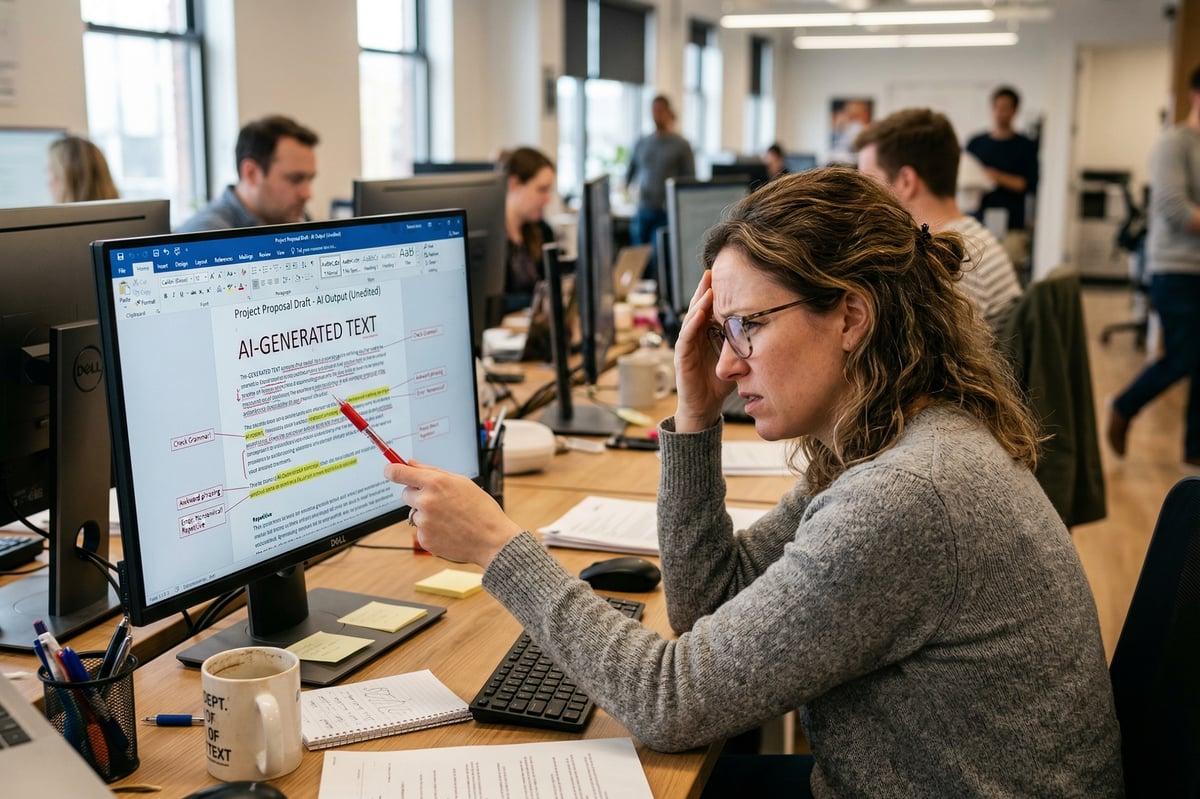
AI can produce incorrect information, fabricated citations, inaccurate calculations, or misleading statements.
Imagine an employee sends an important report to a customer without checking an AI-generated answer. The information turns out to be completely wrong and causes a financial problem for the company.
The employer may have grounds to discipline the employee—not necessarily because AI was used, but because the employee failed to follow quality-control requirements.
That’s why many employers are moving toward an approach of “AI can assist, but humans remain responsible for reviewing the work.”
Can an Employer Fire Someone for Refusing to Use AI?
This depends on the circumstances.
An employer may generally require employees to use particular software or technology as part of their jobs.
But there can be exceptions when an employee has a legally protected reason for requesting an accommodation or when another employment law applies.
For example, if an employee cannot use a particular AI-based system because of a disability and requests a reasonable accommodation, the situation may involve disability-discrimination and accommodation laws.
New York protects workers from employment discrimination based on disability and other protected characteristics.
What If AI Is Used to Monitor Employees?
AI isn’t just being used to create documents.
Employers can also use automated systems to analyze:
- Productivity
- Work speed
- Attendance
- Customer interactions
- Performance
- Work patterns
- Computer activity
That creates another set of employment-law questions.
For example, New York’s Department of Labor has rules concerning certain employer use of quotas and work-speed data for covered warehouse workers. Employees covered by those rules can have rights to request information about quota and work-speed data.
So an employer’s use of technology to monitor workers doesn’t necessarily happen in a legal vacuum.
What If AI Is Used to Decide Who Gets Fired?
This is particularly sensitive.
AI can potentially be used to recommend or assist with:
- Hiring
- Promotion
- Discipline
- Compensation
- Termination
New York State’s technology framework specifically recognizes automated employment decision-making tools that can materially automate or replace human decision-making concerning wages, hiring, discipline, promotion, and termination in certain state-government contexts.
New York City also has specific requirements for certain automated employment decision tools (AEDTs). Covered tools must generally have a bias audit within one year of use, certain audit information must be publicly available, and required notices must be provided to affected candidates or employees.
The important distinction is that these rules concern certain employment decision tools. They do not mean every AI program an employee or employer uses is regulated as an AEDT.
What If AI Makes a Biased Decision?
This can create serious legal concerns.
Suppose an employer uses AI to evaluate candidates, and the system consistently disadvantages people based on race, sex, disability, age, or another protected characteristic.
The employer cannot necessarily avoid responsibility by saying:
“The computer made the decision.”
New York prohibits employment discrimination based on numerous protected characteristics, including race, sex, disability, age, national origin, sexual orientation, and gender identity or expression.
AI can therefore become part of a discrimination case if the technology contributes to an unlawful employment decision.
What About New York City?
New York City has some of the most specific AI employment rules in the state.
Under Local Law 144, employers and employment agencies using a covered AEDT must meet requirements involving:
- Bias audits
- Public disclosure of audit information
- Notice to candidates or employees
- Information about the data used
- Reasonable-accommodation instructions
Workers can report certain violations to the NYC Department of Consumer and Worker Protection.
A 2025 New York State Comptroller audit also found problems with NYC’s enforcement of Local Law 144, including difficulties identifying employers that failed to disclose AI use or post required audit information.
Can You Be Fired for Using AI Outside Work?
This is a different question.
New York protects employees from certain discrimination based on lawful off-duty activities, subject to statutory exceptions. The Department of Labor notes that Labor Law § 201-d protects certain political and recreational activities outside work and other specified conduct.
But that doesn’t mean every activity involving AI outside working hours is protected.
For example, using an AI tool at home for a personal project is very different from using an AI system to disclose your employer’s confidential information publicly.
The circumstances matter.
What If You Are Fired After Complaining About AI?
This can be important.
Suppose you discover that an employer is using an AI system in a way you believe violates an employment law. You make a protected complaint, and shortly afterward you’re fired.
The termination may raise a retaliation issue if the complaint involved legally protected activity.
New York law prohibits retaliation in various employment contexts, and employees can have protections when they complain about violations of applicable labor laws or discrimination.
However, simply disagreeing with an employer’s AI policy does not automatically make a complaint legally protected.
What Should Employees Do Before Using AI at Work?
A few simple steps can prevent a surprisingly large problem.
Read the Company’s AI Policy
Look for rules about:
- Approved AI tools
- Confidential information
- Customer data
- Personal information
- Disclosure requirements
- Human review
- Copyright
- Security
- Recordkeeping
If there isn’t an AI policy, ask your manager or IT department what the company’s expectations are.
Don’t Upload Confidential Information
This is probably the safest general rule.
If you’re not sure whether something is confidential, don’t paste it into a public AI system until you’ve received permission.
Keep Your Own Work Records
If AI is part of your normal workflow, keep appropriate records showing what you actually did.
This can be useful if there is later a disagreement about whether you performed the work yourself or simply submitted unreviewed AI output.
Review AI-Generated Work
AI can make mistakes that look convincing.
Employees should carefully check important:
- Legal information
- Financial information
- Customer communications
- Medical information
- Technical work
- Research
- Reports
What Should Employers Do?
Employers should avoid having vague rules like “Don’t use AI.”
A better policy can explain:
- Which tools are approved
- What information employees may enter
- What information is prohibited
- Whether AI use must be disclosed
- Who is responsible for checking AI output
- What happens when the policy is violated
- Whether AI can be used for customer-facing work
- How AI-related disciplinary decisions will be handled
Employers should also make sure their policies are applied consistently.
If one employee is fired for using an approved AI tool while another employee is praised for doing exactly the same thing, that inconsistency could create unnecessary legal and workplace problems.
Frequently Asked Questions
Can my employer legally fire me for using ChatGPT?
Potentially, yes. New York is generally an at-will employment state, so an employer can usually terminate an employee for a lawful reason. If the employee violated a workplace policy concerning AI, confidentiality, security, or work quality, that could provide a legitimate reason.
Is using AI at work illegal in New York?
No. There is no general rule making ordinary workplace AI use illegal. Whether you can use AI depends on the employer’s policies, the type of work, the information involved, and any applicable employment laws.
Can I be fired for using AI if my employer never gave me an AI policy?
An employer may still have grounds for discipline depending on the circumstances, but the absence of a clear policy can make the situation more complicated. The nature of the AI use, confidentiality issues, job requirements, and how the employer treats similar employees can all matter.
Can my employer use AI to fire me?
Certain AI-based employment decision tools are regulated, particularly in New York City. Covered AEDTs are subject to requirements including bias audits and employee or candidate notices.
What should I do if I think I was fired unfairly because of AI?
Save your termination letter, AI policy, emails, messages, performance records, and other relevant documents. If you believe the termination involved discrimination, retaliation, wage violations, or another protected right, consider speaking with a New York employment attorney.
Final Thoughts
The question isn’t really whether AI itself can get you fired. It’s about how you use it and what rules apply to your workplace.
Using an approved AI tool to help brainstorm an email is very different from uploading confidential customer information into an unauthorized system. Ignoring a clear AI policy is different from using technology your employer specifically encouraged.
And for employers, AI doesn’t provide a shortcut around employment law. Discrimination, retaliation, wage protections, accommodations, and other worker rights can still apply when technology is involved.
As AI becomes more common in New York workplaces, employees should read their company’s AI rules and avoid putting confidential information into unapproved systems. Employers, meanwhile, should create clear policies and make sure their use of AI complies with applicable employment requirements.