What Are the 10 Categories of Adult Abuse?
Adult abuse is not always obvious. People often think of abuse as physical violence, but an adult can experience harm in many different ways. Abuse may involve money, emotional manipulation, neglect, sexual misconduct, or controlling behavior. In some situations, the signs can be subtle, especially when the person depends on someone else for care.
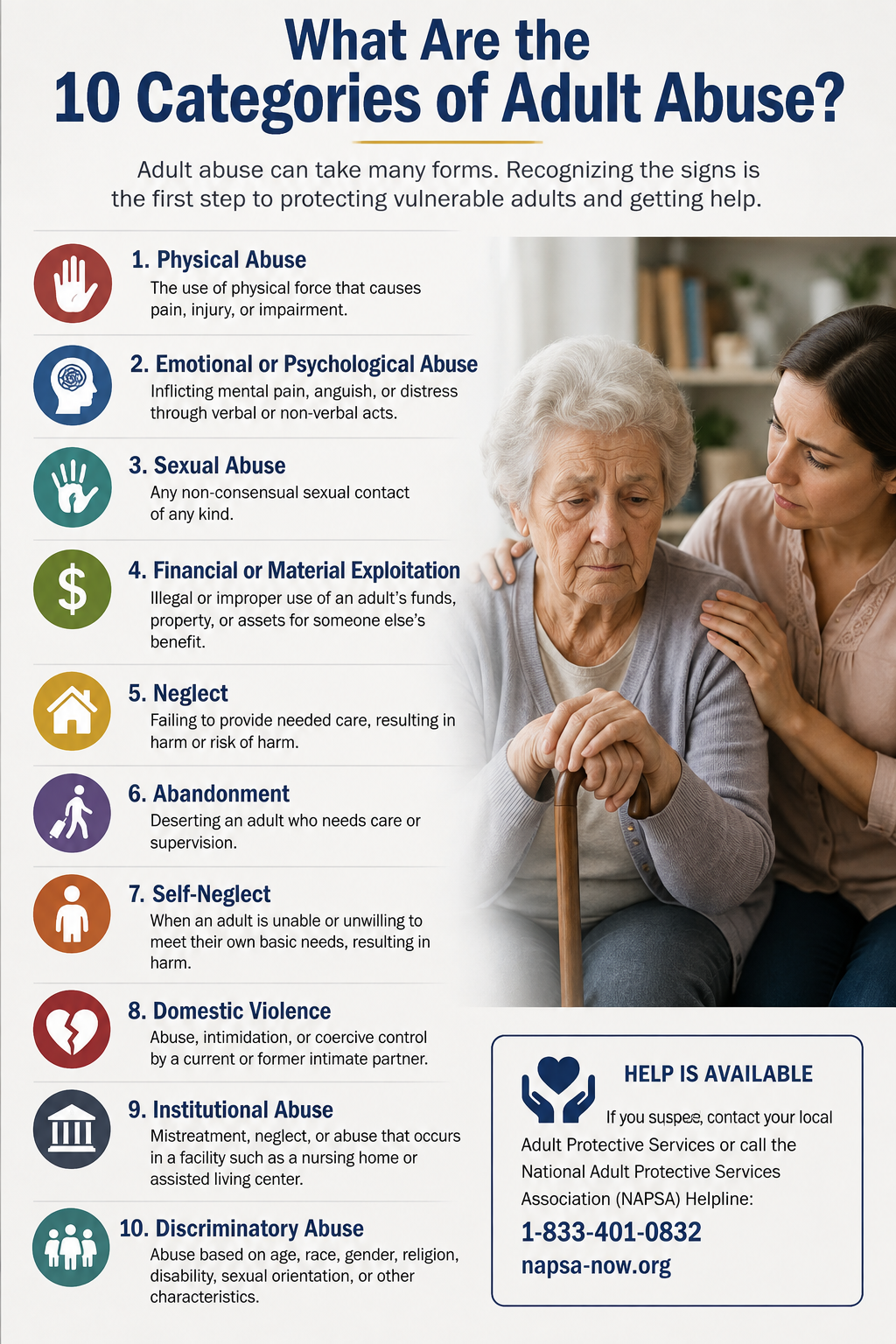
The exact legal definitions and categories can vary by state and agency, but the following are commonly recognized forms of adult abuse and exploitation.
1. Physical Abuse
Physical abuse involves intentionally using force against an adult in a way that causes injury, pain, or fear.
Examples can include:
- Hitting or punching
- Pushing or kicking
- Slapping
- Burning
- Improperly restraining someone
- Using unnecessary physical force
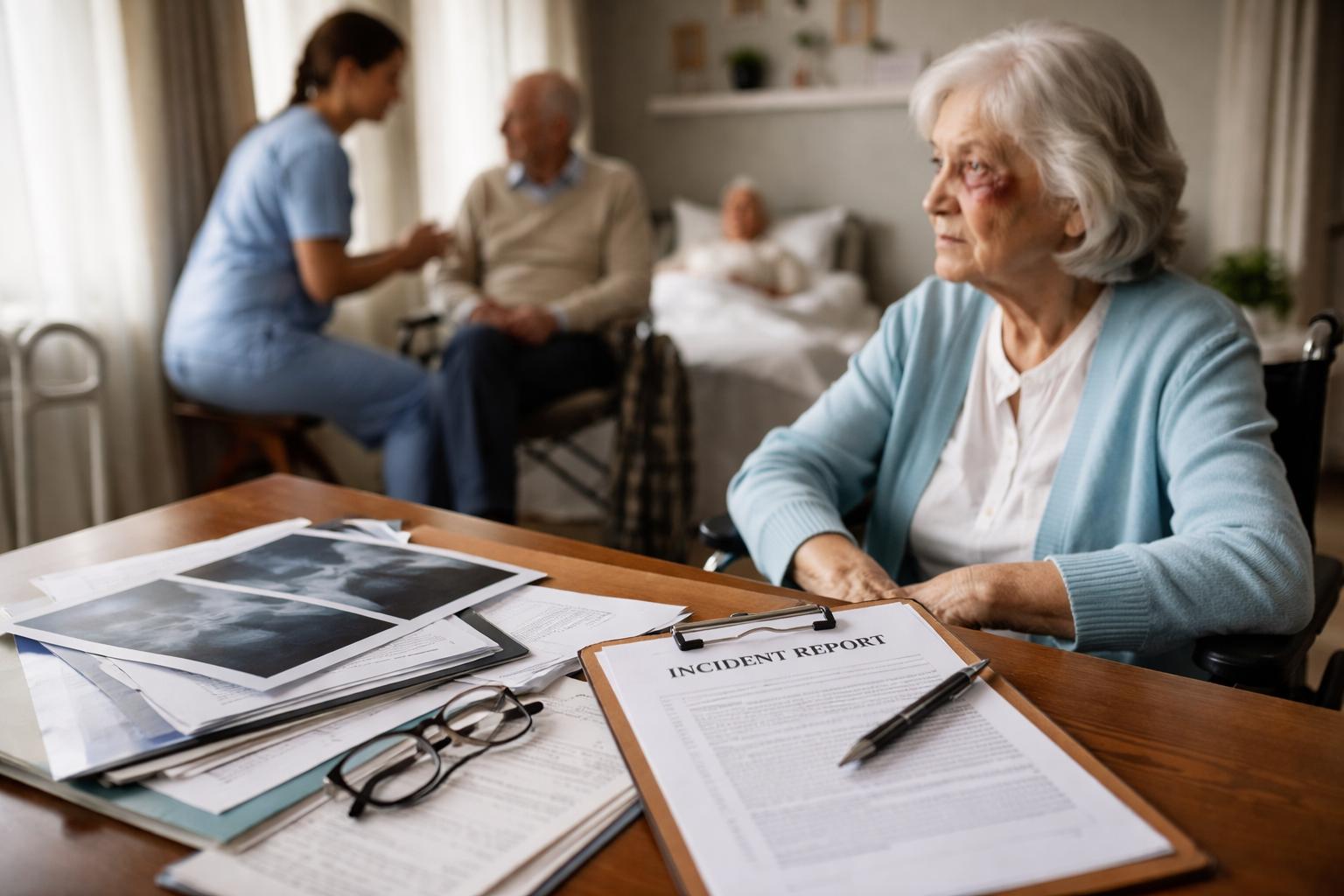
Unexplained bruises, burns, injuries, or repeated accidents may sometimes be warning signs.
2. Emotional or Psychological Abuse
Emotional abuse can be harder to recognize because there may be no visible injury.
It can include threatening, humiliating, insulting, intimidating, or deliberately isolating someone. Constant criticism or making a person feel worthless can also cause serious emotional harm.
Over time, someone experiencing emotional abuse may become unusually anxious, withdrawn, frightened, or depressed.
3. Sexual Abuse
Sexual abuse occurs when an adult is subjected to sexual contact or activity without valid consent.
This can include unwanted touching, sexual assault, forced sexual activity, or taking advantage of an adult who cannot understand or communicate consent.
Consent is particularly important when the person has a cognitive impairment or depends on another individual for care.
4. Financial or Material Exploitation
Financial exploitation involves improperly using another person’s money, property, or resources.
It can happen when someone:
- Takes money without permission
- Uses another person’s credit cards
- Pressures them to change a will
- Misuses bank accounts
- Steals property
- Forces financial decisions
- Uses their benefits for personal purposes
Financial abuse can sometimes be committed by strangers, caregivers, friends, or even family members.
5. Neglect
Neglect occurs when a person responsible for providing care fails to provide necessary assistance.
This might involve failing to provide adequate:
- Food and water
- Medication
- Hygiene
- Medical attention
- Clothing
- Safe living conditions
- Supervision
Neglect can be intentional, but it can also happen because a caregiver is overwhelmed or unable to provide the level of care required.
6. Abandonment
Abandonment involves leaving an adult who depends on another person for care or supervision without making appropriate arrangements for their safety.
For example, leaving a vulnerable adult alone without necessary medication, food, transportation, or assistance can create a serious safety concern.
The circumstances surrounding the situation matter when determining whether abandonment has occurred.
7. Self-Neglect
Self-neglect is different because the harm isn’t necessarily caused by another person.
It can occur when an adult is unable or unwilling to meet their own basic needs, creating a serious risk to their health or safety.
Possible warning signs include:
- Severe lack of hygiene
- Unsafe living conditions
- Not having enough food
- Untreated medical needs
- Failure to take essential medication
- Serious hoarding conditions
Self-neglect can be especially complicated because the person may refuse assistance even when others are concerned.
8. Domestic Violence
Domestic violence can affect adults of any age and may involve a spouse, partner, former partner, or another household member.
It can include physical violence, threats, intimidation, sexual abuse, emotional abuse, financial control, and other coercive behavior.
An older adult or dependent adult may be particularly vulnerable if they rely on the abusive person for transportation, housing, finances, or daily care.
9. Institutional Abuse
Institutional abuse occurs when mistreatment or neglect happens in a facility or organization responsible for caring for people.
Examples may include abuse in:
- Nursing homes
- Assisted living facilities
- Residential care facilities
- Group homes
- Other care institutions
Warning signs can include unexplained injuries, poor hygiene, medication problems, sudden behavioral changes, or repeated complaints about staff treatment.
10. Discriminatory Abuse
Discriminatory abuse involves mistreatment based on characteristics such as age, disability, race, religion, gender, or other protected characteristics.
It can involve harassment, unequal treatment, intimidation, exclusion, or denying a person services or opportunities because of who they are.
Discrimination can sometimes overlap with other forms of abuse, particularly when a vulnerable adult is being denied appropriate care or assistance.
How Can You Recognize Adult Abuse?
There isn’t always one obvious sign.
Sometimes the first indication is a change in behavior. A person who was previously social may suddenly become withdrawn. Someone may appear nervous around a particular caregiver or become unusually protective of their finances.
Other warning signs can include:
- Unexplained injuries
- Sudden financial problems
- Missing belongings
- Poor hygiene
- Unusual fear or anxiety
- Changes in eating habits
- Untreated medical conditions
- Sudden isolation
- Changes to legal or financial documents
- Conflicting explanations about injuries or missing money
One sign alone doesn’t necessarily prove abuse. But repeated or concerning changes deserve attention.
What Should You Do If You Suspect Abuse?
If you believe an adult is in immediate danger, contact emergency services.
For situations that aren’t an immediate emergency, you can consider contacting the appropriate Adult Protective Services agency or another qualified authority in your area. Keep factual notes about what you observed, including dates, conversations, injuries, financial concerns, or other relevant information.
Avoid confronting a suspected abuser if doing so could increase the person’s risk.
If the situation involves serious injuries, financial exploitation, sexual abuse, or ongoing danger, speaking with an appropriate professional or attorney may also help you understand what options are available.
Frequently Asked Questions
What is the most common type of adult abuse?
There isn’t one category that is universally considered the most common in every population or jurisdiction. Financial exploitation, neglect, emotional abuse, and physical abuse are all significant concerns, particularly among vulnerable and older adults.
Can adult abuse happen at home?
Yes. Abuse can happen in a private home, assisted living facility, nursing home, hospital, or other setting. The person responsible may be a family member, caregiver, partner, employee, or another individual.
Can financial exploitation be considered adult abuse?
Yes. Taking or improperly using another adult’s money, property, benefits, or assets can constitute financial exploitation and may violate civil or criminal laws depending on the circumstances.
What if I am not sure whether something is abuse?
You don’t necessarily need to know the exact legal category before raising a concern. If something seems unsafe or unusual, document what you observed and contact an appropriate protective-services agency or professional for guidance.
Final Thoughts
Adult abuse can take many forms, and physical violence is only one part of the picture. Emotional manipulation, neglect, abandonment, financial exploitation, domestic violence, and institutional mistreatment can all seriously affect a person’s safety, independence, and quality of life.
Recognizing the warning signs early can make it easier to protect a vulnerable adult. If you suspect abuse, take the concern seriously, document what you know, and seek appropriate help rather than trying to handle a potentially dangerous situation alone.