New York Green Card Process: Common Legal Questions
Getting a green card can feel like one giant immigration process, but it is really a series of steps that depend on how you qualify for permanent residence. A person applying through a spouse may have a very different process from someone applying through an employer, asylum, a family member, or another immigration category.
For people living in New York, it is also important to remember that green card eligibility is primarily governed by federal immigration law. New York does provide immigration legal services and other resources, but the actual green card application is handled through federal immigration agencies.
In 2026, immigration rules and policies are changing in several areas, so applicants should check current requirements rather than relying on an old application checklist.
What Is a Green Card?
A green card, officially called a Permanent Resident Card, allows an eligible immigrant to live and work permanently in the United States.
It is different from a temporary visa.
A tourist visa, student visa, or temporary work visa generally gives someone permission to remain in the United States for a specific purpose and period. Permanent residence is a longer-term immigration status.
But getting a green card isn’t automatic just because someone has lived in the United States for several years.
You generally need a qualifying immigration category and must meet the requirements for that category.
How Can Someone Get a Green Card?
There are several common pathways to permanent residence.
These can include:
- Family-based immigration
- Employment-based immigration
- Adjustment of status
- Consular processing
- Asylum or refugee status
- Certain humanitarian programs
- Special immigrant categories
- Diversity Visa programs, when applicable
The correct process depends on your circumstances.
For example, someone married to a U.S. citizen may have a very different process from an employee sponsored by a U.S. company.
Can I Apply for a Green Card While Living in New York?
Potentially, yes.
If you’re already in the United States and qualify for adjustment of status, you may be able to apply for permanent residence without leaving the country.
However, eligibility depends on your immigration category and history.
Issues such as unauthorized employment, unlawful presence, previous immigration violations, criminal convictions, or certain entries into the United States can affect eligibility.
That’s why two people who both live in New York and are married to U.S. citizens can still have completely different green card situations.
What Is Adjustment of Status?
Adjustment of status is the process used by certain eligible people already in the United States to apply for permanent residence.
Instead of leaving the country for an immigrant visa interview at a U.S. consulate, an eligible applicant may apply through USCIS.
The process can involve forms, supporting evidence, biometrics, an interview, and a final decision.
Not everyone qualifies for adjustment of status, so it is important to determine eligibility before filing.
Do I Need a Sponsor?
Some green card categories require a petitioner or sponsor.
For example, many family-based applications involve a U.S. citizen or permanent resident family member filing a petition for a qualifying relative.
Financial sponsorship can also be part of the process.
The sponsor may need to submit an Affidavit of Support demonstrating that the intending immigrant will have adequate financial support.
The exact requirements depend on the immigration category and circumstances.
Can My Spouse Help Me Get a Green Card?
A qualifying marriage to a U.S. citizen or permanent resident can provide a potential family-based path to permanent residence.
But getting married does not automatically give someone a green card.
USCIS may require evidence showing that the marriage is legally valid and genuine rather than entered into primarily for immigration purposes.
Applicants may be asked about their relationship, household, finances, history together, and other details.
Documents such as photographs, joint financial records, leases, insurance records, correspondence, and other evidence can sometimes help demonstrate a genuine relationship.
What If I Entered the U.S. Without Inspection?
This can make the situation considerably more complicated.
A person who entered the United States without being inspected or admitted may not qualify for adjustment of status in the same way as someone who entered legally with a visa or parole.
There can be exceptions and other possible immigration options, depending on the person’s history.
For this reason, someone who entered without inspection should speak with an immigration attorney before submitting a green card application.
Filing the wrong application without understanding the consequences can create additional problems.
How Long Does the Green Card Process Take?
There is no single processing time for every green card application.
Timing can depend on:
- The immigration category
- Whether a visa number is immediately available
- USCIS workload
- Whether an interview is required
- Whether additional evidence is requested
- The applicant’s immigration history
- Whether the case is being handled through adjustment of status or consular processing
Someone who tells you that every green card case takes exactly the same number of months is oversimplifying the process.
Will I Have a Green Card Interview?
Some applicants are required to attend an interview, while others may have the interview requirement waived.
If you receive an interview notice, read it carefully and bring the documents requested.
For marriage-based cases, applicants may be asked questions about their relationship.
For other categories, the interview may focus on eligibility, immigration history, documentation, or other issues related to the application.
What Happens If USCIS Requests More Evidence?
USCIS may send a Request for Evidence, commonly called an RFE, if it needs additional information or documentation before deciding the application.
Receiving an RFE doesn’t automatically mean your case will be denied.
It means USCIS is asking for something.
The important part is responding correctly and before the deadline stated in the notice.
If you’re unsure why USCIS is requesting something or how to respond, getting professional advice can be useful.
Can a Criminal Record Affect a Green Card?
Yes.
Certain criminal convictions, arrests, or other conduct can affect immigration eligibility.
But an arrest isn’t necessarily the same as a conviction, and not every offense has the same immigration consequences.
If you have ever been arrested, charged, or convicted of a crime, don’t assume that a minor offense from years ago is irrelevant.
Have an immigration attorney review the situation before filing.
What About the Public Charge Rule?
Public charge is an issue that some green card applicants may need to consider.
This area is particularly important in 2026 because federal changes are currently developing.
As of August 18, 2026, NYC’s Mayor’s Office of Immigrant Affairs reported that proposed changes concerning how certain public benefits could be considered in public-charge determinations were not yet in effect. The earliest possible effective date was September 18, 2026, although that date could change because of court action.
This is a situation where applicants should be careful about acting on social media posts or outdated articles.
If you’re concerned about whether receiving a particular benefit could affect your immigration case, talk to a qualified legal provider before making decisions about essential services.
Can I Work While My Green Card Application Is Pending?
A pending green card application does not automatically provide employment authorization in every situation.
Depending on the category and circumstances, an applicant may separately apply for an Employment Authorization Document.
If you’re already working in the United States, make sure you understand whether you currently have valid employment authorization.
Don’t assume that filing a green card application automatically fixes an employment authorization problem.
What Documents Should I Keep?
Immigration applications can involve a lot of paperwork.
Keep copies of:
- Passport
- Birth certificate
- Marriage certificate, if applicable
- Divorce records, if applicable
- Immigration documents
- Visa records
- I-94 information
- Previous USCIS notices
- Employment authorization cards
- Tax records
- Court records
- Criminal disposition documents, if applicable
- Copies of submitted immigration forms
- USCIS receipts and approval notices
If your case becomes complicated later, having your complete immigration history can make it much easier for an attorney to understand your situation.
What If My Green Card Application Is Denied?
A denial doesn’t necessarily mean that you have no other immigration options.
Depending on the reason for the denial and the type of application, there may be options such as filing a motion, appealing a decision, submitting a new application, or pursuing another immigration benefit.
But the appropriate option depends heavily on the facts.
Read the denial notice carefully and seek legal advice promptly if you believe the decision is incorrect.
Can I Get Free Immigration Legal Help in New York?
If you live in New York City and meet the program’s eligibility requirements, free immigration legal assistance may be available.
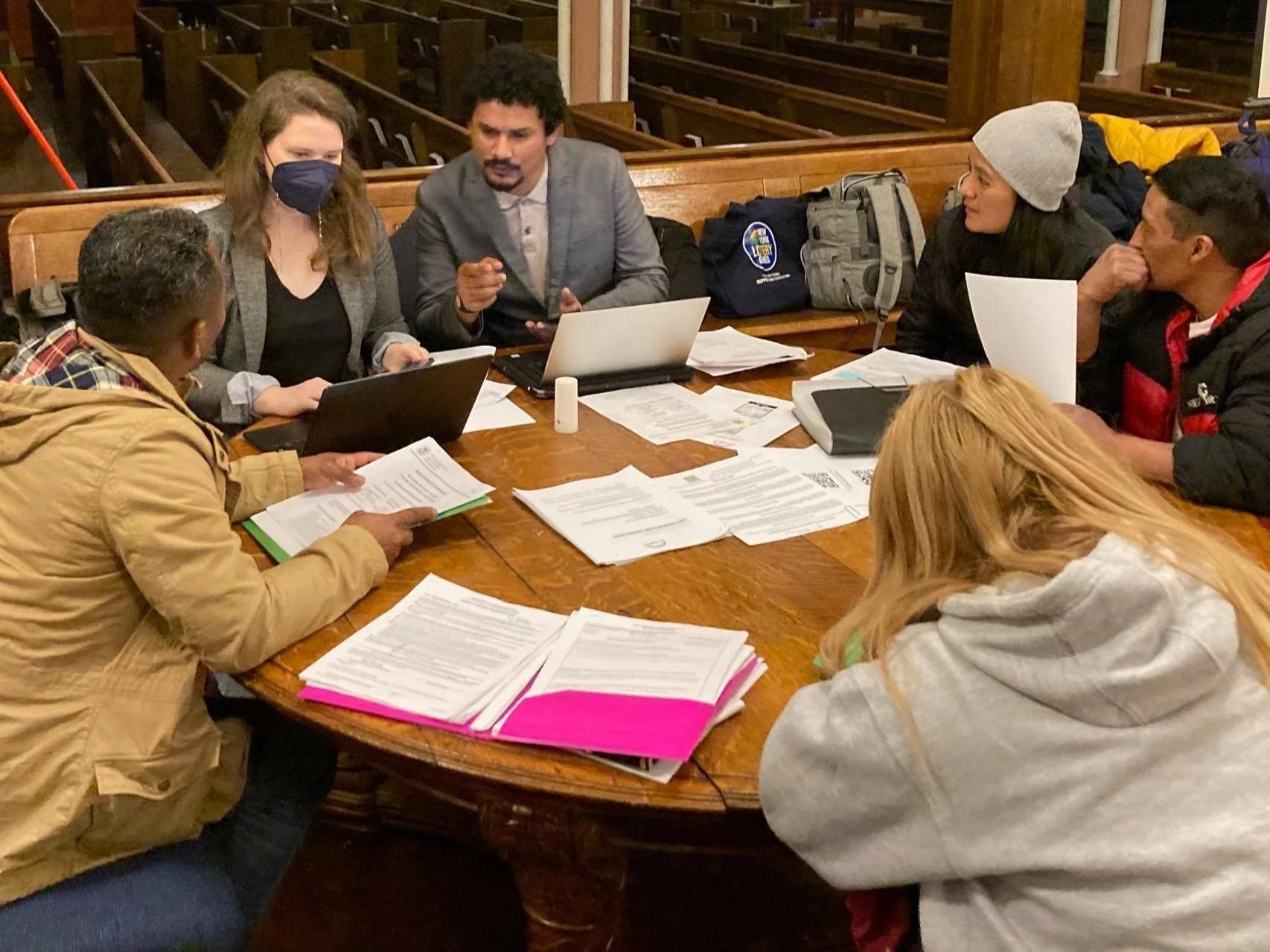
NYC’s MOIA Immigration Legal Support Centers provide free legal screenings and assistance with matters including green card applications and renewals. The program is available to NYC residents who meet its income eligibility requirements, generally household income below 200% of the Federal Poverty Level.
New Yorkers can also call the City-funded MOIA Immigration Legal Support Hotline at 800-354-0365 or call 311 and say “Immigration Legal” to find trusted legal resources.
When Should You Talk to an Immigration Attorney?
You don’t necessarily need a lawyer for every straightforward immigration form.
But professional advice can be particularly valuable if you:
- Entered the U.S. without inspection
- Have a criminal record
- Have previously been deported
- Have overstayed a visa
- Have worked without authorization
- Have submitted a previous immigration application
- Have received an immigration court notice
- Have been denied an immigration benefit
- Have concerns about fraud or misrepresentation
- Are unsure which green card category applies to you
A consultation before filing can sometimes identify a problem that would otherwise appear much later.
Frequently Asked Questions
1. Can I get a green card while living in New York?
Potentially. If you qualify for adjustment of status or another permanent-residence pathway, you may be able to apply while living in New York. Eligibility depends on your immigration category and personal history.
2. Does marrying a U.S. citizen automatically give me a green card?
No. Marriage can create a potential family-based immigration pathway, but the applicant still has to meet applicable requirements and complete the appropriate immigration process.
3. Can I apply for a green card if I overstayed my visa?
It depends on the circumstances. Some applicants may still qualify for adjustment of status, while others may face significant problems because of their immigration history. Professional legal advice can be important before filing.
4. How long does a green card application take in New York?
There is no universal timeline. Processing can vary based on the category, visa availability, USCIS workload, interviews, requests for evidence, and other factors.
5. Where can I find free immigration legal help in New York City?
Eligible NYC residents can contact MOIA’s free Immigration Legal Support Hotline at 800-354-0365 or call 311 and say “Immigration Legal.” NYC also operates Immigration Legal Support Centers offering free legal screenings and assistance for qualifying residents.
Final Thoughts
The New York green card process isn’t really a separate state immigration system. Most of the rules come from the federal government, while New York and New York City provide important legal and community resources for immigrants.
The biggest mistake is assuming that someone else’s immigration experience will be identical to yours.
Your entry into the United States, family relationships, immigration history, employment, criminal record, current status, and the category you’re applying under can all matter.
If your case is complicated, get advice before filing rather than trying to fix a problem after it appears.