New York Probate Laws Explained
When someone dies in New York, their family may suddenly find themselves dealing with bank accounts, property, debts, paperwork, and questions about who is actually allowed to handle everything. This is where New York probate laws come into play. Probate is the court process used to establish that a deceased person’s will is valid and to give the person named as executor legal authority to handle the estate. In New York, these matters are generally handled through the Surrogate’s Court in the county where the person lived.
The process can be straightforward in some situations and surprisingly complicated in others. It depends on whether there is a will, what property the person owned, the value of the estate, and whether family members disagree about anything.
What Is Probate in New York?
Probate is essentially the legal process of proving a will.
If someone dies with a will, the person named as executor generally starts the probate proceeding. The court reviews the will and the required paperwork before officially appointing the executor to administer the estate. Interested family members and beneficiaries may also have to receive notice of the proceeding.
The executor then has responsibilities such as identifying estate assets, dealing with debts and expenses, and distributing property according to the will and applicable law.
It isn’t simply a matter of taking the will to the bank and collecting everything.
What Happens If There Is No Will?
When someone dies without a will, New York calls this intestate.
Instead of following instructions written in a will, the estate is distributed according to New York’s intestacy laws. The court appoints an administrator, generally based on the priority established by law, to collect and distribute estate property.
For example, if a married person dies without a will, the surviving spouse generally has priority over the deceased person’s children when it comes to filing for administration. The actual inheritance rules can depend on the family structure and circumstances.
This is one reason having a valid will can make a major difference. It gives your family clearer instructions instead of leaving the distribution entirely to the intestacy rules.
Where Is Probate Filed?
New York estate proceedings are generally filed in the Surrogate’s Court for the county where the deceased person was domiciled, meaning their primary legal residence.
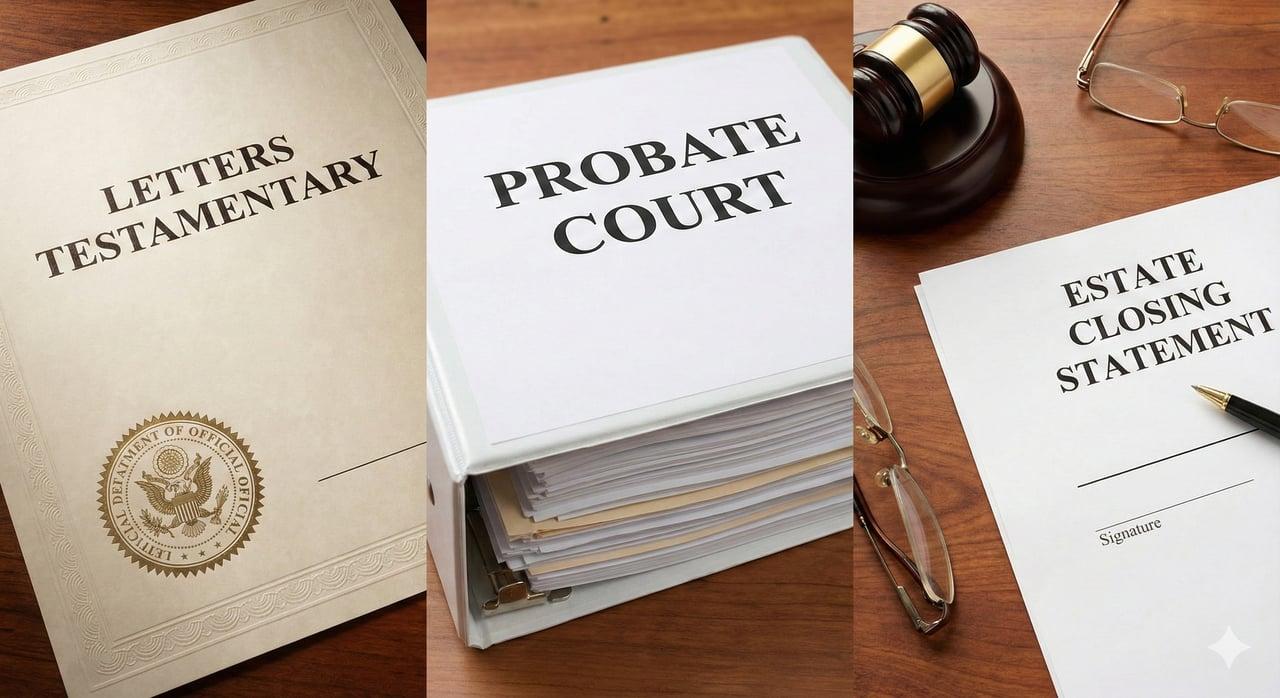
For probate, the executor typically submits the original will, a certified death certificate, the probate petition, and other supporting documents.
The court also needs information about the deceased person’s distributees and other interested parties. Depending on the circumstances, those people may sign waivers and consents or receive a citation requiring them to respond.
New York Small Estate Rules
Not every estate requires a full probate or administration proceeding.
New York provides a Voluntary Administration, commonly called a small estate proceeding, when the deceased person’s qualifying personal property in their name alone does not exceed $50,000, subject to certain exclusions.
There is an important detail here: this simplified procedure generally cannot be used to administer real property such as a house or land owned solely by the deceased.
So, a person might have relatively little cash or personal property but still need a different proceeding because of real estate ownership.
What Does an Executor Do?
The executor is the person named in the will to handle the estate.
Once appointed by the court, the executor becomes a fiduciary. That means the executor has legal responsibilities toward the estate and its beneficiaries. New York Courts explain that executors, administrators, and voluntary administrators all have fiduciary duties.
An executor may need to:
- Locate and protect estate assets
- Deal with banks and financial institutions
- Identify outstanding debts
- Handle estate expenses
- Communicate with beneficiaries
- Address real estate owned by the deceased
- Complete required tax and court paperwork
- Distribute assets according to the will and applicable law
Being named executor doesn’t mean the person can simply do whatever they want with the estate.
Can a Will Be Challenged?
Yes, a will can be contested during probate.
Interested people may have an opportunity to object before the will is admitted to probate. This can make an otherwise ordinary estate much more complicated.
Questions about whether the will was properly executed, whether the deceased had the required capacity, or whether someone exerted improper influence can become important depending on the circumstances.
New York Courts specifically describe probate as a process in which interested parties can have an opportunity to oppose the will before it is admitted.
Not Everything Automatically Goes Through Probate
This is another part of New York probate that often causes confusion.
Some assets may pass outside of probate because of how they are owned or because they have designated beneficiaries. New York Courts note that if an estate consists only of jointly held assets or assets with named beneficiaries, a Surrogate’s Court proceeding may not be necessary.
For example, certain jointly owned property or accounts with valid beneficiary designations may transfer according to those arrangements rather than through the will.
That’s why looking at the person’s entire financial picture matters.
How Long Does Probate Take in New York?
There isn’t one standard timeline that applies to every estate.
A relatively simple, uncontested estate can move differently from one involving multiple beneficiaries, real estate, tax questions, missing documents, creditor issues, or a contested will.
The paperwork also needs to be complete. New York’s court rules require specific information in probate and administration petitions, including an estimate of the estate and details concerning the deceased person’s property and distributees.
If the estate becomes disputed or unusually complicated, the process can take substantially longer.
Frequently Asked Questions
1. Is probate required for every estate in New York?
No. Some assets can pass outside probate, and qualifying estates with no more than $50,000 in qualifying personal property may use the voluntary administration procedure.
2. What happens if someone dies without a will in New York?
The person is considered intestate, and New York’s intestacy laws determine how qualifying assets are distributed. An administrator is appointed through the Surrogate’s Court process.
3. How much property qualifies for a New York small estate?
Generally, a voluntary administration proceeding can be used when qualifying personal property owned in the deceased person’s name alone does not exceed $50,000, subject to statutory exclusions. It generally cannot be used to administer real property.
4. Do I need a lawyer for probate in New York?
Not every estate requires an attorney, but probate can become complicated quickly, especially when there is real estate, a contested will, significant assets, tax issues, or disagreements among family members. New York Courts recommend considering legal assistance for complicated probate matters.
Final Thoughts
New York probate is basically about making sure a deceased person’s property is handled legally and that the right person has authority to manage the estate. A valid will can provide direction, while intestacy laws provide the framework when there is no will.
The important thing is not to assume that every estate follows the same process. A small estate, a house owned solely by the deceased, a jointly owned account, and a contested will can all lead to very different procedures.
If you are dealing with an actual New York estate, getting advice based on the specific assets, family relationships, and documents involved can help prevent expensive mistakes. This article is general information and not legal advice.