Rochester Truck Accident Laws: What Injured Victims Should Know
A crash involving a large truck can feel very different from an ordinary car accident. The size and weight of a tractor-trailer, delivery truck, or other commercial vehicle can lead to serious injuries and significant property damage. For someone searching for information about Rochester truck accident laws, one of the biggest questions is usually simple: who can be held responsible, and what should I do next?
Truck accident cases can involve the truck driver, trucking company, vehicle owner, maintenance company, cargo handlers, or even another driver. Figuring out what happened often requires more than looking at the damage to the vehicles.
New York Uses Comparative Fault
New York generally allows an injured person to recover damages even when that person is partly responsible for an accident. However, the amount recovered can be reduced according to the person’s share of fault.
That can become important after a truck collision. The trucking company or its insurer may argue that the other driver was speeding, distracted, following too closely, or otherwise contributed to the crash.
Recent New York appellate decisions show that comparative negligence can remain an important issue in truck collision cases. In one 2026 case involving a tractor-trailer, the court considered conflicting evidence about how the truck moved into another lane and whether the injured driver was partly at fault.
That is why an accident report alone may not tell the whole story.
Who May Be Responsible for a Truck Accident?
Unlike a typical two-car crash, a truck accident can involve several potentially responsible parties.
For example, liability may involve:
- The truck driver
- The trucking company
- The owner or leasing company
- A vehicle maintenance provider
- A company responsible for loading cargo
- A manufacturer if a defective part contributed to the crash
- Another motorist
- A government entity in certain roadway-related situations
The facts matter. A driver may have made a mistake, but an investigation may also reveal problems involving maintenance, loading, training, scheduling, or the condition of the truck.
Truck Driver Negligence Can Take Different Forms
Driver behavior is one of the first areas investigators may examine. A truck driver could potentially be negligent by driving too fast for conditions, changing lanes unsafely, failing to maintain a safe following distance, driving while distracted, or operating while fatigued.
The circumstances surrounding the collision matter more than simply assuming the truck driver was responsible because the truck was larger.
For example, New York courts have recently considered cases involving trucks and lane changes, rear-end collisions, sudden stops, and competing claims of comparative negligence.
Evidence Can Become Extremely Important
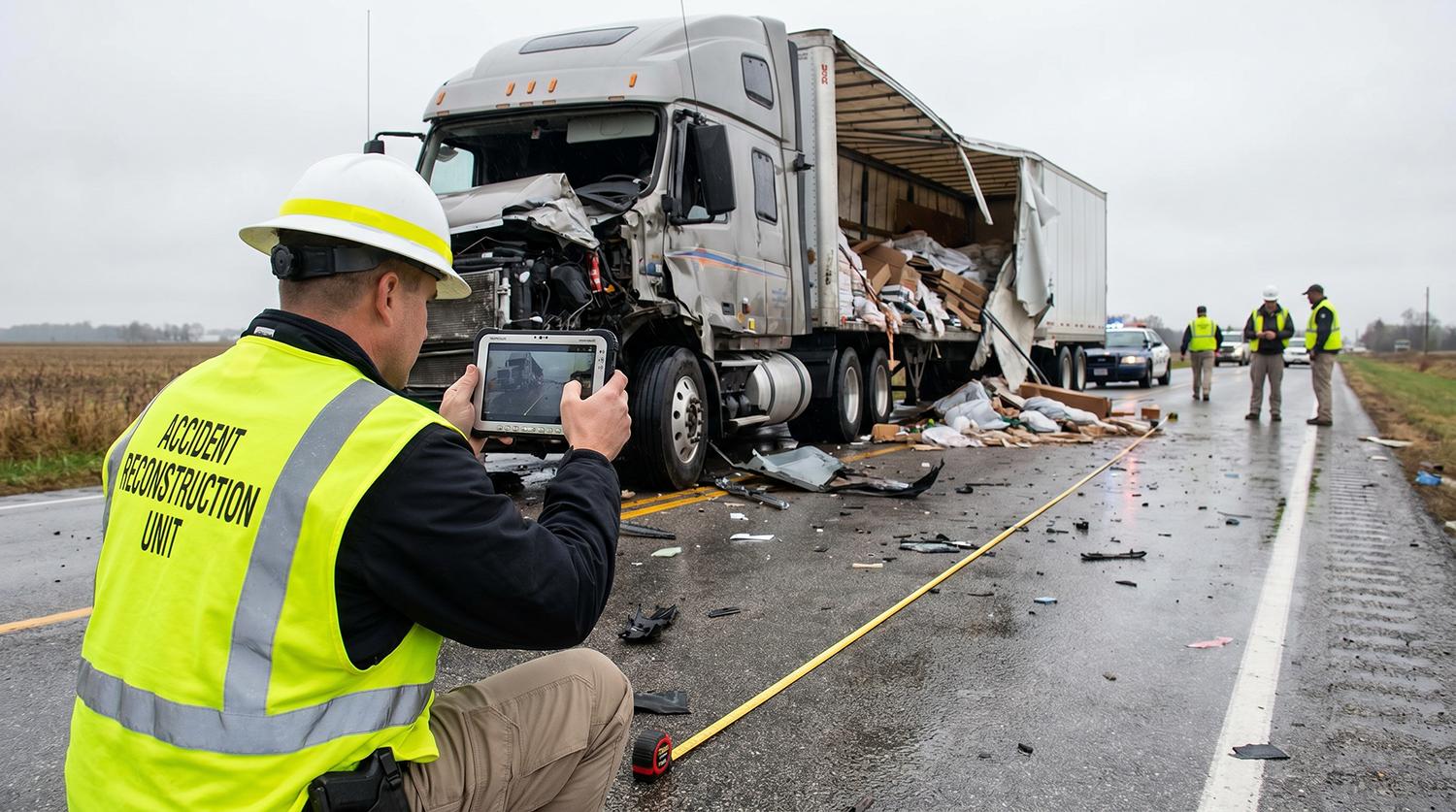
Truck accident evidence can disappear or become harder to obtain as time passes. Photos from the accident scene, witness information, medical records, police reports, vehicle damage, traffic-camera footage, and available electronic vehicle information may all help establish what happened.
Depending on the circumstances, a lawyer may also want to investigate trucking records and other information maintained by the company.
This is one reason injured people should avoid casually deleting messages, photographs, dashcam footage, or other records connected with the accident.
What If the Truck Driver Says You Caused the Crash?
Do not assume that an insurance company’s version of the accident is automatically correct.
A truck insurer may investigate the accident from its own perspective. If the parties disagree about what happened, evidence such as photographs, witness testimony, vehicle positions, traffic footage, police reports, and other records may become important.
New York courts have recognized that even when a plaintiff presents evidence supporting liability, conflicting evidence can create factual questions that must be resolved rather than simply assuming one side’s version is correct.
What Compensation May Be Available?
Depending on the circumstances and the injuries involved, a personal injury claim may seek compensation for losses such as medical expenses, lost income, reduced earning ability, pain and suffering, and other damages recognized under New York law.
The value of a claim depends heavily on the evidence and individual circumstances. A serious injury that affects someone’s ability to work or perform everyday activities may have very different consequences from a minor injury that resolves quickly.
It is also important to keep records of medical treatment and follow medical recommendations. Gaps in treatment or incomplete records can sometimes create questions about the extent or cause of an injury.
How Long Do You Have to File a Truck Accident Claim in New York?
For many personal injury claims arising from motor vehicle accidents, New York’s general statute of limitations is three years from the date of the accident. New York Courts lists car accidents and other negligence-based personal injury claims under a three-year limitations period.
However, this is not a deadline you should treat as a universal rule for every truck accident. Different defendants and circumstances can create different requirements.
For example, if a potential claim involves a city, county, town, or another government entity, special notice requirements can apply. New York Courts explains that claims against governmental entities can involve a 90-day Notice of Claim requirement and a separate limitations period.
Because missing a legal deadline can seriously affect a claim, getting legal advice early can be important.
When Should You Talk to a Truck Accident Lawyer?
You do not necessarily need to wait until you know how serious your injuries will be before speaking with an attorney.
A consultation may be particularly useful when the crash involved serious injuries, a fatality, disputed fault, a commercial trucking company, multiple vehicles, significant property damage, or an insurance company that is already asking questions about the accident.
A lawyer can review the basic facts, explain possible claims, identify potential defendants, and discuss what evidence may need to be preserved.
4 FAQs About Rochester Truck Accident Laws
1. Is a trucking company responsible if its driver causes an accident?
It can be, depending on the relationship between the driver and company and the facts surrounding the crash. Other parties may also have potential responsibility.
2. Can I still recover compensation if I was partly at fault?
Potentially, yes. New York recognizes comparative fault, although a person’s recovery may be reduced based on their percentage of responsibility.
3. How long do I have to file a Rochester truck accident lawsuit?
Many New York personal injury claims have a three-year statute of limitations, but exceptions and special rules can apply. Claims involving government entities, for example, may have additional notice requirements.
4. What should I do after a truck accident?
Seek appropriate medical care, report the crash as required, document the scene if you can do so safely, keep relevant records, avoid deleting accident-related evidence, and consider speaking with a qualified New York personal injury attorney before making important decisions about a claim.
Final Thoughts
Truck accidents can become complicated quickly. What initially looks like a simple collision may involve questions about the driver, trucking company, vehicle maintenance, cargo, road conditions, insurance coverage, and comparative fault.
If you were injured in a truck accident in Rochester, preserving evidence and understanding the applicable deadlines can be just as important as determining who caused the crash. The sooner the circumstances are properly reviewed, the easier it may be to understand your legal options.