Supreme Court and Gay Marriage in NYC: What You Need to Know
The history of gay marriage in New York City is closely connected to two major legal developments: New York’s own Marriage Equality Act and landmark decisions from the U.S. Supreme Court. For couples and families looking into marriage rights today, it helps to understand how those decisions changed the law and what protections same-sex married couples have in New York.
New York State made same-sex marriage legal in 2011, when the Marriage Equality Act took effect on July 24 of that year. Several years later, the U.S. Supreme Court’s decisions in United States v. Windsor and Obergefell v. Hodges changed the legal landscape nationwide.
When Did Gay Marriage Become Legal in New York?
Same-sex marriage became legal in New York State in 2011.
The New York Legislature passed the Marriage Equality Act, and Governor Andrew Cuomo signed it into law on June 24, 2011. The law took effect on July 24, 2011.
The law changed New York’s Domestic Relations Law so that a valid marriage could not be treated differently based on whether the spouses were the same sex or different sexes.
In practical terms, same-sex couples could obtain marriage licenses and marry under New York law just like different-sex couples.
That was an enormous change for couples who had spent years fighting for the ability to have their relationships legally recognized.
What Did the Supreme Court Have to Do With Gay Marriage?
The U.S. Supreme Court played an important role in expanding marriage equality nationwide, but it is important to distinguish two different cases.
The first was United States v. Windsor, decided in 2013.
The second was Obergefell v. Hodges, decided in 2015.
They addressed different legal questions.
United States v. Windsor and New York
United States v. Windsor has a particularly strong connection to New York City.
Edith Windsor and her spouse, Thea Spyer, were a same-sex couple who had married in Canada. New York recognized their marriage. After Spyer died, Windsor faced a federal estate-tax issue because the federal Defense of Marriage Act, or DOMA, prevented the federal government from recognizing their marriage for federal purposes.
Windsor challenged that treatment.
In 2013, the Supreme Court struck down Section 3 of DOMA.
The decision meant that the federal government could no longer treat legally recognized same-sex marriages as though they were not marriages for purposes covered by federal law.
This mattered enormously to same-sex couples in New York.
A couple could be legally married under New York law, but before Windsor, federal law could still deny them important rights and benefits.
Why Was the Windsor Case Important to NYC?
The Windsor case was not simply an abstract constitutional dispute.
It involved a New York resident and a marriage recognized by New York.
The case demonstrated the real-world consequences of having two conflicting systems: one government recognizing a marriage while another refused to recognize it.
The Supreme Court’s decision removed one of the most significant federal barriers facing legally married same-sex couples.
It also helped set the stage for the next major Supreme Court case involving marriage equality.
Obergefell v. Hodges and Same-Sex Marriage Nationwide
In Obergefell v. Hodges, the Supreme Court went further.
In 2015, the Court held that the Fourteenth Amendment requires states to license marriages between two people of the same sex and recognize same-sex marriages lawfully performed in other states. The Supreme Court’s docket confirms that these were the central questions presented in the case.
This meant marriage equality was no longer limited to states such as New York that had already legalized same-sex marriage.
The decision made marriage equality a constitutional right throughout the United States.
For same-sex couples in NYC, it provided an additional layer of constitutional protection on top of the rights they already had under New York law.
New York Already Had Marriage Equality Before Obergefell
This is an important point.
Some people assume the Supreme Court decision in 2015 was when same-sex marriage first became legal in New York.
It wasn’t.
New York had already legalized same-sex marriage in 2011 through the Marriage Equality Act.
The Supreme Court’s 2015 decision instead made marriage equality a constitutional requirement nationwide.
So the timeline looks roughly like this:
2011: New York passes the Marriage Equality Act.
2013: Supreme Court decides United States v. Windsor and strikes down Section 3 of DOMA.
2015: Supreme Court decides Obergefell v. Hodges and requires states to license and recognize same-sex marriages.
What Rights Do Same-Sex Married Couples Have in New York?
New York law provides that same-sex marriages are treated equally with different-sex marriages.
The New York Department of Health states that no government treatment, legal status, right, benefit, privilege, protection, or responsibility relating to marriage should differ based on whether the spouses are the same sex or different sexes.
That can affect many areas of everyday life, including:
- Estate planning
- Inheritance
- Property ownership
- Tax matters
- Health-related decision-making
- Spousal rights
- Divorce
- Retirement benefits
- Insurance
- Family and parental rights
The exact rules can depend on the circumstances, so couples dealing with substantial assets or complicated family situations may want legal advice.
What About Taxes?
Marriage can have significant tax consequences.
New York’s Tax Department explains that, since the Marriage Equality Act took effect, same-sex and different-sex marriages are treated equally under New York tax law. The department also notes that federal recognition followed the Supreme Court’s Windsor decision and IRS Revenue Ruling 2013-17.
This means legally married same-sex couples can generally be treated as married for applicable state and federal tax purposes.
However, marriage can affect taxes in both favorable and unfavorable ways depending on income, property, investments, and other circumstances.
What About Estate Planning?
Marriage equality also changed estate planning for same-sex couples.
Before marriage recognition, couples could face significant problems when one partner died without adequate estate planning.
Today, legally married same-sex spouses generally have the same marital legal framework as other married couples under New York law.
That can affect:
- Wills
- Trusts
- Beneficiary designations
- Estate taxes
- Property transfers
- Inheritance
- Health care planning
But getting married does not mean a couple no longer needs an estate plan.
A will, trust, power of attorney, and health care documents can still be important, particularly when there are children, significant assets, previous marriages, or complicated family relationships.
Can Same-Sex Couples Get Divorced in New York?
Yes.
Marriage equality applies to divorce as well as marriage.
A legally married same-sex couple can seek a divorce in New York under the state’s divorce laws.
The same types of issues can arise in a same-sex divorce, including:
- Property division
- Spousal maintenance
- Custody
- Parenting arrangements
- Child support
- Retirement assets
- Real estate
The legal details can become complicated when a couple married in one state, lived in another, or accumulated property in multiple jurisdictions.
What If the Couple Married Outside New York?
The Supreme Court’s Obergefell decision requires states to recognize same-sex marriages that were lawfully performed in other states.
New York also has a long history of recognizing valid marriages performed elsewhere, subject to applicable law.
This can be particularly important for couples who married before moving to NYC.
For example, a couple may have married in Massachusetts, California, Canada, or another jurisdiction and later moved to New York.
The place where the wedding occurred and the couple’s current residence can both matter when determining which laws apply to a particular legal issue.
Does Marriage Equality Apply to All Legal Benefits?
Generally, legally recognized same-sex marriages receive the same treatment as other marriages under New York law.
New York’s Department of Health specifically states that government treatment and legal rights related to marriage cannot differ based on the spouses being of the same or different sex.
However, individual benefits can involve additional eligibility requirements.
For example, a retirement plan, immigration matter, tax issue, or insurance policy may have its own rules and documentation requirements.
What About Religious Organizations?
Marriage equality does not mean every religious organization must perform same-sex wedding ceremonies.
New York’s Marriage Equality Act specifically provides protections for certain religious entities and organizations, including provisions stating that they cannot be required to perform marriage ceremonies or provide facilities for marriage ceremonies contrary to their religious principles.
This is an important distinction between civil marriage rights and religious ceremonies.
The government may recognize a marriage even when a particular religious organization chooses not to conduct the ceremony.
Why NYC Has Such an Important Place in Marriage Equality History
New York City has been part of the marriage-equality story for decades.
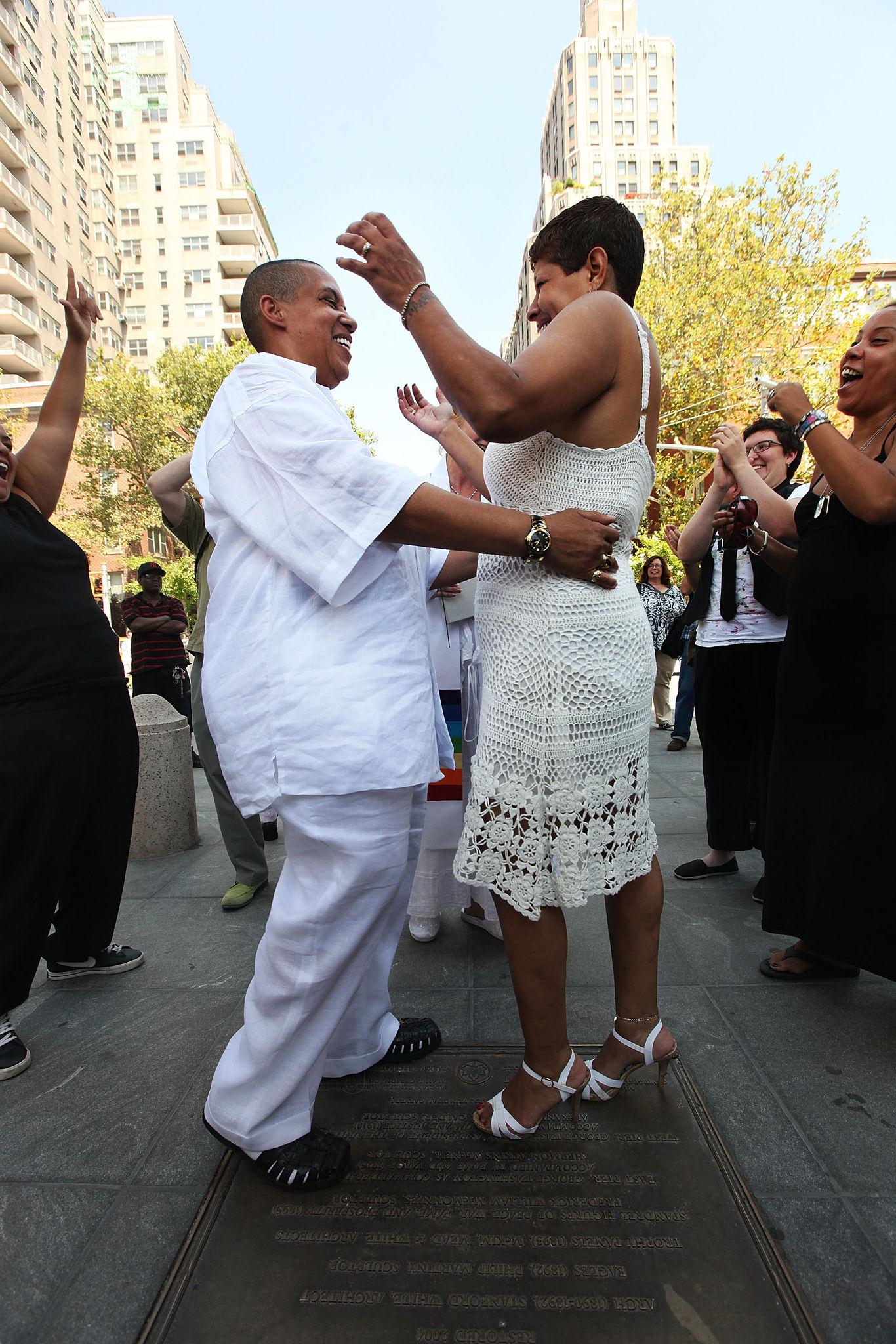
The city became a major center for LGBTQ+ activism, legal challenges, public demonstrations, and eventually marriage celebrations.
The 2011 New York Marriage Equality Act was a major state-level milestone. The Windsor case then demonstrated how federal law could still discriminate against couples whose marriages were recognized by New York.
Finally, Obergefell extended the constitutional right to marry nationwide.
Together, these developments transformed marriage law for millions of Americans.
Frequently Asked Questions
1. When did same-sex marriage become legal in NYC?
Same-sex marriage became legal throughout New York State on July 24, 2011, when the Marriage Equality Act took effect.
2. Did the Supreme Court legalize gay marriage in New York?
No. New York had already legalized same-sex marriage in 2011. The Supreme Court’s Obergefell v. Hodges decision in 2015 required states nationwide to license and recognize same-sex marriages.
3. What did United States v. Windsor change?
The 2013 Windsor decision struck down Section 3 of DOMA, which had prevented the federal government from recognizing legally valid same-sex marriages. The case involved Edith Windsor, whose marriage was recognized by New York.
4. Can same-sex couples legally marry in New York today?
Yes. New York law provides that a valid marriage is recognized regardless of whether the spouses are the same sex or different sexes.
5. Do same-sex married couples have the same rights under New York law?
Yes. New York states that legal status, benefits, protections, rights, and responsibilities relating to marriage should not differ based on whether the spouses are of the same or different sex.
Final Thoughts
The relationship between the Supreme Court and gay marriage in NYC is really a story of several legal milestones.
New York took an important step in 2011 when it enacted the Marriage Equality Act. The Supreme Court’s 2013 Windsor decision then removed a major federal barrier to recognition of same-sex marriages. In 2015, Obergefell v. Hodges established a constitutional right to same-sex marriage throughout the country.
Today, legally married same-sex couples in New York are entitled to equal treatment under the state’s marriage laws. Still, issues involving divorce, estate planning, property, taxes, and family law can become complicated, particularly when a couple has significant assets or legal ties to multiple states.