Can You Sue a Nursing Home for Neglect in the Bronx?
Finding out that a parent, grandparent, or another loved one may have been neglected in a Bronx nursing home can leave a family feeling angry, guilty, and unsure about what to do next. You trusted the facility to provide basic care, supervision, and medical attention. Instead, you may be looking at unexplained injuries, untreated bedsores, medication mistakes, dehydration, weight loss, or repeated falls. At that point, one question naturally comes up: Can You Sue a Nursing Home for Neglect in the Bronx?
In many situations, yes, a nursing home or other responsible party can potentially be held legally responsible when neglect causes harm to a resident. But whether a particular case supports a lawsuit depends on what happened, the evidence available, the type of claim involved, and New York’s legal deadlines.
What Counts as Nursing Home Neglect?
Nursing home neglect does not necessarily mean someone intentionally tried to hurt a resident.
It can involve failing to provide the care that a resident reasonably needs.
Some examples include:
- Failing to provide adequate food or hydration
- Not administering medication properly
- Failing to monitor a resident after a known fall risk
- Leaving a resident without necessary supervision
- Failing to prevent or properly treat pressure sores
- Ignoring signs of infection or illness
- Poor hygiene or toileting care
- Failing to follow a resident’s care plan
- Not responding appropriately to changes in a resident’s condition
- Unsafe or unsanitary living conditions
New York’s Department of Health specifically monitors nursing homes for compliance involving care, resident safety, abuse, neglect, medication-related requirements, privacy, complaints, and other standards.
One bad experience does not automatically prove legal negligence. But a pattern of problems—or a serious injury that could have been prevented—may deserve a much closer look.
When Can a Nursing Home Be Held Responsible?
A nursing home may potentially be responsible when its own actions or failures contribute to a resident’s injury.
For example, imagine an elderly resident who has a documented history of falls. The care plan says the resident needs assistance when getting out of bed. Staff repeatedly leave the resident unattended, and the resident eventually falls and suffers a serious hip fracture.
The important questions would include:
- Did the facility know about the fall risk?
- What did the care plan require?
- Was the required supervision actually provided?
- Were staff properly trained?
- Were staffing levels adequate?
- Was the incident documented?
- Did the facility respond appropriately afterward?
The answers can help determine whether the situation may support a negligence claim.
What Types of Injuries Can Lead to a Lawsuit?
Not every nursing home complaint results in a lawsuit. Generally, there needs to be legally actionable conduct and harm.
Potentially serious situations can include:
Pressure Ulcers and Bedsores
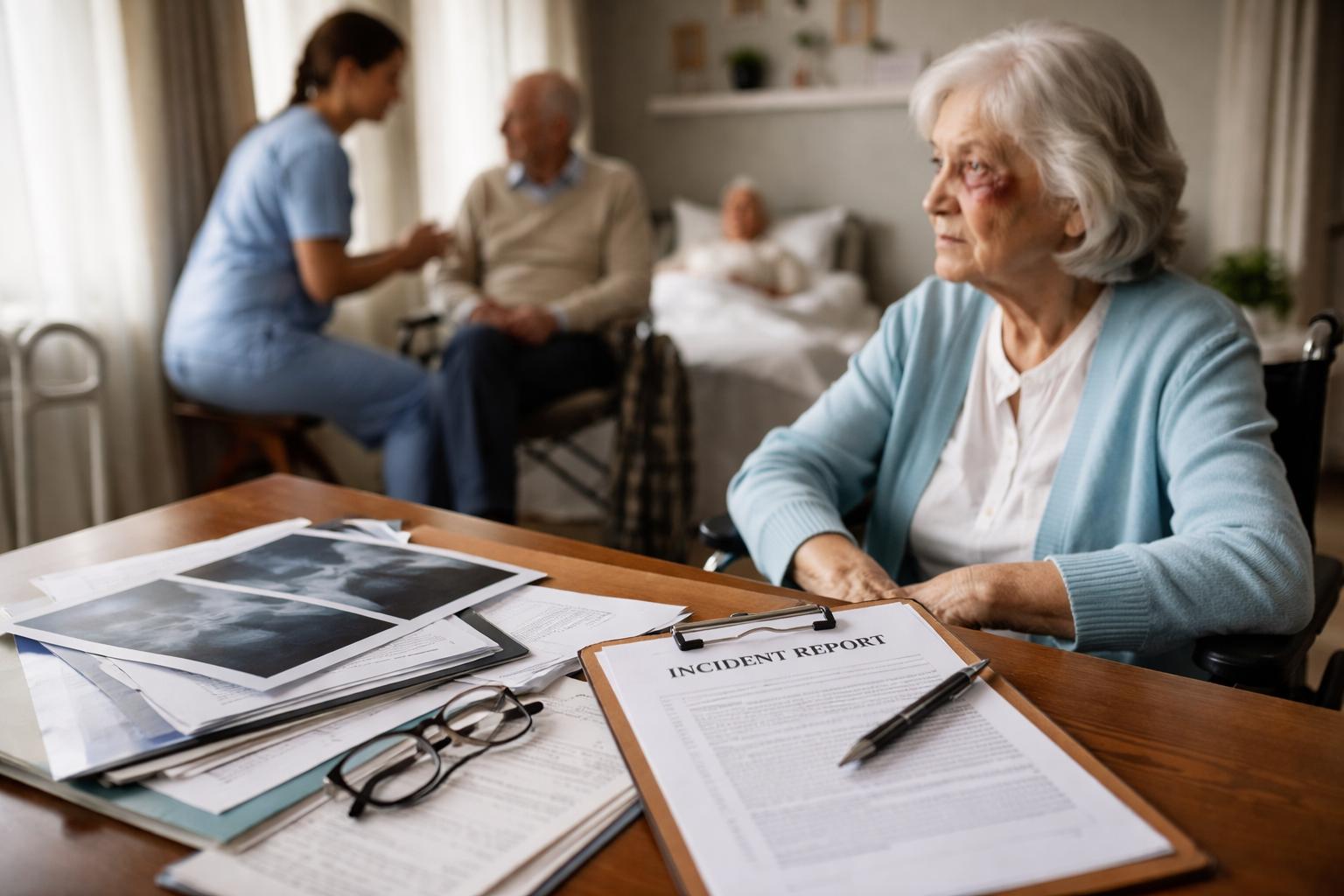
Residents who have limited mobility may be particularly vulnerable to pressure injuries. If staff fail to reposition, monitor, assess, or treat a resident appropriately, a bedsore can become severe.
Falls
Falls are a common concern in nursing facilities, especially when a resident has known mobility or balance problems. A fall itself does not automatically mean negligence, but inadequate precautions may raise legal questions.
Medication Errors
Giving the wrong medication, missing necessary medication, or failing to monitor a resident after a medication-related problem can have serious consequences.
Malnutrition and Dehydration
Significant unexplained weight loss, dehydration, or other nutritional problems may warrant investigation into whether the resident was receiving appropriate food, fluids, and assistance.
Untreated Medical Problems
A resident may develop an infection, wound, illness, or other medical problem that requires attention. If warning signs are repeatedly ignored and the condition becomes significantly worse, the circumstances may support a claim.
What Legal Rights Do Nursing Home Residents Have in New York?
Nursing home residents retain important legal rights.
New York recognizes rights including dignity and respect, quality care, personal decision-making, privacy, protection of property and money, visitors of the resident’s choosing, a complaint procedure, and freedom from physical, verbal, sexual, and mental abuse. Residents also have rights concerning restraints and transfer or discharge.
The state also specifically recognizes a resident’s right to seek damages or other relief when rights to adequate and proper treatment and care have been violated.
So, moving into a nursing home does not mean your loved one gives up their legal protections.
What Evidence Can Help a Nursing Home Neglect Case?
Evidence can make a major difference.
If you suspect your loved one has been neglected, start keeping records as soon as possible.
Useful information may include:
- Medical records
- Nursing notes
- Medication records
- Care plans
- Fall reports
- Photos of injuries
- Hospital records
- Weight records
- Emails with nursing home administrators
- Written complaints
- Names of staff members
- Names of witnesses
- Statements made by your loved one
- Records of previous similar incidents
Try to create a timeline.
For example:
March 5: Family notices new pressure sore.
March 6: Facility notified.
March 8: Resident taken to hospital.
March 10: Hospital documents infection.
March 12: Family requests nursing records.
It may feel like paperwork at the time, but a clear timeline can help an attorney understand what happened.
Should You Report the Nursing Home Before Filing a Lawsuit?
You can report suspected neglect to the New York State Department of Health.
The Department reviews nursing home complaints through its Centralized Complaint Intake Unit. Depending on the circumstances, investigators may interview people, review medical and facility records, and conduct an onsite investigation. If violations are established, the Department can issue citations and require corrective action.
Reporting a problem and pursuing a civil claim are not necessarily alternatives.
A government complaint addresses regulatory concerns, while a civil lawsuit may seek compensation for injuries and other legally recognized losses.
What Damages Could a Nursing Home Neglect Lawsuit Recover?
The potential value of a case depends heavily on the circumstances.
Depending on the claim, damages may potentially include compensation for:
- Medical expenses
- Hospital treatment
- Rehabilitation
- Additional care
- Physical pain and suffering
- Other injury-related losses
- Certain losses associated with a wrongful death
A serious injury may involve considerably greater losses than a relatively minor incident.
For example, the financial and personal consequences of a fractured hip requiring surgery, rehabilitation, and long-term additional care can be very different from a temporary injury.
An attorney would generally review the medical records, circumstances of the incident, and applicable law before estimating what a claim might be worth.
What If the Resident Dies?
If suspected neglect contributes to a resident’s death, the legal situation can become more complicated.
Depending on the circumstances, the estate and eligible family members may have potential claims under New York law.
These cases can involve questions about medical causation, the resident’s condition before the incident, treatment received, and whether the nursing home’s conduct contributed to the death.
If a loved one has died after suspected nursing home neglect, it is particularly important to speak with a qualified New York attorney promptly rather than assuming there is nothing that can be done.
How Long Do You Have to Sue in New York?
This is one area where families need to be careful.
There is not one universal deadline for every nursing home neglect claim. New York’s courts identify a three-year period for ordinary negligence causing personal injury, while medical malpractice claims generally have a two-year-and-six-month limitations period under CPLR 214-a.
Which deadline applies can depend on how the claim is legally characterized and the specific parties and conduct involved.
There can also be exceptions and special rules that affect the calculation.
Because waiting can jeopardize a claim, families should not assume they have plenty of time simply because the neglect was discovered recently.
What If the Nursing Home Is Trying to Discharge Your Loved One?
A suspected neglect case can become even more stressful if the facility suddenly wants to discharge the resident.
New York provides residents with transfer and discharge protections. A nursing home must generally provide written notice explaining the reason for the transfer or discharge, and residents have the right to appeal certain decisions to the New York State Department of Health.
If your family receives a discharge notice, read it carefully and act quickly. A discharge deadline is not something you want to discover after the appeal period has already passed.
What Should You Do If You Suspect Neglect?
Start with your loved one’s immediate safety.
If there is a serious injury or medical emergency, seek appropriate medical care first.
Then consider taking these steps:
1. Document what you observed.
Write down dates, injuries, symptoms, conversations, and names.
2. Request relevant records.
Keep copies of medical and care-related documents.
3. Report serious concerns.
The New York State Department of Health accepts nursing home complaints and investigates alleged violations.
4. Speak with the facility.
Ask specific questions and, when possible, communicate important concerns in writing.
5. Consider speaking with a nursing home neglect attorney.
An attorney can review the evidence and explain whether a civil claim may be available.
Do You Need a Lawyer to Sue a Nursing Home?
You are not necessarily required to hire an attorney to pursue every legal matter, but nursing home neglect cases can become complicated quickly.
The facility may have extensive medical records, insurance representatives, attorneys, administrators, and experts involved.
A lawyer experienced in nursing home negligence can help investigate issues such as:
- Whether the facility violated its own care plan
- Whether staffing or supervision was inadequate
- Whether medical records support the family’s concerns
- Whether the injury was preventable
- Which parties may be legally responsible
- Which statute of limitations applies
- What damages may potentially be recovered
An attorney can also help preserve evidence before records or other information become difficult to obtain.
Frequently Asked Questions
Q1: Can I sue a nursing home in the Bronx for neglect?
A: Potentially, yes. If a nursing home’s negligent conduct or failure to provide appropriate care causes a resident harm, a civil claim may be possible. The specific facts and applicable New York law determine whether the case can move forward.
Q2: What is an example of nursing home neglect?
A: Examples can include failing to provide necessary supervision, ignoring pressure sores, medication errors, inadequate nutrition or hydration, poor hygiene, or failing to respond appropriately to a resident’s worsening medical condition.
Q3: How long do I have to file a nursing home neglect lawsuit in New York?
A: It depends on the legal theory of the claim. New York generally provides three years for ordinary personal-injury negligence, while medical malpractice claims generally have a two-year-and-six-month period. Because the correct deadline can vary, it is important to have the facts reviewed promptly.
Q4: Where can I report suspected nursing home neglect in the Bronx?
A: You can report concerns to the New York State Department of Health. The Department reviews nursing home complaints and may investigate by examining records, interviewing individuals, and conducting onsite investigations when appropriate.
Final Thoughts
If your loved one was neglected in a Bronx nursing home, you do not have to simply accept what happened.
New York law provides nursing home residents with important protections, and the state actively investigates allegations involving abuse, neglect, mistreatment, and regulatory violations.
Whether you have a lawsuit depends on the details. The most important thing is not to wait until every question has been answered before taking action. Make sure your loved one is safe, document what happened, preserve medical records, report serious concerns, and consider speaking with an attorney who handles nursing home neglect cases.
Sometimes the first step toward accountability is simply asking the question: Why did this happen, and could it have been prevented?