Nursing Home Abuse Lawyer NYC: What Families Should Know
When a family places an older loved one in a nursing home, there is usually one basic expectation: they should be safe, treated with dignity, and properly cared for. So when something feels wrong, it can be difficult to know whether it is simply a change in the person’s condition or a sign of something more serious. Speaking with a nursing home abuse lawyer NYC can help a family understand what may have happened, what evidence matters, and what legal options may be available.
New York nursing home residents have specific rights, including the right to dignity, quality care, privacy, and freedom from physical, verbal, sexual, and mental abuse. They also have the right to be free from restraints and to make complaints without fear of retaliation.
What Can Nursing Home Abuse Look Like?
Abuse does not always leave an obvious bruise.
Physical abuse may involve hitting, unnecessary force, inappropriate restraints, or other physical mistreatment. Emotional or verbal abuse can involve threats, humiliation, intimidation, or repeatedly treating a resident in a degrading way. Sexual abuse is another serious concern, particularly when a resident is unable to provide meaningful consent.
There can also be financial exploitation. A resident’s money or personal property may be taken, misused, or handled without proper authorization.
New York’s Department of Health specifically recognizes physical, verbal, sexual, and mental abuse as issues affecting nursing home residents’ rights.
Neglect Can Be Just as Serious
Sometimes the problem is not something a staff member actively did. It may be something that should have been done but was not.
A resident may not receive enough food or fluids. Medications may be improperly administered. A person who needs help moving may be left in the same position for too long. A fall may occur because appropriate supervision was not provided.
New York nursing home standards address areas such as hydration, nutrition, medication administration, pressure-sore prevention and treatment, and adequate supervision to prevent accidents.
That is why families should pay attention to changes that seem difficult to explain.
Warning Signs Families Should Take Seriously
One unexplained incident does not necessarily establish abuse or neglect. But repeated or unexplained changes deserve attention.
Possible warning signs can include:
- Unexplained bruises, cuts, burns, or other injuries
- Frequent falls
- Bedsores or worsening pressure injuries
- Sudden weight loss or dehydration
- Poor hygiene or unchanged clothing
- Medication problems
- Sudden fear around particular staff members
- Unusual withdrawal or personality changes
- Missing money or personal belongings
- Staff members giving inconsistent explanations
- Delays in receiving medical attention
Families should also listen when a resident says something feels wrong. Even if the person has difficulty communicating clearly, changes in behavior or routine can sometimes provide important clues.
What Should You Do If You Suspect Abuse?
The first priority is the resident’s immediate safety and medical needs. If someone has suffered an emergency injury, medical attention should come before worrying about the legal side of the situation.
Afterward, start keeping records.
Write down dates, names, conversations, injuries, changes in condition, and explanations provided by the facility. Keep photographs when appropriate and preserve relevant messages, letters, bills, medical records, and other documents.
New York’s Department of Health investigates complaints involving abuse, neglect, mistreatment, and certain regulatory violations in nursing homes. The New York Attorney General’s Medicaid Fraud Control Unit also investigates allegations involving patient abuse or neglect and certain other violations in nursing homes and assisted living facilities.
Families therefore do not necessarily have to choose between reporting a concern and speaking with a lawyer. Depending on the circumstances, both may be appropriate.
When Should You Contact a Nursing Home Abuse Lawyer?
You do not necessarily need to wait until you know exactly what happened.
A lawyer may be able to review the circumstances, explain what information could be important, and help determine whether the situation may support a legal claim. This can be especially important when the resident suffered a significant injury, hospitalization, worsening medical condition, emotional harm, or death.
It can also be useful when the nursing home disputes the family’s concerns or provides an explanation that does not seem consistent with the available evidence.
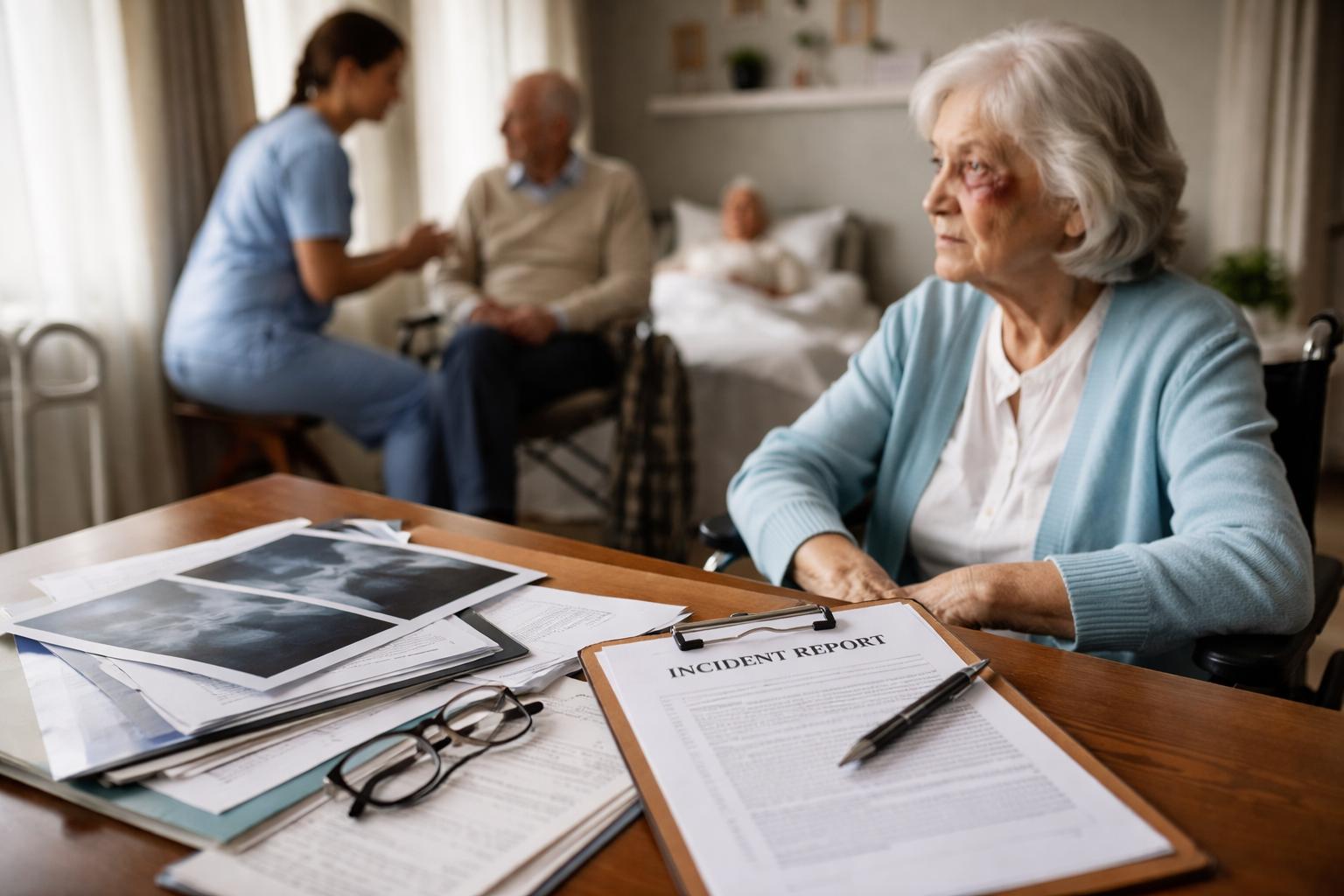
A lawyer may investigate medical records, incident reports, staffing information, photographs, witness statements, and other evidence depending on the circumstances.
What Can a Nursing Home Abuse Claim Involve?
The legal issues can vary considerably from one case to another. A claim might involve negligent care, abuse, inadequate supervision, medication errors, unsafe conditions, or other forms of mistreatment.
The potential damages will also depend on the facts. They may include medical expenses and other losses connected to the harm suffered. In particularly serious cases, the legal issues may extend to wrongful death.
That is why families should avoid assuming that every nursing home injury has the same legal solution. A consultation with an attorney who handles these types of cases can help clarify the situation.
Families Should Not Ignore Their Concerns
It is understandable for families to hesitate before accusing a nursing home of wrongdoing. Sometimes a resident’s health can change quickly, and not every injury is caused by neglect or abuse.
Still, families should not feel that they have to ignore their concerns simply because they cannot immediately prove what happened.
New York gives nursing home residents a right to an accessible complaint process and protection from abuse and retaliation. Keeping careful records and asking questions can help families get a clearer picture of what is happening.
4 FAQs About Nursing Home Abuse in NYC
1. What are common signs of nursing home abuse?
Unexplained injuries, repeated falls, sudden behavioral changes, poor hygiene, medication problems, dehydration, malnutrition, unexplained financial losses, and fear around certain caregivers can all warrant closer attention.
2. Should I report suspected nursing home abuse in New York?
If you suspect abuse, neglect, or mistreatment, reporting may be appropriate. The New York State Department of Health investigates nursing home complaints, while the Attorney General’s Medicaid Fraud Control Unit investigates certain allegations involving patient abuse, neglect, and related violations.
3. What evidence can help a nursing home abuse case?
Depending on the situation, useful evidence may include medical records, photographs, incident reports, facility communications, medication records, witness statements, financial records, and notes documenting when and how the problem occurred.
4. How can a nursing home abuse lawyer help?
An attorney can review the circumstances, identify potential legal claims, help preserve and investigate evidence, communicate with the facility or insurers, and explain the potential legal remedies available based on the facts.
Final Thoughts
Finding out that a loved one may have been abused or neglected in a nursing home can be extremely upsetting. Families may feel angry, guilty, or unsure about what to do next. The important thing is not to dismiss changes that do not make sense.
Document what you see, make sure your loved one receives appropriate medical attention, report serious concerns through the proper channels, and consider speaking with an experienced attorney when the situation may involve significant harm. New York law gives nursing home residents important protections, and families have options when those protections may have been violated.