When a parent or loved one moves into a nursing home, the hope is simple: they should be safe, cared for, and treated with dignity. Families often trust the facility and its staff to handle things they cannot manage at home. That is why noticing possible Bronx nursing home abuse can be especially upsetting.
Sometimes the warning signs are obvious, such as an unexplained injury. Other times, they are much quieter—a loved one becoming withdrawn, suddenly afraid of a caregiver, losing weight, or repeatedly complaining that no one listens to them.
One sign does not automatically prove abuse. Older adults may have medical conditions, mobility problems, or other reasons for bruising or behavioral changes. But when something doesn’t seem right, families should pay attention.
What Is Nursing Home Abuse?
Nursing home abuse can take different forms. It isn’t limited to physical violence.
New York recognizes residents’ rights to be free from physical, mental, verbal, and sexual abuse, as well as financial exploitation and inappropriate restraints. Residents also have rights involving dignity, privacy, quality care, and personal choices.
Abuse may include:
- Physical abuse
- Emotional or psychological abuse
- Verbal abuse
- Sexual abuse
- Financial exploitation
- Improper use of restraints
Neglect is another serious concern. It can involve failing to provide appropriate care, supervision, nutrition, hydration, medication, hygiene, or treatment.
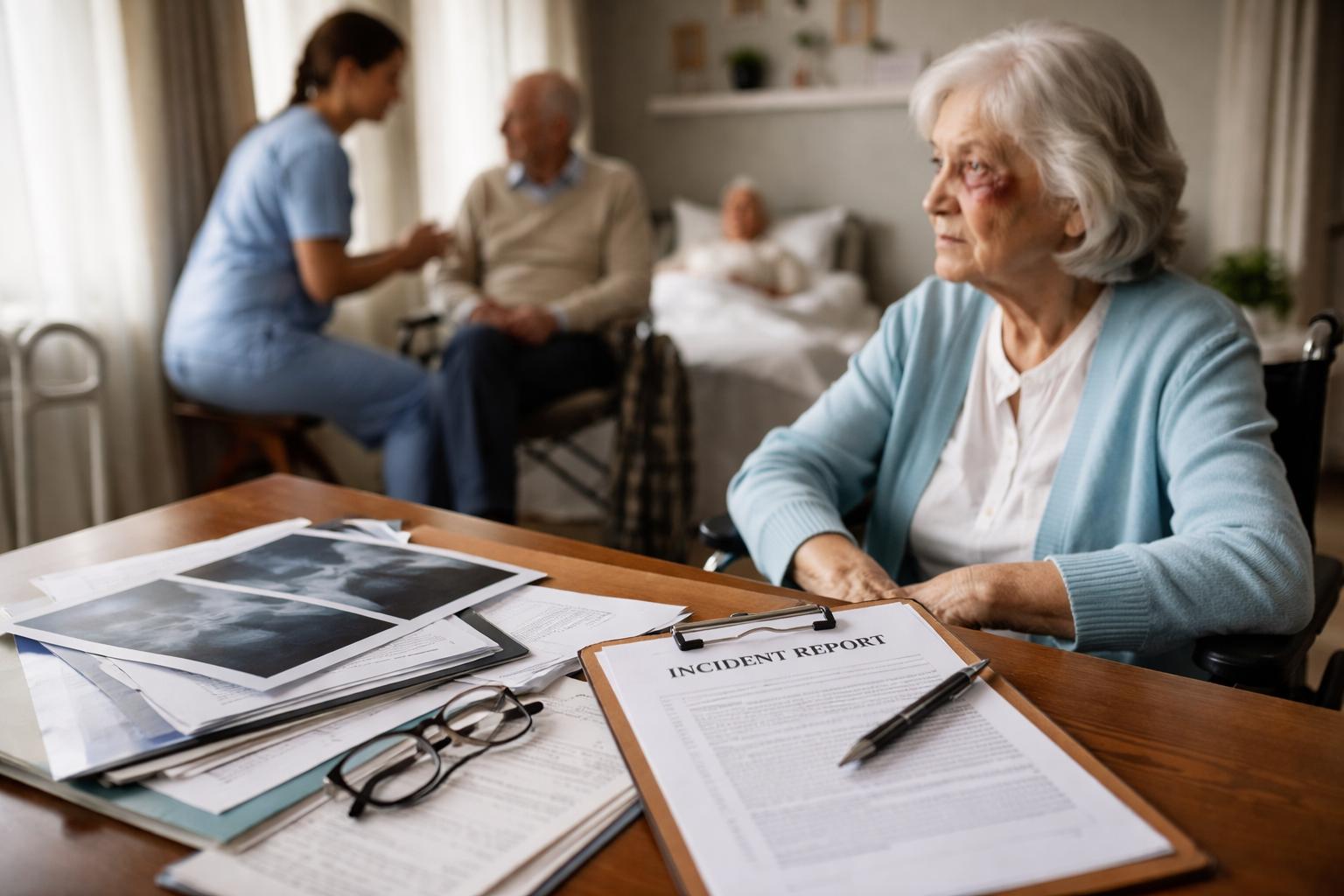
Unexplained Bruises or Injuries
A bruise doesn’t automatically mean someone has been abused.
Older adults can bruise easily, particularly if they take certain medications or have medical conditions. But families should ask questions when injuries are unexplained, happen repeatedly, or don’t match the explanation provided.
Pay attention to:
- Unexplained bruises
- Cuts or scratches
- Burns
- Broken bones
- Repeated falls
- Injuries appearing at different times
- Delays in receiving medical treatment
Ask when the injury happened, how it happened, and who was present.
If the explanation keeps changing, that’s something worth documenting.
Sudden Changes in Personality
Sometimes the biggest warning sign isn’t physical.
A loved one who used to enjoy family visits may suddenly become quiet or anxious. They might stop talking about their day or seem frightened when a particular staff member enters the room.
Possible changes include:
- Unusual anxiety
- Depression
- Withdrawal
- Fearfulness
- Agitation
- Changes in sleeping patterns
- Refusing to participate in activities
- Becoming unusually quiet
Of course, these symptoms can also be caused by dementia, illness, medication changes, pain, or the stress of moving into a nursing home.
The important thing is to notice a pattern or unexplained change.
Poor Hygiene Can Be a Warning Sign
A resident who regularly appears unwashed, wears dirty clothing, has untreated wounds, or isn’t receiving appropriate assistance may not be getting the care they need.
Families can look for:
- Unwashed hair or body
- Dirty clothing or bedding
- Untreated wounds
- Poor oral hygiene
- Strong odors
- Unchanged adult briefs
- Pressure injuries
Occasional problems can happen in busy care environments. Repeated problems that aren’t corrected deserve more attention.
Weight Loss or Dehydration
Unexpected weight loss can have many medical causes, but it can also raise questions about nutrition and hydration.
Ask:
Is the resident receiving meals regularly?
Can they eat independently?
Do they need help feeding themselves?
Are dietary restrictions being followed?
Is someone monitoring their fluid intake when necessary?
New York nursing-home regulations address areas including nutrition, hydration, pressure-sore prevention, medication administration, supervision, and accident prevention.
Medication Problems
Medication mistakes can be particularly serious for older residents.
Families may notice that a loved one’s medication has suddenly changed or that the person seems unusually sleepy, confused, or unwell.
Ask the care team:
- What medications is the resident currently taking?
- Has anything recently changed?
- Why was the medication changed?
- Who administers the medication?
- What happens when a dose is missed?
If something doesn’t make sense, ask for an explanation.
Fear of a Particular Caregiver
This can be difficult to interpret, especially when a resident has dementia or communication problems.
But if a loved one consistently becomes frightened, distressed, or unusually quiet around a particular employee, don’t simply dismiss it.
Ask the resident privately, if possible, whether something is bothering them.
You can also document what you’ve observed and raise the concern with the appropriate supervisor or administrator.
Financial Exploitation Is Abuse Too
Not all nursing home abuse leaves a physical mark.
Financial exploitation can involve unauthorized use of a resident’s money, property, credit cards, or financial information.
Watch for:
- Missing cash
- Missing personal belongings
- Unexplained purchases
- Unusual withdrawals
- Changes to financial documents
- Pressure to give money or possessions to someone
New York protects nursing-home residents from financial exploitation and provides rights concerning their personal property and money.
What Should Families Do If They Suspect Abuse?
Start documenting what you see.
Write down:
- The date and time
- What happened
- Who was involved
- What the resident said
- Any visible injuries
- Who you notified
- What response you received
Photographs can also be useful when appropriate.
Try to keep records factual. Instead of writing, “The caregiver abused my mother,” write what you actually observed: “I noticed a bruise on her left arm during my visit on Tuesday, and she said she did not know how it happened.”
That kind of record can be much more useful later.
Speak With the Nursing Home
For a non-emergency concern, families can contact the nurse, social worker, administrator, or another appropriate person at the facility.
Ask for an explanation and what steps will be taken.
If the problem continues or the response isn’t satisfactory, families can consider contacting the New York State Department of Health, which investigates complaints involving nursing homes and regulatory issues. The state’s Nursing Home Complaint Hotline is 1-888-201-4563 and is available 24 hours a day, seven days a week.
New York’s Long Term Care Ombudsman Program can also advocate for nursing-home residents and assist with complaints and resident-rights concerns.
If someone is in immediate danger or needs urgent medical care, seek emergency assistance immediately.
Residents Have Rights
A nursing-home resident doesn’t lose their rights simply because they need help with everyday activities.
New York residents have rights to:
- Dignity and respect
- Quality care
- Privacy
- Participate in decisions about their care
- Receive visitors of their choosing
- Raise complaints
- Keep personal possessions
- Be free from abuse
- Be free from inappropriate restraints
- Receive information about their care
That is important for families to remember.
Speaking up about poor treatment isn’t being difficult. It is part of protecting someone who may not be able to advocate for themselves.
Frequently Asked Questions
What are common signs of nursing home abuse?
Unexplained injuries, sudden behavioral changes, fear of particular caregivers, poor hygiene, unexplained weight loss, medication problems, missing belongings, and untreated medical issues can all be warning signs that deserve investigation.
Does an unexplained bruise prove nursing home abuse?
No. Bruising can have many causes. However, repeated unexplained injuries or inconsistent explanations should not simply be ignored.
Where can I report suspected nursing home abuse in the Bronx?
Families can contact the New York State Department of Health’s Nursing Home Complaint Hotline at 1-888-201-4563. The Long Term Care Ombudsman Program is another resource for resident advocacy.
Can nursing home residents complain about their treatment?
Yes. New York residents have the right to raise complaints and exercise their rights without retaliation.
Final Thoughts
Concerns about Bronx nursing home abuse shouldn’t be ignored, but families also don’t need to jump to conclusions based on one isolated incident.
Look for patterns. Ask questions. Talk privately with your loved one when possible. Document what you observe and follow up when an explanation doesn’t make sense.
Most importantly, remember that nursing-home residents have rights. They deserve to be treated with dignity, patience, respect, and appropriate care every day—not just when family members are visiting.