Buffalo Employment Laws Every Worker Should Know
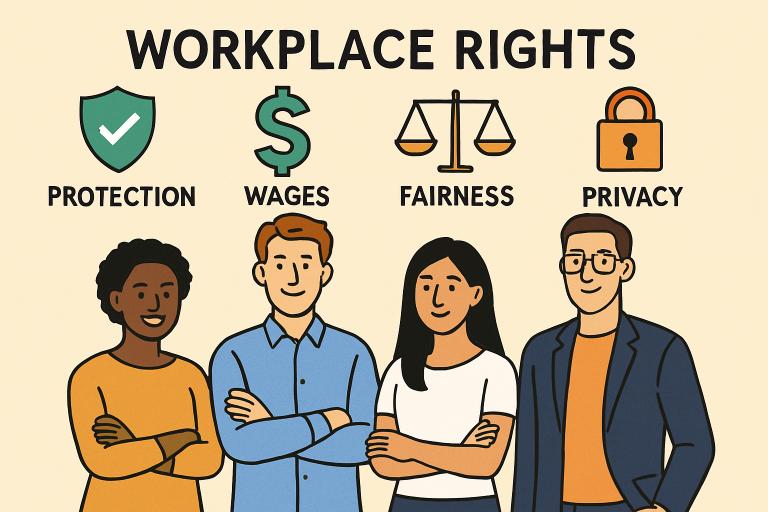
Going to work should not mean giving up your basic rights. Whether you work in an office downtown, at a restaurant, on a construction site, or for a small business in the Buffalo area, New York employment laws provide important protections for workers. Understanding Buffalo employment laws can be especially helpful when something feels wrong at work—like missing overtime pay, unfair treatment, retaliation, or being told you cannot take legally protected leave.
The tricky part is that employment law is not just one rule. Different laws can apply depending on your job, employer, hours, wages, and what happened.
Know What You Should Be Paid
Pay is one of the most common workplace concerns.
New York has minimum-wage requirements, and the rate depends on where you work and, in some situations, the type of work you perform. For 2026, the general minimum wage for the remainder of New York State, which includes Buffalo, is $16 per hour. Certain industries and tipped positions have different rules.
But minimum wage is only part of the issue.
Workers may also have questions about:
- Unpaid wages
- Overtime
- Illegal deductions
- Missing paychecks
- Paystub requirements
- Tip credits
- Working before or after scheduled hours
For many nonexempt workers, New York requires overtime at one-and-a-half times the regular rate after more than 40 hours in a workweek. There are exceptions and special rules, so simply being paid a salary does not automatically answer the overtime question.
If you regularly stay late, answer work messages after your shift, or work through tasks before clocking in, it can be worth keeping your own record of those hours.
Your Employer Cannot Simply Retaliate Against You
Sometimes workers are less worried about the original problem than what might happen after they complain about it.
New York law protects workers from retaliation for certain protected complaints and activities. For example, the New York Department of Labor states that employers cannot retaliate against employees who report labor-law violations.
Retaliation can take different forms. It might involve termination, reduced hours, disciplinary action, threats, or other unfavorable treatment, depending on the circumstances.
That does not mean every unpleasant workplace decision is automatically illegal retaliation. The timing, reason given by the employer, documentation, and surrounding facts can matter.
Workplace Discrimination Is a Serious Issue
Federal and New York laws protect workers from certain forms of employment discrimination.
Depending on the circumstances, unlawful discrimination may involve characteristics such as race, color, religion, sex, pregnancy, sexual orientation, gender identity, disability, age, national origin, or other legally protected categories.
A worker might notice a pattern rather than one obvious incident. Maybe someone with similar qualifications repeatedly receives opportunities while you are passed over, or comments about a protected characteristic become part of the workplace.
One incident may not always establish a legal claim, but it should not necessarily be ignored either.
Keeping emails, messages, performance reviews, schedules, and other relevant records can help preserve a clear timeline of what happened.
You May Have Rights to Protected Leave
New York workers may have access to different types of legally protected leave depending on their circumstances.
State law provides protections involving areas such as paid sick leave and Paid Family Leave. New York also prohibits employers from retaliating against employees for using certain legally protected absences.
The details matter because eligibility, amount of leave, notice requirements, and job protections can vary.
If you are being pressured not to take protected leave, disciplined immediately after requesting it, or told that you will lose your job for exercising a legal right, consider getting legal advice rather than assuming you have no options.
Workers Also Have Wage and Hour Protections
Sometimes a paycheck looks correct until you actually break down the hours.
For example, imagine a Buffalo employee who is scheduled for 40 hours but regularly works an additional two or three hours every week finishing reports. If those hours qualify as compensable work and the employee is not exempt, there may be an overtime issue.
Other wage-and-hour problems can involve unpaid training time, improper deductions, meal-period issues, or employees being incorrectly classified as exempt.
The New York Department of Labor investigates complaints involving minimum wage, unpaid wages, hours of work, and other labor-law violations.
Being Called an “Independent Contractor” Does Not End the Question
Some workers are told they are independent contractors when they start a job. But the label alone does not necessarily determine their legal status.
Worker classification can affect wage protections, taxes, workers’ compensation, and other rights.
New York’s Workers’ Compensation Board specifically provides guidance for determining who may be considered an employee and who may be an independent contractor.
If a company controls when, where, and how you work but calls you a contractor, it may be worth asking an employment attorney whether the classification is legally appropriate.
What If You Are Injured at Work?
Employment law can overlap with workers’ compensation law when someone is injured or becomes ill because of their job.
New York workers’ compensation generally provides medical care and cash benefits for covered work-related injuries and illnesses. The system generally does not depend on proving that the employer was at fault.
Most New York employers with employees are required to carry workers’ compensation coverage, subject to specific exceptions.
An important point is that workers’ compensation is its own system. A workplace injury does not automatically become a traditional personal injury lawsuit against the employer.
Keep Records When Something Feels Wrong
You do not need to become your own lawyer, but keeping organized records can make a major difference.
Save relevant:
- Paystubs
- Work schedules
- Emails and text messages
- Employment agreements
- Performance reviews
- Written complaints
- Disciplinary notices
- Medical records related to workplace issues
- Notes about important conversations
Write down dates while they are still fresh. A quick note saying, “Supervisor told me this after I complained about unpaid overtime,” can be much more useful months later than trying to reconstruct the conversation from memory.
When Should a Buffalo Worker Talk to an Employment Lawyer?
You do not necessarily need an attorney for every workplace disagreement. But legal advice may be worth considering if the situation involves significant unpaid wages, termination, discrimination, harassment, retaliation, a serious employment contract dispute, protected leave, whistleblowing, or another issue that could affect your job or finances.
The sooner you understand your options, the easier it may be to make an informed decision.
It is also important not to assume that waiting is harmless. Employment claims can have deadlines, and the appropriate deadline can depend on the specific legal theory and where a claim is filed.
4 FAQs About Buffalo Employment Laws
1. What is the minimum wage in Buffalo in 2026?
For most workers in Buffalo and the rest of New York State outside New York City, Long Island, and Westchester, the general minimum wage is $16 per hour as of January 1, 2026. Some occupations have different rates or rules.
2. Can my employer fire me for complaining about unpaid wages?
Retaliation for reporting certain labor-law violations is prohibited under New York law. Whether a particular termination is unlawful depends on the facts, including what you reported and why the employer took the action.
3. Do salaried employees automatically lose the right to overtime?
No. Being paid a salary does not by itself answer whether someone is exempt from overtime. Job duties, salary level, and applicable federal and New York rules can matter.
4. What should I do if I think my workplace rights were violated?
Keep relevant records, avoid deleting messages or documents, and consider speaking with an employment lawyer or contacting the appropriate New York agency. The right next step depends on whether the issue involves wages, discrimination, retaliation, leave, workers’ compensation, or another area of employment law.
Final Thoughts
Knowing your workplace rights does not mean assuming your employer has done something illegal every time there is a disagreement. It means knowing when something deserves a closer look.
If your paycheck does not add up, you are being treated differently after making a protected complaint, you are dealing with discrimination or harassment, or your employer is refusing to recognize a workplace right, getting reliable information early can help you decide what to do next.
For Buffalo workers, understanding the basics of New York employment law is a good starting point—but the details of your particular job and situation can make all the difference.