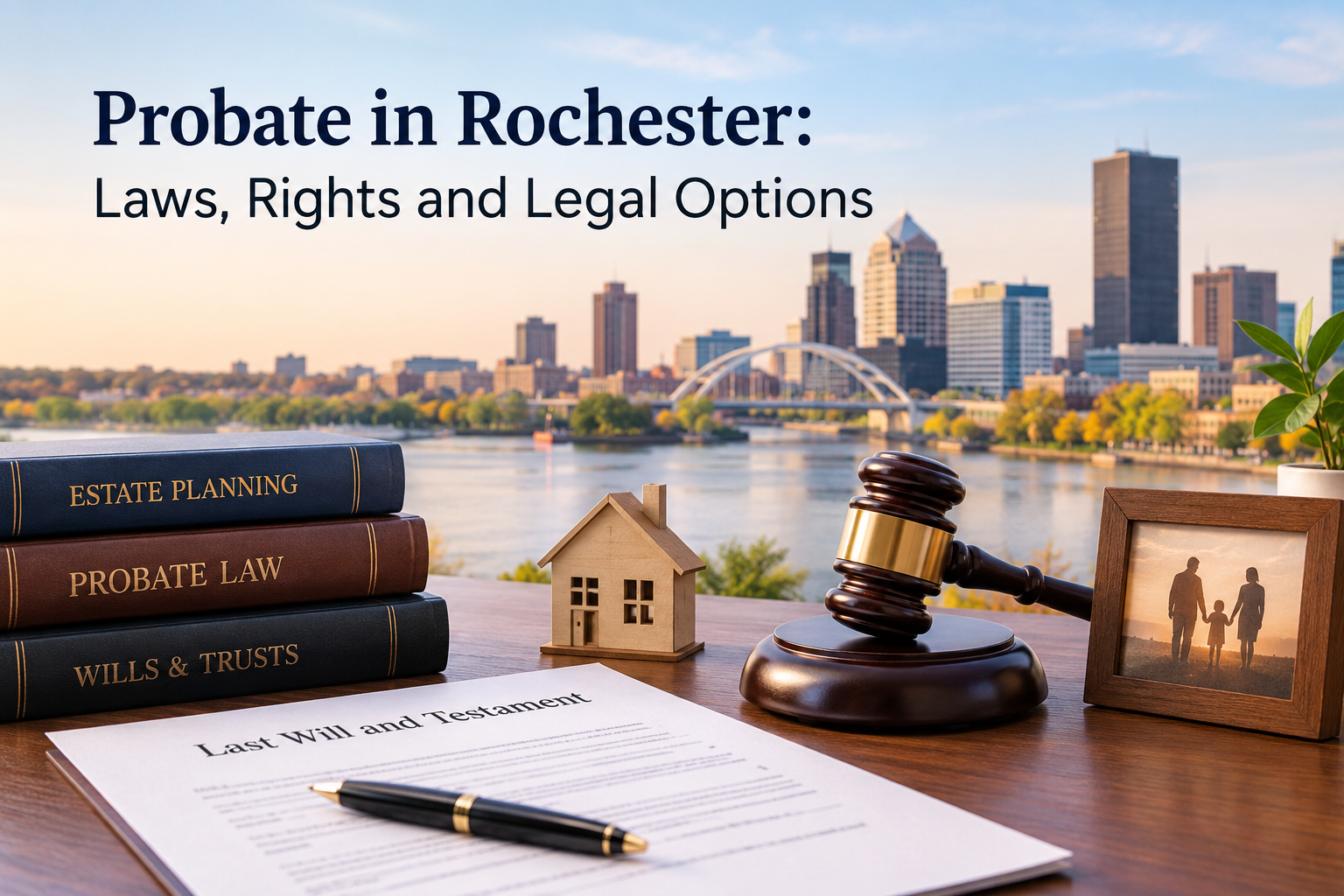
Estate Planning in Buffalo: Laws, Rights and Legal Options
Estate planning is one of those things many people put off because it feels like something to deal with “later.” But life does not always follow a convenient schedule. Whether you own a home in Buffalo, have children, have retirement accounts, or simply want someone you trust to handle your affairs if you cannot, having a plan can make difficult situations easier for your family. Understanding estate planning in Buffalo means looking at more than just a will. New York residents have several legal tools available for managing property, finances, health care decisions, and what happens after death.
What Does an Estate Plan Include?
An estate plan can be as simple or as detailed as your circumstances require. A will is often an important starting point, but it is only one part of the picture.
Depending on your situation, an estate plan may include a will, trusts, a power of attorney, a health care proxy, and written instructions about your medical wishes. The goal is to make your intentions clearer and reduce uncertainty for the people who may eventually have to make decisions on your behalf.
For example, a Buffalo homeowner may want to specify who should receive the home, while a parent may want to name who should care for minor children. Someone with substantial financial assets may need to consider trusts or tax planning as well.
New York Wills and Your Property
A will allows you to state how certain property should be distributed after your death. It can also address other important matters, such as naming an executor to handle the estate.
Without an appropriate estate plan, property may have to pass through New York’s probate process, and disagreements among family members can sometimes make the process more complicated.
A will does not necessarily control every asset you own. Certain assets may pass through beneficiary designations or other arrangements. Retirement accounts and some jointly owned property, for example, can operate differently from assets passing under a will.
That is why simply writing down who gets “everything” may not be enough for every family.
Trusts May Be Useful in Some Situations
A trust can provide another way to manage property. The person creating the trust establishes the terms, and a trustee manages the assets according to those terms.
Trust planning can become particularly relevant when someone wants to control how and when beneficiaries receive assets, provide for a family member who needs ongoing support, or plan around particular financial or tax circumstances.
A trust is not automatically necessary for everyone. Whether one makes sense depends on the person’s assets, family circumstances, goals, and the type of trust being considered.
Power of Attorney in New York
Estate planning is not only about what happens after death. What happens if you are alive but temporarily or permanently unable to manage your financial affairs?
New York allows a person to use a power of attorney to appoint an agent to act on their behalf for financial and other non-health-care matters. Depending on how it is drafted, the authority can cover areas such as banking, real estate, investments, taxes, and legal matters.
This can be particularly important if an unexpected accident or serious illness leaves someone unable to handle everyday financial responsibilities.
The person giving the authority should understand exactly what powers are being granted and who will have them.
Health Care Proxy and Medical Wishes
A health care proxy serves a different purpose from a financial power of attorney.
Under New York law, a competent adult can appoint a health care agent to make medical decisions if the person becomes unable to make those decisions themselves. The New York Attorney General explains that a health care proxy can help ensure that treatment decisions reflect the person’s wishes and values.
You can also discuss your preferences with your health care agent and put specific instructions in writing. New York recognizes living wills as another way to document health care wishes, although the state does not have a specific statute governing living wills.
This distinction matters. A financial power of attorney does not simply replace a health care proxy.
What About New York Estate Taxes?
Estate taxes can become an important consideration for families with substantial assets.
For people dying during 2026, New York’s basic estate-tax exclusion amount is $7.35 million. New York’s Department of Taxation and Finance explains that estate-tax filing requirements can depend on the value of the federal gross estate, includible gifts, residency, and whether New York property is involved.
That does not mean every estate valued above the threshold will automatically owe the same amount of tax. Estate-tax calculations can be complicated, particularly when gifts, trusts, marital interests, and property in different states are involved.
For larger Buffalo-area estates, discussing these issues with an estate-planning attorney and tax professional can be worthwhile.
Who Should Consider Estate Planning?
Estate planning is not limited to wealthy families or retirees.
A younger parent may want to address guardianship and financial arrangements for children. A homeowner may want to make property transfer easier. A business owner may need a succession plan. Someone without children may still want to make sure assets go to particular relatives, friends, or organizations.
Even people with modest assets can benefit from having their wishes documented.
The New York Attorney General also notes that advance-care planning is relevant to adults generally, not only people who are elderly or seriously ill.
When Should You Review Your Estate Plan?
Creating an estate plan once does not necessarily mean you can forget about it.
Marriage, divorce, the birth of a child, a death in the family, a major change in finances, purchasing property, selling a business, or moving to another state can all be reasons to review your documents.
Beneficiary designations should also be checked periodically. It is possible for an old beneficiary designation to remain in place even after a person’s circumstances have changed.
A review can help make sure the different pieces of the plan still work together.
4 FAQs About Estate Planning in Buffalo
1. Do I need a lawyer to create an estate plan in Buffalo?
Not every estate-planning document legally requires an attorney, but professional advice can be helpful when your situation involves real estate, trusts, business interests, substantial assets, blended families, or tax considerations.
2. Is a will enough for estate planning in New York?
Not necessarily. A will addresses certain matters after death, while documents such as a power of attorney and health care proxy can address financial and medical decisions during your lifetime.
3. What is the difference between a power of attorney and a health care proxy?
A power of attorney generally deals with financial and other legal matters, while a health care proxy allows you to appoint someone to make health care decisions when you are unable to make them yourself.
4. How often should I update my estate plan?
There is no single schedule that works for everyone. It is sensible to review your plan after major life changes and periodically to make sure beneficiaries, agents, property information, and other instructions still reflect your wishes.
Final Thoughts
Estate planning in Buffalo is really about making decisions before someone else has to make them for you. A will can address the distribution of property, while powers of attorney and health care directives can help cover situations where you are still alive but cannot manage your own affairs.
You do not have to predict everything that could happen. The important part is creating a plan that reflects your family, property, finances, and personal wishes under New York law—and reviewing it when those circumstances change.