New York Asylum Laws and Legal Protections for Immigrants
Seeking asylum in New York can be a complicated process. Many people arrive in the state after experiencing violence, persecution, or serious threats in their home countries and may not know where to begin. Others may already be dealing with immigration court while trying to work, find housing, or take care of their families.
One important point is that asylum law is primarily federal law, not New York State law. The federal government determines asylum eligibility and processes asylum applications. However, New York provides important legal services, worker protections, housing protections, and other resources that can help immigrants and asylum seekers.
In 2026, staying current is especially important because immigration policies and procedures continue to change.
What Is Asylum?
Asylum is a form of protection available to people who are already in the United States or arriving at a U.S. port of entry and who meet the legal requirements.
Generally, an applicant must show that they have suffered persecution or have a well-founded fear of persecution because of a protected ground, such as:
- Race
- Religion
- Nationality
- Political opinion
- Membership in a particular social group
Simply coming from a country with difficult economic conditions does not automatically qualify someone for asylum. Each case depends on the person’s individual circumstances and evidence.
The One-Year Filing Rule Matters
One of the most important deadlines for asylum applicants is the general one-year filing deadline.
In many situations, a person must file Form I-589 within one year after their most recent arrival in the United States. There are exceptions to this rule, but they can be complicated and depend on the circumstances.
This is one reason it can be risky to wait simply because you aren’t sure whether your case qualifies.
If you believe you may qualify for asylum, consider speaking with an immigration attorney or an authorized legal representative as soon as possible.
Asylum Can Be Affirmative or Defensive
There are two common ways an asylum case can proceed.
An affirmative asylum application is generally filed with U.S. Citizenship and Immigration Services (USCIS) when the person is not currently in removal proceedings.
A defensive asylum application is generally made as a defense against removal in immigration court.
The procedures and risks can be different depending on which process applies.
If you have already received immigration court paperwork, don’t assume you can simply follow the same process as someone filing an affirmative asylum application.
Work Authorization Is Not Automatic
Filing an asylum application does not automatically give an applicant permission to work.
USCIS explains that an asylum applicant may generally request employment authorization after the required waiting period. Under the current rules, an applicant may generally file Form I-765 after 150 days, and eligibility for the employment authorization document generally begins after the asylum application has been pending for 180 days. Certain applicant-caused delays can affect the calculation.
That distinction is important.
Submitting an asylum application and receiving a work permit are two different things.
Keep Track of Your Asylum EAD Clock
The asylum employment authorization clock can be particularly important for people waiting for permission to work.
USCIS explains that the 180-day clock can stop when an applicant requests or causes certain delays in the case. Missing an interview, requesting certain rescheduling actions, or failing to respond to required requests can potentially affect the clock.
If you believe USCIS has incorrectly calculated your clock, there are procedures for requesting correction in appropriate circumstances.
What Happens If You Are Called for an Interview?
USCIS may schedule an affirmative asylum applicant for an interview.
The applicant should carefully read the appointment notice and follow the instructions. If there is an emergency or another serious reason you cannot attend, follow the procedures provided by USCIS rather than simply missing the appointment.
USCIS also provides accommodations for qualified individuals with disabilities.
Starting May 18, 2026, USCIS also changed rules concerning attorney and accredited representative participation in certain asylum-office interviews, generally requiring legal representatives to be physically present except in limited circumstances.
Immigration Court Deadlines Should Never Be Ignored
Some asylum seekers are placed into removal proceedings.
If that happens, immigration court paperwork can contain extremely important deadlines and hearing dates.
Missing a hearing can have serious consequences. If you receive a Notice to Appear or another immigration court document, consider getting legal advice immediately.
Don’t assume that because you have submitted an asylum application, you can ignore a separate immigration court notice.
New York Provides Immigration Legal Assistance
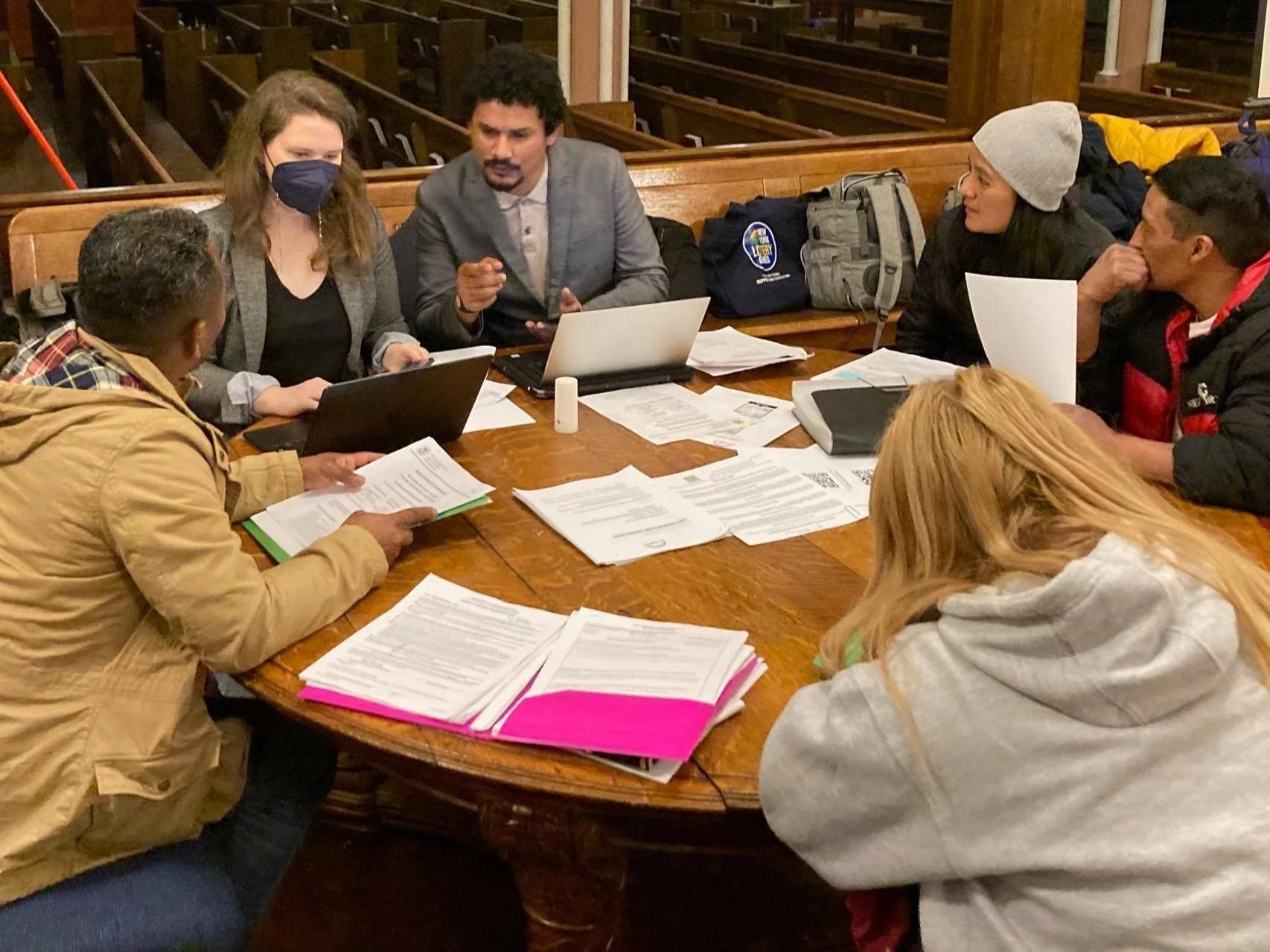
New York City has several programs designed to connect immigrants with legal services.
The city supports free and confidential immigration legal services through nonprofit organizations. New Yorkers can call the MOIA Immigration Legal Support Hotline at 800-354-0365 or call 311 and say “Immigration Legal” to get information about available assistance.
New York City has also created the Asylum Seeker Legal Assistance Network (ASLAN) to expand legal assistance for newly arrived asylum seekers.
These resources can be especially useful for people who cannot afford a private immigration attorney.
Be Careful About Immigration Scams
Asylum seekers can be particularly vulnerable to scams because the process is complicated and often stressful.
Be careful if someone promises that they can guarantee asylum, a green card, or immediate work authorization.
Also be cautious about people who ask you to sign blank immigration forms or submit documents you don’t understand.
Before paying someone for immigration assistance, find out whether they are a licensed attorney or an authorized representative who is legally permitted to provide immigration services.
Asylum Seekers Still Have Workplace Rights
Being an asylum seeker doesn’t mean an employer can ignore workplace laws.
Immigrant workers may have rights concerning wages, workplace safety, discrimination, and other employment issues.
If an employer threatens someone with immigration consequences because they complained about unpaid wages or workplace conditions, the situation may deserve legal attention.
Don’t assume that having an immigration case means you have no employment protections.
Housing Problems Can Also Affect Asylum Seekers
Finding stable housing can be difficult for newly arrived immigrants.
New York has laws addressing housing discrimination and landlord-tenant issues. Immigration-related circumstances can also create additional challenges for people who are new to the state.
If you are facing an eviction, discrimination, unsafe housing conditions, or another serious housing problem, consider getting advice from a qualified housing or immigration legal provider.
Keep Your Documents Organized
Asylum cases can involve a lot of paperwork.
Keep copies of:
- Form I-589
- USCIS receipt notices
- Interview notices
- Employment authorization documents
- Passport or identity documents
- Immigration court paperwork
- Birth certificates
- Marriage certificates
- Evidence supporting your asylum claim
- Attorney correspondence
- Previous immigration applications
It can also help to keep a written timeline of important events in your case.
If your attorney asks when something happened six months earlier, having it written down can save a lot of confusion.
Evidence Can Be Important
Asylum cases are often based on personal experiences, but supporting evidence can also be important.
Depending on the case, evidence might include:
- Police reports
- Medical records
- News reports
- Photos
- Messages or emails
- Membership records
- Witness statements
- Country-condition information
- Documentation of threats or attacks
Not every applicant will have the same type of evidence.
If certain documents are impossible to obtain, don’t create or alter evidence just to make the case appear stronger. Explain the situation honestly to your attorney or legal representative.
Family Members May Have Immigration Options
An asylum application can potentially involve qualifying family members, but the rules depend on the applicant’s situation.
After asylum is granted, an asylee may also have options for certain qualifying family members through the appropriate immigration process.
Because family immigration rules can become complicated, especially when family members are outside the United States or have separate immigration histories, professional advice can be helpful.
What If Your Asylum Case Is Denied?
A denial doesn’t necessarily mean every possible immigration option has disappeared.
Depending on how and where the case was decided, there may be opportunities for appeal, review, reopening, or another form of immigration relief.
But deadlines can be short.
If you receive a denial or an immigration court decision, contact a qualified immigration attorney promptly rather than assuming you have unlimited time.
A New York Address Change Can Matter
Immigrants should keep their address updated with the appropriate immigration authorities and courts when required.
This is especially important for people with pending immigration court cases.
A person can miss an important notice simply because it was sent to an old address.
If you move, check the applicable USCIS and immigration court procedures for updating your address.
Frequently Asked Questions
1. Can I apply for asylum in New York?
Yes. Asylum is a federal immigration benefit, and people physically present in the United States may potentially apply if they meet the legal requirements.
2. How long do I have to apply for asylum?
Generally, asylum must be filed within one year of your most recent arrival in the United States, although exceptions exist.
3. Can asylum applicants work in New York?
Not automatically. Under current federal rules, eligible applicants may generally request employment authorization after the applicable waiting periods. USCIS states that the EAD may generally be filed for after 150 days, with eligibility generally beginning after 180 days, subject to applicable rules and delays.
4. Where can asylum seekers get free legal help in New York City?
New York City provides free immigration legal resources through nonprofit organizations. The MOIA Immigration Legal Support Hotline is 800-354-0365, and residents can also call 311 and say “Immigration Legal.”
5. Should I hire an immigration attorney for an asylum case?
It can be very helpful, particularly if your case involves complicated facts, an immigration court proceeding, a previous immigration problem, criminal history, a missed deadline, or a possible exception to the one-year filing rule.
Final Thoughts
Asylum law can be difficult to navigate, particularly when someone is also trying to find housing, work, medical care, and stability for their family.
The most important things are to pay attention to deadlines, keep copies of your documents, attend required appointments and court hearings, and avoid unqualified people who promise guaranteed immigration results.
New York also has legal assistance programs that may help eligible immigrants and asylum seekers who cannot afford private representation.