New York Eviction Laws: What Tenants Need to Know
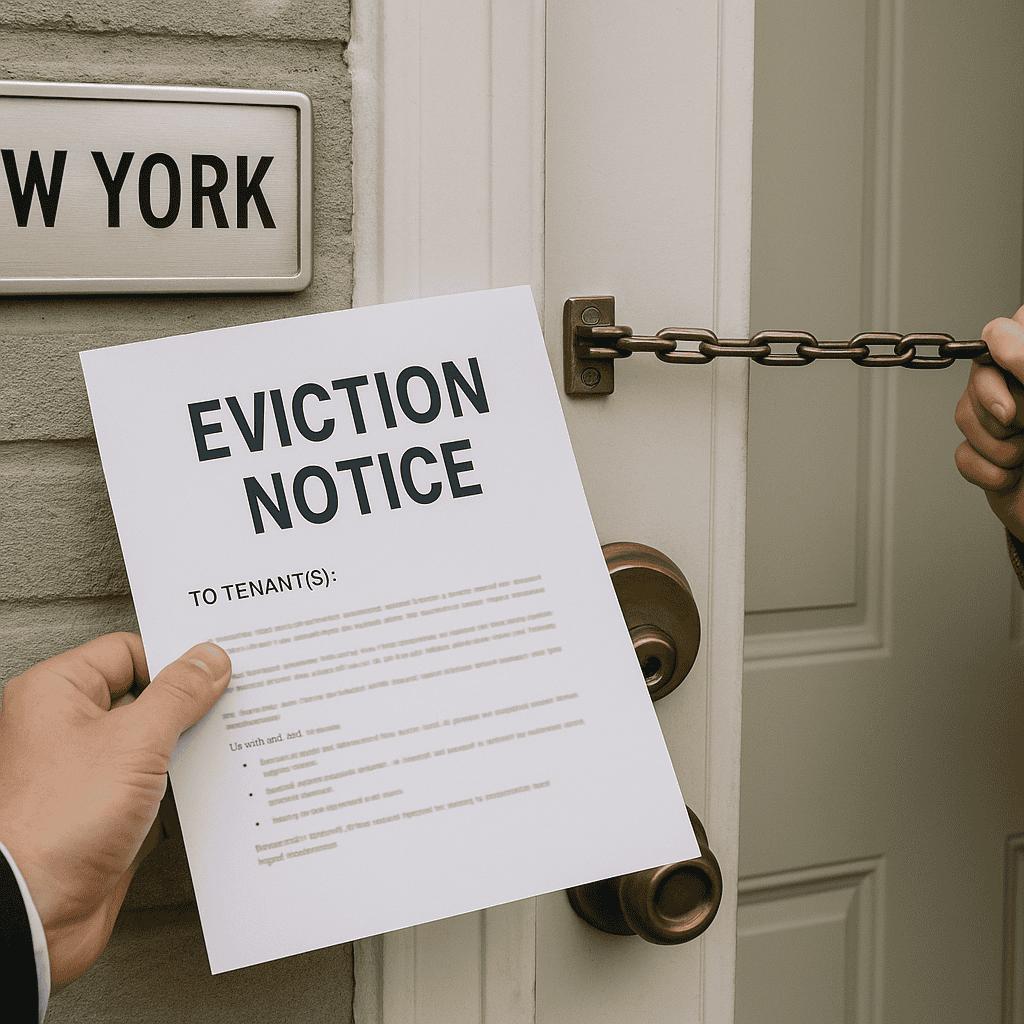
Getting an eviction notice can be frightening, especially when you are unsure whether your landlord can actually make you leave. New York eviction laws give tenants important protections, but the rules can depend on where you live, whether your apartment is rent-regulated, the type of lease you have, and the reason the landlord wants you out. New York tenants generally cannot be physically removed from their homes simply because a landlord tells them to leave. A lawful eviction normally requires a court case, a judgment, and enforcement by an authorized officer.
Understanding the basic process can make it easier to recognize what is happening and what you should do next.
Can a Landlord Evict You Without Going to Court?
Generally, no.
A landlord cannot simply change your locks, remove your belongings, threaten you into leaving, or physically force you out. New York law provides protections against unlawful evictions, including for many occupants who have lawfully lived in a dwelling for at least 30 days.
If a landlord wants to legally remove a tenant, the matter generally has to go through the court system.
That distinction is important. A letter or conversation from your landlord saying “you need to move out” is not the same thing as a court judgment authorizing an eviction.
Why Is a Landlord Trying to Evict You?
The reason for the eviction matters.
A landlord may bring an eviction case for reasons such as:
- Failure to pay rent
- Significant violation of the lease
- Nuisance behavior
- Illegal use of the apartment
- Remaining in the apartment after a lawful lease termination
- Certain owner-use situations
- Other legally recognized grounds
The exact rules depend on the type of tenancy and location.
For example, New York’s Attorney General explains that a nonpayment proceeding generally requires the landlord to first serve a written 14-day rent demand before bringing the case.
What Is a Nonpayment Eviction?
A nonpayment case generally involves rent that the landlord claims has not been paid.
This doesn’t necessarily mean that the tenant has no defense.
There can be disagreements about the amount of rent owed, payments already made, improper charges, repairs, or other circumstances.
If you receive a nonpayment notice or court papers, don’t simply assume that you have to leave immediately.
Read the paperwork carefully and respond according to the instructions and deadlines.
What Is a Holdover Eviction?
A holdover case is different from a nonpayment case.
Instead of claiming that rent is unpaid, the landlord is generally claiming that the tenant no longer has a legal right to remain in the apartment.
This could involve an alleged lease violation, staying after a lease ends, nuisance allegations, or another legally recognized reason.
New York Courts explains that eviction cases outside New York City can involve different notice requirements depending on the circumstances.
Good Cause Eviction Protections
One of the biggest changes New York renters should know about is the Good Cause Eviction Law.
The law took effect on April 20, 2024. It provides additional protections to many tenants in New York City and certain other localities that have opted into the law.
For covered apartments, a landlord generally cannot simply refuse to renew a tenant’s lease because the lease expired. The landlord generally needs a legally recognized good cause.
Possible grounds can include failure to pay rent, certain lease violations, nuisance behavior, and specific owner-use or withdrawal-from-rental-market situations.
However, Good Cause does not apply to every apartment.
There are exemptions involving certain small landlords, owner-occupied buildings, high-rent apartments, rent-regulated housing, condominiums, cooperatives, income-restricted housing, newer buildings, and other categories.
That’s why a tenant shouldn’t assume that Good Cause automatically applies just because the apartment is somewhere in New York.
Rent-Regulated Tenants Have Additional Protections
If you live in a rent-stabilized or rent-controlled apartment, different protections may apply.
Rent-regulated tenants already have significant protections against eviction without legally recognized grounds, and their rights can differ from those of tenants in market-rate apartments.
If you’re unsure whether your apartment is rent regulated, check your records and consider contacting the New York State Division of Housing and Community Renewal or a qualified housing attorney.
Your Landlord Cannot Just Change the Locks
This is worth repeating because illegal lockouts still happen.
A landlord generally cannot decide to change the locks because you complained about repairs, fell behind on rent, or because the lease ended.
New York law specifically makes certain unlawful evictions criminal offenses. Lawful occupants who have lived in a dwelling for at least 30 days are protected against this type of self-help eviction.
If you arrive home and discover that the locks have been changed without a court order, treat the situation seriously and seek immediate legal assistance.
What Happens After an Eviction Case Goes to Court?
The landlord starts an eviction case by filing the required court papers and serving them on the tenant.
The tenant then has an opportunity to respond.
Depending on the case, the tenant might:
- Answer the case
- Dispute the amount of rent claimed
- Raise defenses
- Ask for repairs or other relief where appropriate
- Negotiate a settlement
- Request an adjournment
- Go to trial
New York Courts explains that tenants have the right to request an adjournment of at least 14 days if they are not ready for court in certain proceedings.
Most importantly, do not ignore court papers.
Missing a court date can result in a default judgment against you.
A Notice Is Not Always an Eviction
Tenants sometimes receive a letter and immediately think, “I’m being evicted.”
Not necessarily.
A rent demand, termination notice, notice of petition and petition, and marshal’s notice of eviction are different documents with different purposes.
New York Courts specifically warns tenants that receiving some of these documents means a landlord is planning to start or has started a case, while a formal Notice of Eviction comes later after a judgment and warrant.
Read every document carefully rather than throwing it aside because it looks like another landlord letter.
What Happens If the Landlord Wins?
If the landlord wins the eviction case, the court can issue a judgment of possession and eventually a warrant of eviction.
The warrant authorizes an appropriate enforcement officer, such as a marshal, sheriff, or constable, to carry out the eviction.
In New York City, a marshal must generally serve a Notice of Eviction before carrying out the eviction, and the eviction can occur on or after the date specified in that notice.
A landlord cannot simply decide to personally carry out the court-ordered eviction.
Can an Eviction Be Stopped?
Sometimes.
If you have received a marshal’s eviction notice or a judgment was entered because you missed court, you may have options.
New York Courts explains that a tenant can ask the court for an Order to Show Cause to request that an eviction be stopped or stayed.
The sooner you act, the better.
Waiting until the last possible moment can make an already stressful situation much harder.
What If You Can’t Pay the Rent?
If the eviction is based on unpaid rent, don’t simply disappear.
There may be rental assistance, legal defenses, payment arrangements, or other options depending on your circumstances.
In certain nonpayment cases, paying the full amount due before the eviction is carried out can affect the warrant, although the exact rules depend on the circumstances.
If you cannot pay everything, you should still respond to the court case and seek legal assistance.
Can a Landlord Evict You for Complaining About Repairs?
Retaliation is generally prohibited in New York.
The Attorney General states that landlords cannot retaliate against tenants who make good-faith complaints about health and safety violations, habitability problems, non-repair issues, lease rights, or certain other protected matters.
For example, imagine you repeatedly report a serious plumbing problem and contact a government agency after the landlord doesn’t fix it.
If the landlord suddenly tries to punish you because you made that complaint, retaliation protections may become relevant.
Keep Your Documents
If you’re facing an eviction, start keeping everything in one place.
Save:
- Your lease
- Rent receipts
- Bank statements showing payments
- Text messages
- Emails
- Repair requests
- Photos and videos
- Notices from the landlord
- Court papers
- Letters from government agencies
- Records of conversations
A simple folder on your phone and a physical folder at home can make a big difference when you’re trying to explain what happened.
What Should You Do After Receiving an Eviction Notice?
Don’t panic, but don’t ignore it either.
First, identify exactly what document you received.
Then check the dates, the reason for the eviction, the amount claimed if it’s a nonpayment case, and any court information.
If court papers are included, follow the instructions and appear on the scheduled date.
New York’s Attorney General recommends consulting an attorney when facing eviction and notes that free legal service providers are available to qualifying tenants.
Frequently Asked Questions
1. Can my landlord evict me without going to court in New York?
Generally, no. A lawful eviction normally requires a court proceeding and judgment, followed by enforcement by an authorized officer. Landlords cannot use force or illegal lockouts to remove protected occupants.
2. What happens if I don’t go to eviction court?
You could lose the case by default. New York Courts advises tenants not to ignore court papers or court dates.
3. Does Good Cause Eviction apply everywhere in New York?
No. The law applies in New York City and certain other localities that have opted in, with additional exemptions.
4. Can my landlord change my locks?
A landlord generally cannot use a lockout to remove a protected tenant without a court order. Certain unlawful lockouts can constitute a crime under New York law.
5. Can I stop an eviction after the landlord wins?
Possibly. Depending on the circumstances, a tenant may be able to ask the court for an Order to Show Cause or a stay. Act quickly if you’ve received a marshal’s or sheriff’s notice.
Final Thoughts
New York eviction laws can be complicated, but one thing is important to remember: an eviction notice does not always mean you have to leave immediately.
The type of notice, reason for the eviction, location of the property, lease status, rent-regulated status, and whether Good Cause protections apply can all affect your rights.
Don’t ignore paperwork. Don’t assume your landlord can lock you out. And if you’re facing an eviction case, consider getting legal help as soon as possible.