Rochester Construction Accident Laws
Construction sites can change from one day to the next. A worker may be using a ladder in the morning, working around heavy equipment later, and moving materials near an unfinished floor before the day is over. When something goes wrong, the resulting injury can be serious, and figuring out who may be legally responsible is not always straightforward.
Understanding Rochester construction accident laws is important because New York gives construction workers certain protections that may go beyond ordinary workplace injury rules. Depending on what happened, a worker may have a workers’ compensation claim as well as a separate claim against an owner, contractor, or another responsible party.
New York Labor Law Protects Construction Workers
New York has several laws that address safety on construction sites. Two of the most important are Labor Law Sections 240(1) and 241(6).
Labor Law § 240(1), often associated with New York’s “Scaffold Law,” deals with certain elevation-related hazards. It requires owners, contractors, and their agents to provide appropriate safety devices for workers exposed to covered gravity-related risks. Recent New York decisions continue to describe this as a nondelegable duty.
This can become relevant when someone falls from a ladder or scaffold or is struck by a falling object because proper protective equipment was not provided.
But not every construction accident automatically qualifies. Courts look closely at the circumstances, including whether the injury was actually connected to the type of elevation-related risk covered by the statute.
What Does Labor Law § 241(6) Cover?
Labor Law § 241(6) focuses on safety at construction, excavation, and demolition sites. It requires reasonable and adequate protection for workers and creates a nondelegable duty concerning compliance with specific Industrial Code safety requirements.
That last part matters. A worker generally cannot establish a § 241(6) claim simply by saying the construction site was unsafe. The claim generally needs to be tied to a sufficiently specific Industrial Code provision, and the violation must be connected to the injury.
For example, an accident involving unsafe access, inadequate protection, machinery, debris, or other site conditions may require a careful review of the particular safety regulations that applied to the work being performed.
Common Construction Accidents in Rochester
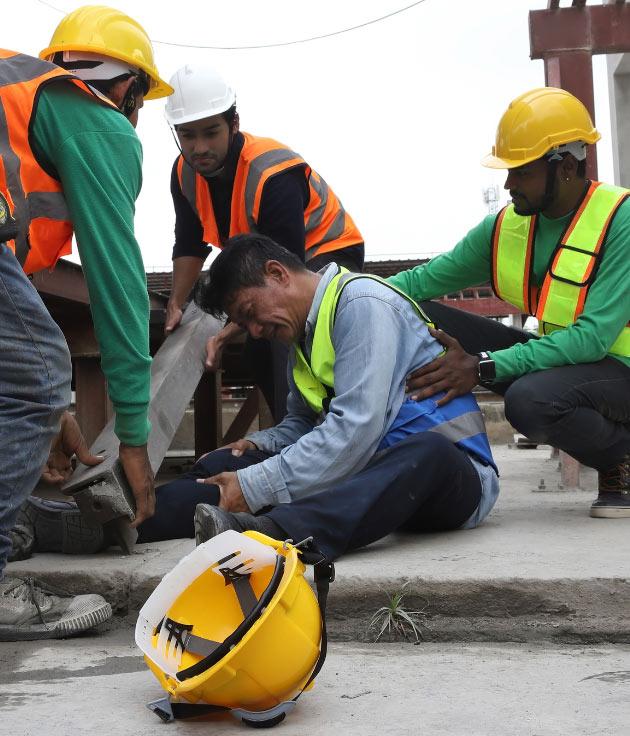
Construction injuries can happen in many ways. Some of the more common situations include falls from ladders or scaffolds, falling objects, machinery accidents, trench or excavation incidents, electrical accidents, defective equipment, and injuries caused by unsafe work areas.
A worker could also be hurt while performing what seems like a routine task. Carrying materials, walking across a work area, or using temporary equipment can become dangerous when the proper protections are missing.
The details matter. Two workers could suffer similar injuries but have very different legal claims because the accidents happened under different circumstances.
Workers’ Compensation May Be Part of the Picture
Workers’ compensation is often an important part of a construction injury case. If you were injured while working, you may have rights to workers’ compensation benefits even when nobody intentionally caused the accident.
At the same time, workers’ compensation does not necessarily answer every legal question. In some situations, an injured construction worker may have a separate claim involving a property owner, general contractor, subcontractor, equipment manufacturer, or another party.
That is one reason it is useful to have the accident reviewed carefully rather than assuming that filing a workers’ compensation claim is the end of the matter.
What Should You Do After a Construction Accident?
After an accident, seek medical attention and report the injury through the appropriate workplace channels. Keep copies of medical records, accident reports, photographs, communications, and other information connected to what happened.
If coworkers witnessed the accident, write down their names and contact information if you can do so safely. Photos of the work area can also become important, particularly when the site changes quickly after an accident.
Try not to guess about what caused the accident when speaking about the incident. Simply explain what happened as accurately as possible.
When Should You Speak With a Construction Accident Lawyer?
You do not necessarily need to wait until your injuries become permanent or your medical treatment is finished before talking to an attorney. An early consultation can help you understand which potential claims may apply and what evidence could be important.
This can be particularly important after a fall, a falling-object accident, a machinery injury, or another incident where questions may arise about the responsibilities of the property owner or contractor.
Recent New York cases show why the details matter. Courts continue to distinguish between accidents covered by Labor Law § 240(1) and ordinary workplace risks that fall outside its scope.
4 FAQs About Rochester Construction Accident Laws
1. What should I do after a construction accident in Rochester?
Get medical attention, report the accident, document what happened, and keep copies of relevant records. Consider speaking with an attorney if the injury is serious or there may be claims beyond workers’ compensation.
2. Does New York’s Scaffold Law cover every construction fall?
No. Labor Law § 240(1) applies to particular elevation-related hazards. Courts examine the circumstances of the accident to determine whether the statute applies.
3. Can I have a workers’ compensation claim and another legal claim?
Potentially, yes. Depending on the facts, an injured worker may have workers’ compensation rights and a separate claim involving another responsible party. The specific facts and relationships between the parties need to be reviewed.
4. How long do I have to bring a construction injury claim?
The applicable deadline depends on the type of claim and who may be legally responsible. Because different claims can have different limitation periods, it is safer to discuss the accident with a New York attorney as soon as reasonably possible rather than waiting until a deadline is approaching.
Final Thoughts
A construction accident can leave a worker dealing with medical bills, missed work, physical pain, and uncertainty about what happens next. New York’s construction safety laws can provide important protections, but they do not apply automatically to every accident.
The cause of the accident, the type of work being performed, the equipment involved, and the roles of the owner and contractors can all make a difference. Getting the facts documented early and understanding the possible legal options can help an injured Rochester construction worker make a more informed decision.