
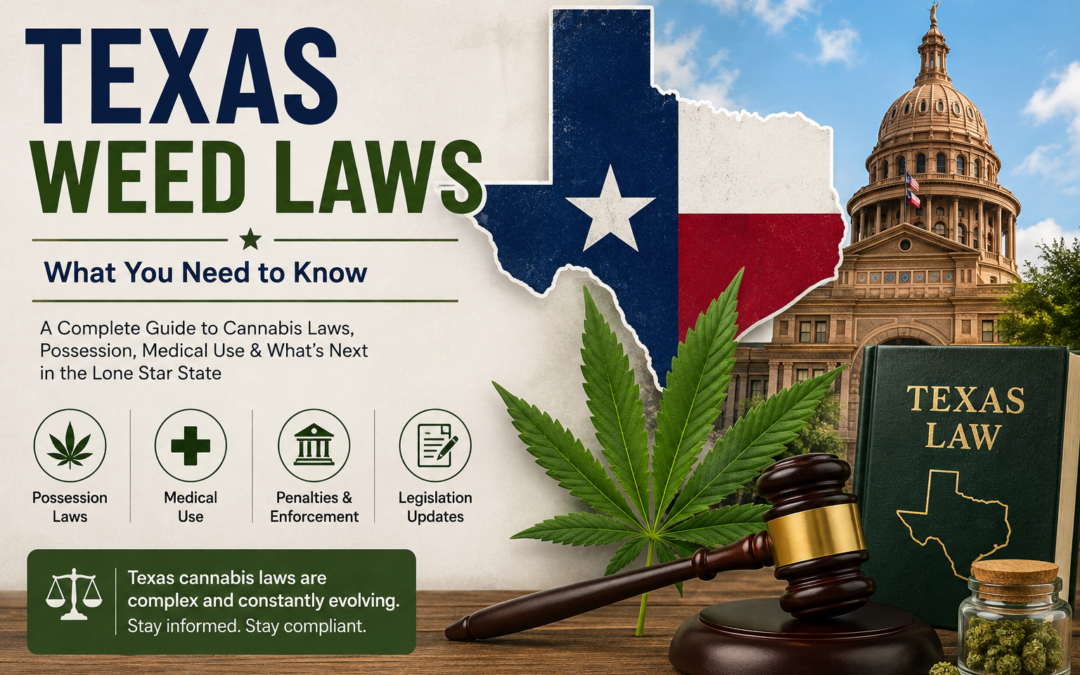
Cannabis laws can be confusing, especially in a state like Texas. You may hear that medical marijuana is legal, see stores selling THC or CBD products, and then come across stories of people being arrested for possessing marijuana. It’s no surprise that many Texans aren’t sure what is actually allowed and what could land them in legal trouble.
The reality is that Texas has some of the stricter cannabis laws in the United States, although recent changes have created limited exceptions for certain medical patients and hemp-derived products. Understanding the difference between what’s legal and what’s prohibited can help you avoid costly mistakes and make informed decisions.
Is Weed Legal in Texas?
The short answer is no—recreational marijuana is not legal in Texas.
Adults cannot legally possess, use, buy, or sell marijuana for recreational purposes under Texas law. Even possessing a small amount of marijuana can result in criminal penalties, although enforcement policies may vary from one county to another.
That said, Texas does allow limited access to medical cannabis through its Compassionate Use Program (CUP). Only patients with qualifying medical conditions who receive a prescription from a registered physician can legally obtain low-THC cannabis products through licensed dispensaries.
Understanding Texas’ Medical Cannabis Program
Unlike some states that have broad medical marijuana programs, Texas takes a much narrower approach.
The Compassionate Use Program allows eligible patients to access low-THC cannabis products, not traditional recreational marijuana.
Depending on state regulations, qualifying medical conditions may include:
- Epilepsy
- Multiple sclerosis
- Autism
- Spasticity disorders
- Amyotrophic lateral sclerosis (ALS)
- Terminal cancer
- Incurable neurodegenerative diseases
- Post-traumatic stress disorder (PTSD), under qualifying circumstances
Patients must receive approval from a physician registered with the Compassionate Use Program before obtaining medical cannabis.
What’s the Difference Between Marijuana and Hemp?
This is where many people become confused.
Under federal law and Texas law, hemp and marijuana are treated differently based on their THC concentration.
Generally:
- Hemp contains no more than 0.3% Delta-9 THC by dry weight.
- Marijuana contains more than 0.3% Delta-9 THC.
That small percentage creates a major legal difference.
Many CBD products sold in Texas are derived from legal hemp. However, products containing higher THC levels remain illegal unless specifically authorized under the state’s medical cannabis program.
Are Delta-8 and Other Hemp Products Legal?
This question has generated significant debate in Texas.
Delta-8 THC and similar hemp-derived cannabinoids have been the subject of ongoing legal disputes and regulatory changes. Court rulings and state enforcement efforts have shifted over time, creating uncertainty for businesses and consumers alike.
Because the legal status of these products continues to evolve, anyone considering purchasing or selling them should review the most current Texas laws and regulations before doing so.
What Happens If You’re Caught With Marijuana?
Penalties depend on several factors, including the amount involved and whether there are prior convictions.
For small amounts intended for personal use, charges may range from misdemeanor offenses carrying fines, probation, or possible jail time.
Larger quantities, evidence of distribution, or repeat offenses can result in significantly more serious felony charges with much harsher penalties.
Some counties have implemented diversion programs or cite-and-release policies for certain low-level offenses, but those policies vary by jurisdiction and do not change state law.
Can You Grow Marijuana at Home?
No.
Texas does not allow individuals to grow marijuana plants for personal recreational use.
Even if marijuana has been legalized in other states, growing cannabis without legal authorization remains prohibited under Texas law.
Can You Drive After Using Cannabis?
No one should drive while impaired by marijuana or any other intoxicating substance.
Driving under the influence of cannabis can lead to criminal charges if law enforcement believes a driver’s mental or physical abilities are impaired.
Even legally prescribed medical cannabis does not give someone permission to drive while impaired.
Texas Weed Laws: Do’s
If you want to stay on the right side of Texas law, it’s helpful to keep a few basic guidelines in mind.
Do:
- Learn the difference between hemp products and marijuana.
- Use medical cannabis only if you qualify under the Compassionate Use Program.
- Purchase medical cannabis only from licensed providers.
- Keep documentation if you’re legally participating in the state’s medical cannabis program.
- Stay informed about changes to hemp and cannabinoid regulations.
Texas Weed Laws: Don’ts
Just as important are the things you should avoid.
Don’t:
- Assume recreational marijuana is legal because it is legal in another state.
- Possess marijuana without legal authorization.
- Grow cannabis plants at home.
- Drive while impaired by cannabis.
- Purchase products from unlicensed or questionable sources.
- Assume every THC product sold online is legal in Texas.
Why Texas Weed Laws Cause So Much Confusion
Part of the confusion comes from the fact that cannabis laws are changing across the country, but not at the same pace.
Someone may travel from a state where recreational marijuana is completely legal and assume the same rules apply in Texas. Others see hemp-derived products available in local stores and mistakenly believe all cannabis products are now legal.
The reality is that Texas maintains a clear distinction between recreational marijuana, medical cannabis, and hemp products. Understanding those differences is the best way to avoid legal problems.
Frequently Asked Questions (FAQs)
Is recreational weed legal in Texas?
No. Recreational marijuana remains illegal under Texas law. Adults cannot legally possess or use marijuana for non-medical purposes.
Can medical marijuana patients smoke cannabis in Texas?
The Compassionate Use Program generally authorizes certain low-THC cannabis products prescribed by registered physicians. Traditional smokable marijuana is not part of the program.
Can I bring legal marijuana from another state into Texas?
No. Marijuana that is legal in another state may still be illegal under Texas law. Bringing it into Texas can lead to criminal charges.
Is CBD legal in Texas?
Generally, yes. Hemp-derived CBD products containing no more than the legal limit of Delta-9 THC are permitted under state and federal law, provided they comply with applicable regulations.
Final Thoughts
Texas weed laws can seem complicated at first, but the basic rule is fairly straightforward: recreational marijuana remains illegal, while limited medical cannabis is available only through the state’s Compassionate Use Program. Hemp-derived products may also be legal if they meet state and federal requirements, but not every THC product sold on the market is automatically lawful.
Because cannabis laws continue to evolve through new legislation, court decisions, and regulatory updates, it’s always wise to verify the latest rules before buying, possessing, or using cannabis products in Texas. Taking a few minutes to understand the law today can help you avoid legal complications tomorrow.