What to Do If a Loved One Is Injured in a Bronx Nursing Home
Finding out that a parent, grandparent, spouse, or another loved one has been injured in a nursing home can leave a family feeling angry, worried, and unsure about what to do next. Maybe you receive a call saying your loved one fell. Maybe you notice a bruise, pressure sore, or unexplained injury during a visit. Or perhaps your loved one suddenly needs hospitalization and the explanation from the facility does not seem to make sense.
When something feels wrong, it is reasonable to ask questions.
In New York, nursing home residents have the right to dignity, respectful treatment, quality care, and freedom from physical, sexual, mental, and verbal abuse. They also have the right to a responsive complaint process and protection from retaliation for exercising their rights.
If your loved one has been injured in a Bronx nursing home, the following steps can help you understand what happened and protect their interests.
First, Make Sure Your Loved One Is Safe
The first concern should always be the resident’s immediate health.
If the injury appears serious, ask the nursing home to obtain appropriate medical attention. Depending on the circumstances, that could mean evaluation by the facility’s medical provider or emergency treatment at a hospital.
Do not let an argument with the facility distract from the person’s medical needs.
Ask what happened, when the injury occurred, who discovered it, and what treatment was provided.
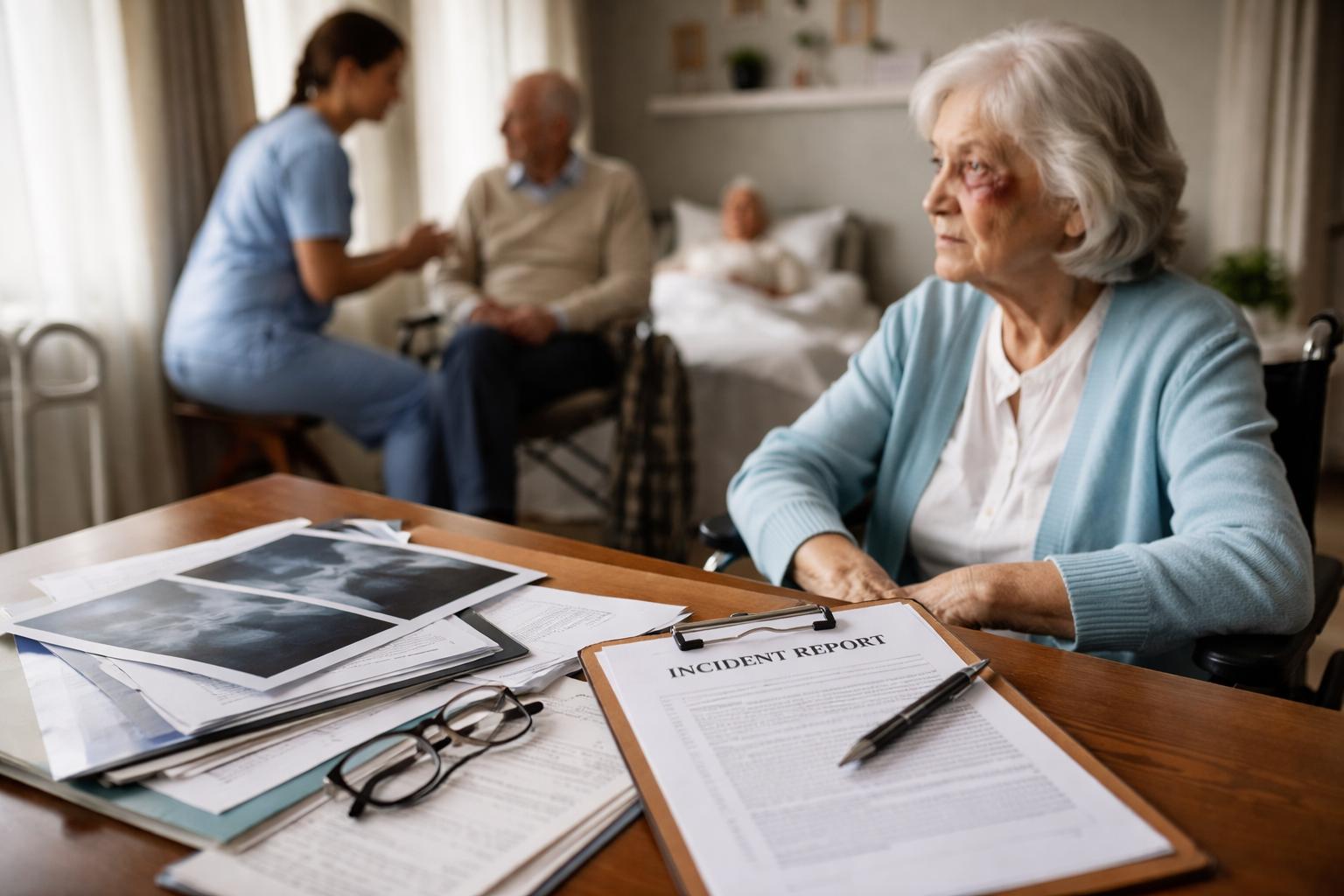
If your loved one has been hospitalized, keep copies of the hospital paperwork, discharge instructions, photographs of injuries, and other medical documentation you receive.
Ask the Nursing Home Exactly What Happened
Once your loved one is safe, start asking questions.
You do not necessarily need to accuse anyone immediately. Begin by gathering information.
Ask:
- When did the incident happen?
- Where did it happen?
- Who was present?
- Who first discovered the injury?
- When was staff notified?
- What treatment was provided?
- Was a doctor contacted?
- Was the family notified?
- Was an incident report completed?
- Were there witnesses?
- Has the facility investigated the incident?
Try to keep your questions specific.
If you are told something verbally, make a note of the date, time, person’s name, and what they said. If the explanation changes later, those notes may become important.
Take Photographs and Keep Records
If you can safely and appropriately document an injury, photographs may be useful.
For example, families may photograph visible bruising, swelling, cuts, wounds, or pressure injuries. Take photographs with dates when possible and keep the original files.
Also create a simple timeline.
Write down:
Date → What happened → Who you contacted → What they said → What treatment was provided
This sounds basic, but when several conversations happen over several weeks, it can become surprisingly difficult to remember exactly who said what.
Keep copies of emails, letters, hospital records, bills, care-plan documents, photographs, and other relevant paperwork.
Ask for Relevant Medical and Facility Records
Medical records can help establish what happened before and after an injury.
Depending on the circumstances, relevant documentation may include nursing notes, physician notes, medication records, care plans, incident reports, treatment records, therapy notes, and other facility documentation.
If the injury involved a fall, for example, you may want to understand whether the resident was considered a fall risk and what precautions were supposed to be in place.
New York’s Department of Health explains that nursing home investigations can involve reviewing medical records and facility documentation, as well as interviewing people and conducting onsite investigative work.
That is one reason documentation can matter so much.
Look for Signs That the Injury May Not Be an Accident
Not every nursing home injury means negligence or abuse occurred.
Older adults can fall. Residents can bruise easily. Some medical conditions can increase the risk of injury.
But certain patterns deserve closer attention.
Families may want to investigate further when they see:
- Repeated unexplained falls
- Unexplained bruises or injuries
- Untreated or worsening pressure sores
- Sudden weight loss or dehydration
- Poor hygiene
- Medication errors
- Injuries that do not match the explanation provided
- Long delays in receiving medical treatment
- Sudden changes in behavior
- Frequent hospitalizations for unexplained reasons
- A resident expressing fear of a particular caregiver
- Staff discouraging family members from asking questions
These signs do not automatically prove neglect or abuse. They do, however, give families a reason to ask more questions.
New York’s nursing home complaint system specifically addresses issues such as abuse, neglect, medication errors, inadequate supervision, pressure sores, hydration, nutrition, and other quality-of-care concerns.
Report Suspected Abuse or Neglect
If you believe your loved one was abused, neglected, or mistreated, you do not have to rely solely on the nursing home’s internal complaint process.
The New York State Department of Health investigates complaints and incidents involving nursing homes and regulatory violations. Complaints can be submitted through the state’s nursing home complaint process.
The state also provides a nursing home complaint hotline at 1-888-201-4563, available 24 hours a day, seven days a week for reporting concerns.
You can also consider reporting suspected abuse or neglect to the New York Attorney General’s Medicaid Fraud Control Unit, which investigates allegations involving patient abuse, neglect, mistreatment, infection-control violations, and certain provider fraud matters in nursing homes and assisted living facilities.
Consider the Long-Term Care Ombudsman Program
Families do not always know where to turn when a nursing home problem develops.
New York’s Long-Term Care Ombudsman Program provides advocacy for people living in long-term care facilities. The program can help residents and families understand rights and address complaints.
An ombudsman is not the same as a private attorney. The program is designed to advocate for residents and help address problems within long-term care settings.
For families who are unsure what to do next, this can be an important resource.
Do Not Assume the Nursing Home Is Automatically Responsible
This is an important distinction.
A resident being injured inside a nursing home does not automatically mean the facility was legally negligent.
To determine whether there may be a legal claim, an attorney generally needs to look at what happened, what the facility knew, what care was required, what precautions were in place, and whether the facility’s actions or omissions contributed to the injury.
For example, suppose a resident was documented as being at high risk for falls, but required precautions were not followed and the resident subsequently suffered a serious injury.
That situation may raise very different legal questions than an unexpected accident where appropriate precautions were followed.
The details matter.
Speak With a Nursing Home Injury Attorney
If your loved one suffered a serious injury, especially where abuse or neglect may be involved, speaking with an attorney who handles nursing home injury or elder abuse cases can help your family understand its options.
A lawyer may review:
- Medical records
- Care plans
- Medication records
- Incident reports
- Staffing information
- Facility policies
- Photographs
- Witness statements
- Hospital records
- Evidence of previous similar incidents
An attorney can also explain whether the facts may support a negligence, abuse, or other civil claim.
The New York Attorney General specifically notes that its complaint process does not make the Attorney General a private lawyer for the person filing the complaint. Families seeking advice about their individual legal rights should consult a private attorney.
Do Not Sign Documents Without Understanding Them
After an injury, a nursing home or its representatives may provide paperwork to the resident or family.
Read it carefully.
If you do not understand what a document means, ask questions before signing it. This is especially important if the paperwork involves releases, settlements, changes in care, or other legal rights.
You do not need to sign something simply because someone puts it in front of you and says it is routine.
If you have concerns about the legal effect of a document, have an attorney review it.
Watch Your Loved One Closely After the Injury
Sometimes the original injury is not the only concern.
A resident who has suffered a fall, for example, may become afraid of walking. They may lose mobility, become less active, or experience complications during recovery.
After an injury, pay attention to changes in:
- Mobility
- Appetite
- Mood
- Sleep
- Weight
- Communication
- Pain
- Participation in activities
- Medication
- Ability to perform daily activities
If something changes, ask the care team why.
You know your loved one better than most people at the facility do. A noticeable change in personality or behavior can be worth mentioning to their medical team.
What If the Nursing Home Tries to Dismiss Your Concerns?
It can be frustrating when a family member asks questions and receives vague answers.
Stay calm and document everything.
Ask for responses in writing when appropriate. Keep copies of your communications. If you believe the facility has failed to address a serious concern, you can escalate the complaint through the appropriate New York State channels.
The Department of Health says nursing home complaints are reviewed through its centralized complaint process, and investigations may involve medical records, facility records, interviews, and onsite investigation.
A documented complaint can therefore create an official record of the concern.
Your Loved One Has Rights
It is easy for families to forget this when someone is living in a nursing home.
A nursing home resident does not give up their basic rights simply because they need assistance.
New York recognizes residents’ rights to dignity, respect, quality care, privacy, choice, visitors, a complaint process, and freedom from abuse and restraints. Residents are also entitled to exercise their rights without fear of retaliation.
If your loved one is unable to speak for themselves, family members and authorized representatives may need to advocate on their behalf.
Frequently Asked Questions
1. What should I do if my loved one falls in a Bronx nursing home?
First, make sure they receive appropriate medical attention. Then ask the facility for a detailed explanation of the incident, document the injury, keep medical records and photographs, and consider reporting the incident if you suspect neglect or abuse.
2. Can I report a Bronx nursing home for suspected neglect?
Yes. The New York State Department of Health accepts nursing home complaints and investigates allegations involving abuse, neglect, mistreatment, and other regulatory violations. The nursing home complaint hotline is 1-888-201-4563.
3. What evidence can help with a nursing home injury claim?
Photographs, medical records, hospital records, care plans, medication records, incident reports, witness information, communications with the facility, and a written timeline of events can all potentially be useful.
4. Should I hire a lawyer if my loved one was injured?
It depends on the circumstances. If the injury was serious, unexplained, repeated, or potentially connected to abuse or neglect, consulting an attorney experienced in nursing home injury cases can help you understand whether there may be a legal claim.
5. Can a nursing home resident be moved after an injury?
A transfer may sometimes be appropriate, particularly when the current environment is no longer safe or the resident needs a different level of care. However, nursing home residents have rights concerning transfers and discharges, including the ability to appeal certain decisions.
Final Thoughts
When a loved one is injured in a Bronx nursing home, the first reaction may be anger. That is understandable. But after making sure the resident is safe, try to slow things down and gather the facts.
Find out what happened. Document the injury. Ask for records. Watch for changes in your loved one’s condition. Report suspected abuse or neglect through the appropriate channels, and consider speaking with an experienced attorney when the circumstances warrant it.
Most importantly, do not let anyone make you feel unreasonable for asking questions.
Your loved one has a right to safe, dignified, respectful care—and families have every reason to speak up when something does not look right.