Can You Sue for a Hit-and-Run Accident in New York?
A hit-and-run accident can leave you with more questions than answers. You may know that another driver caused the crash, but instead of stopping to exchange information, they drove away. Now you may be dealing with injuries, medical bills, vehicle damage, and no idea who is responsible.
So, can you sue for a hit-and-run accident in New York? Sometimes, yes. But when the driver cannot be identified, the claim usually works differently than an ordinary car accident lawsuit. Your own insurance coverage, including applicable uninsured-motorist coverage, can become especially important.
New York law also specifically addresses “hit and run” claims through the Motor Vehicle Accident Indemnification Corporation (MVAIC), which exists to provide certain protections for qualified people injured by financially irresponsible or unidentified motorists.
What Is a Hit-and-Run Accident?
A hit-and-run generally occurs when a driver involved in an accident leaves without stopping and providing the information required by law.
New York Vehicle and Traffic Law § 600 requires drivers involved in certain accidents to stop and provide identifying and insurance information. When personal injury occurs, the driver must stop and provide information to the injured person when practical and to a police officer, or report the incident to the nearest police station or judicial officer if an officer is not present.
In other words, simply driving away after causing an accident is not something New York law treats casually.
Can You Sue the Driver?
If the driver is identified, you may be able to pursue a personal injury claim against that driver, assuming the facts support a negligence claim.
For example, police might later identify the driver through:
- License-plate information
- Traffic-camera footage
- Surveillance video
- Witness statements
- Vehicle damage
- Dashcam footage
- Nearby business cameras
- Other evidence from the accident scene
Once the driver is identified, the case can potentially proceed similarly to other motor-vehicle injury claims, although the circumstances surrounding the hit-and-run may create additional issues.
The big difference is what happens when the driver is never found.
What If the Hit-and-Run Driver Cannot Be Found?
This is where insurance coverage becomes extremely important.
When the person responsible for your injuries cannot be identified, you may be able to make a claim under applicable uninsured motorist (UM) coverage.
New York’s Insurance Law contains specific provisions addressing uninsured and hit-and-run motorists, including procedures involving MVAIC.
Your own automobile insurance policy may therefore become an important source of compensation.
The exact coverage available depends on your policy, the circumstances of the accident, and whether you meet the applicable legal requirements.
What Is MVAIC?
The Motor Vehicle Accident Indemnification Corporation (MVAIC) is a New York organization created to provide certain compensation protections for people injured in accidents involving uninsured or hit-and-run motorists.
New York Insurance Law Article 52 specifically contains provisions addressing “hit and run” causes of action and the procedures for pursuing them.
MVAIC does not mean every hit-and-run victim automatically receives compensation.
There are eligibility requirements and procedural rules that must be followed.
That is why someone involved in a hit-and-run should notify their insurer and investigate the available coverage promptly.
What Should You Do Immediately After a Hit-and-Run?
The first few minutes can be extremely important.
1. Get to Safety
If you can safely move away from traffic, do so.
Do not chase the other vehicle yourself. A hit-and-run driver may be speeding, impaired, or otherwise dangerous.
2. Call the Police
Report the accident as soon as possible.
Give officers as much information as you can remember, including:
- Vehicle make and model
- Color
- License plate, even if you remember only part of it
- Direction the vehicle traveled
- Location of the crash
- Description of the driver
- Any identifying markings on the vehicle
Even a partial license plate can sometimes be useful.
3. Photograph the Scene
If it is safe, take photographs of:
- Your vehicle
- The surrounding roadway
- Debris
- Skid marks
- Traffic signs
- Nearby businesses
- Visible injuries
- Property damage
Try to capture the broader surroundings rather than photographing only the damage to your car.
4. Look for Witnesses
Someone standing nearby may have seen the other vehicle.
Ask witnesses for their names and contact information.
A witness who remembers the vehicle’s color, direction, or license plate can potentially provide valuable information.
5. Look for Cameras
This is particularly important in urban areas.
Nearby businesses, parking lots, apartment buildings, traffic intersections, gas stations, and other properties may have security cameras.
Footage can sometimes disappear quickly, so identifying potential cameras early can be valuable.
What If You Were Injured?
Seek appropriate medical attention.
Even if you initially feel okay, symptoms can develop later.
Keep copies of:
- Medical records
- Hospital paperwork
- Prescriptions
- Medical bills
- Physical therapy records
- Follow-up appointments
- Other treatment documentation
Your medical records can help establish what injuries occurred and how they relate to the accident.
Can You Recover Pain and Suffering?
Potentially.
New York’s no-fault system generally limits lawsuits for non-economic losses from motor-vehicle accidents unless the injured person has suffered a serious injury as defined by New York law.
The statutory definition includes categories such as:
- Death
- Fracture
- Significant disfigurement
- Permanent loss of use of certain body parts or functions
- Permanent consequential limitation
- Significant limitation of use
- Certain medically determined injuries or impairments
Whether a particular injury meets the serious-injury threshold depends on the medical evidence and the specific facts.
What About Medical Bills and Lost Wages?
New York’s no-fault system can provide certain first-party benefits for covered accident-related economic losses, regardless of who caused the crash.
This can be particularly important in a hit-and-run because you may not have another driver’s insurance information available.
Your insurer may require you to submit specific documentation and comply with policy requirements.
Do not ignore letters or forms from your insurance company.
What If You Only Have Property Damage?
A hit-and-run involving only vehicle or property damage is different from a hit-and-run involving personal injuries.
New York law requires a driver who knows or has reason to know that they caused property damage to stop and provide identifying and insurance information, or report the incident as required when the other party is not present.
If the driver cannot be identified, your ability to recover your vehicle-related losses can depend heavily on your own insurance coverage.
For example, collision coverage may be relevant depending on your policy.
What If the Driver Is Eventually Found?
If police identify the driver, you may have additional options.
The driver may face criminal or traffic consequences for leaving the scene. Separately, you may potentially pursue a civil claim for damages caused by the accident.
These are two separate matters.
A criminal case against the driver does not automatically compensate you for your medical bills or other losses.
A civil claim is focused on recovering damages.
How Much Is a Hit-and-Run Case Worth?
There is no standard settlement amount.
The value of a claim can depend on:
- Severity of injuries
- Medical expenses
- Future medical treatment
- Lost wages
- Reduced earning capacity
- Pain and suffering, where legally recoverable
- Property damage
- Insurance coverage
- Evidence of the accident
- Whether the responsible driver is identified
A minor injury requiring a few medical visits is obviously different from a serious injury requiring surgery and long-term rehabilitation.
Insurance policy limits can also affect the amount that is realistically available.
What If You Were Partly Responsible?
New York uses comparative-fault principles in personal injury cases.
If evidence shows that you were partly responsible for an accident, your recovery may be reduced according to your share of fault.
For example, if damages were $100,000 and you were determined to be 20% responsible, a simplified calculation would result in a $80,000 recovery before considering other applicable issues.
The actual determination depends on the evidence and circumstances.
How Long Do You Have to File?
The deadline depends on the type of claim and who may ultimately be responsible.
For many ordinary personal injury claims against private parties, New York generally has a three-year statute of limitations.
But hit-and-run cases can involve additional insurance and MVAIC procedures, so waiting until the general deadline is approaching is not a good strategy.
The sooner you report the accident and notify your insurance company, the better.
Why Evidence Matters So Much in Hit-and-Run Cases
A normal accident usually gives you another driver to identify.
A hit-and-run takes that away.
That makes evidence particularly valuable.
A single detail—a partial license plate, a business camera, a witness’s phone recording, or a dashcam video—could potentially help identify the driver.
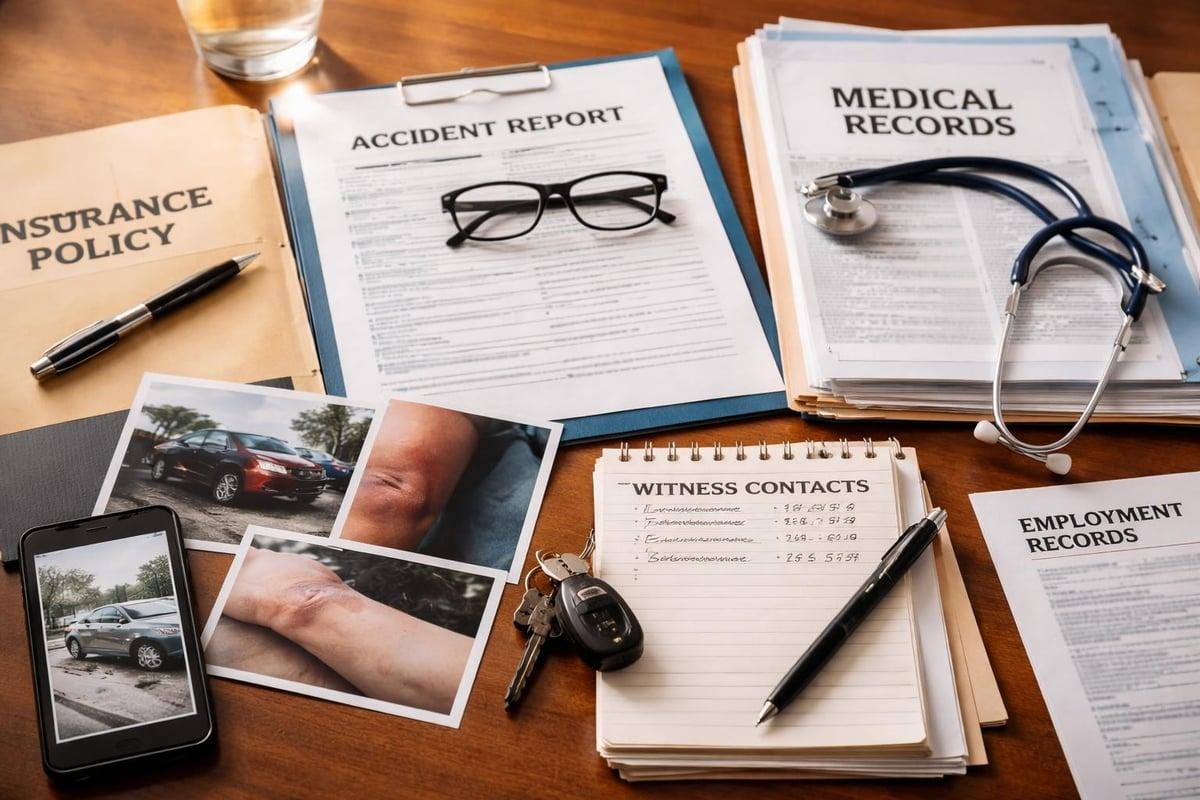
After a hit-and-run, consider preserving:
Dashcam footage: Save the original file rather than assuming it will remain on the device.
Photographs: Keep the original photographs with their metadata when possible.
Police reports: Obtain copies of reports and related documentation.
Witness information: Write down what witnesses told you while the details are still fresh.
Medical records: Keep documentation of every significant treatment visit.
Vehicle evidence: Do not repair or dispose of a badly damaged vehicle before discussing the evidence with the appropriate professionals if the damage may be relevant to identifying the other vehicle.
Frequently Asked Questions
1. Can I sue if the hit-and-run driver is never found?
Potentially, but you generally cannot sue an unidentified person in the same practical way as an identified defendant. Your own uninsured-motorist coverage and, where applicable, MVAIC procedures may provide avenues for compensation.
2. Does New York insurance cover hit-and-run accidents?
Potentially. Uninsured-motorist coverage can be important when the responsible driver is unidentified or uninsured. The specific coverage and requirements depend on the policy and circumstances.
3. What should I do after a hit-and-run?
Get to safety, contact the police, seek medical attention if needed, document the scene, collect witness information, look for nearby cameras, and notify your insurance company promptly.
4. Can I recover pain and suffering after a New York hit-and-run?
Potentially, if your injuries meet New York’s serious-injury threshold and the other applicable requirements are satisfied. New York Insurance Law § 5104 restricts recovery for non-economic losses unless a statutory serious injury exists.
5. What if the police find the driver later?
If the driver is identified, you may potentially pursue a civil personal injury claim against them, depending on the evidence and applicable insurance coverage. The driver may also face separate legal consequences for leaving the accident scene.
Final Thoughts
A hit-and-run can feel especially frustrating because you may know you were injured but have no driver’s insurance information to work with. Yes, you may still have legal options in New York, even when the driver initially gets away.
The most important thing is to act quickly. Report the crash, preserve evidence, seek appropriate medical care, notify your insurer, and find out whether uninsured-motorist coverage or MVAIC may apply.
New York specifically provides procedures for certain claims involving hit-and-run and uninsured motorists, but those procedures have requirements that should not be overlooked.