New York Pedestrian Accident Laws and Your Legal Rights
Walking around New York can sometimes feel like you are constantly watching traffic. A car turns unexpectedly, a driver rolls through a crosswalk, or someone speeds through an intersection, and suddenly a normal walk can become a serious accident.
If you are hit by a vehicle while walking, you may have questions about your medical bills, lost income, insurance, and whether you can take legal action against the driver. Understanding New York pedestrian accident laws and your legal rights can help you know what to do after a crash.
New York has specific rules protecting pedestrians, but pedestrian cases can also involve no-fault insurance, comparative fault, and the state’s serious-injury threshold.
Pedestrians Have Legal Rights in New York
New York traffic law requires drivers to exercise care around people walking.
Under New York Vehicle and Traffic Law § 1151, drivers generally must yield the right of way to pedestrians crossing within a crosswalk when the pedestrian has the right of way. Drivers must also exercise due care to avoid colliding with pedestrians. (nysenate.gov)
This becomes especially important at intersections and marked crosswalks.
A driver cannot simply assume that a pedestrian will move out of the way.
Drivers Must Exercise Reasonable Care
A pedestrian accident is not automatically the driver’s fault simply because a vehicle struck someone.
The circumstances matter.
A driver may potentially be negligent if they:
- Failed to yield
- Ran a red light
- Ignored a stop sign
- Was speeding
- Was distracted
- Failed to watch the roadway
- Made an unsafe turn
- Drove while impaired
- Failed to take reasonable action to avoid hitting someone
Evidence is often what determines how responsibility is assigned.
What If the Pedestrian Was Not in a Crosswalk?
This is a common question.
Being outside a crosswalk does not necessarily mean a pedestrian has no legal rights.
New York Vehicle and Traffic Law § 1152 addresses pedestrians crossing at locations other than crosswalks. It generally requires pedestrians to yield to vehicles when crossing outside a marked or unmarked crosswalk at an intersection, subject to the statute’s specific provisions. (nysenate.gov)
At the same time, drivers still have a duty to exercise due care to avoid collisions with pedestrians.
So the question is usually not simply:
“Was the pedestrian in a crosswalk?”
The more important question can be:
“What was each person doing immediately before the accident, and did either party act negligently?”
New York Uses Comparative Fault
Pedestrian accident cases can involve arguments that both sides contributed to the accident.
New York follows comparative-fault principles.
For example, imagine a pedestrian was found 20% responsible for an accident because they crossed improperly, while the driver was 80% responsible because they were speeding and failed to react.
If the pedestrian’s damages were $100,000, the recovery could potentially be reduced by the pedestrian’s percentage of fault.
Being partly responsible does not automatically mean the injured person cannot recover anything.
The specific effect depends on the facts and applicable law.
What Should You Do Immediately After a Pedestrian Accident?
The moments following a pedestrian accident can be chaotic.
If you are physically able to do so, consider taking several important steps.
1. Get Medical Attention
Your health comes first.
Call 911 if emergency treatment is needed.
Even if you believe your injuries are minor, consider getting evaluated by an appropriate medical professional. Some injuries may become more noticeable later.
2. Call the Police
Report the accident and make sure an official accident report is created.
Tell officers what happened as accurately as you can.
Avoid guessing about things you do not know.
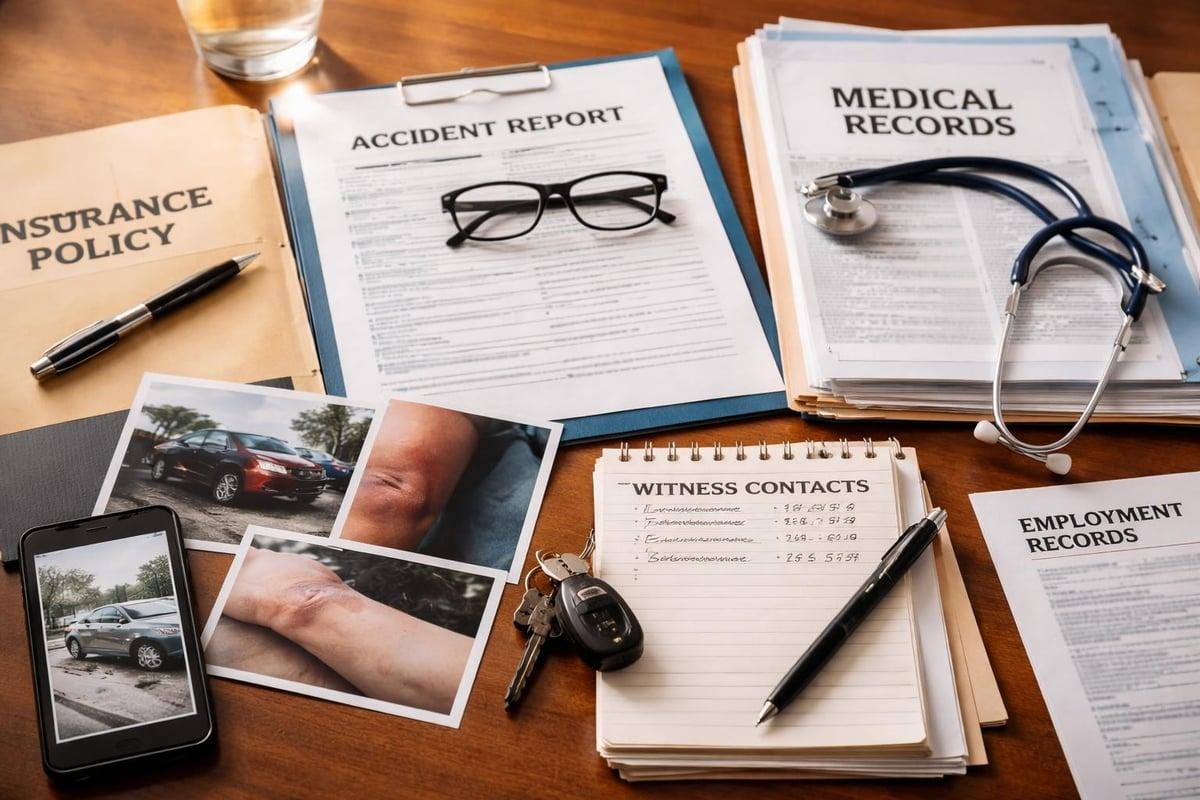
3. Photograph the Scene
If it is safe, take photographs of:
- The crosswalk
- Traffic lights
- Stop signs
- Your injuries
- The vehicle
- Vehicle damage
- Road conditions
- Nearby signs
- Skid marks
- Surrounding buildings
A photograph taken shortly after an accident may preserve conditions that later change.
4. Collect Witness Information
People walking or driving nearby may have seen what happened.
Ask for their names and contact information if they are willing to provide it.
Witnesses can sometimes help clarify who had the right of way and what the driver was doing.
5. Save Your Medical Records
Keep documentation relating to:
- Emergency-room treatment
- Doctor visits
- Prescriptions
- Physical therapy
- Diagnostic tests
- Medical bills
- Future treatment recommendations
These records can become important if you later pursue compensation.
How Does No-Fault Insurance Apply to Pedestrian Accidents?
This is one of the more unusual parts of New York pedestrian accident claims.
New York’s no-fault system can provide benefits to eligible people injured in motor-vehicle accidents, including pedestrians.
The New York State Department of Financial Services explains that no-fault benefits can apply to people injured as pedestrians as well as occupants of vehicles. (dfs.ny.gov)
This means an injured pedestrian may have access to certain no-fault benefits even though they were not driving a car.
These benefits can cover certain economic losses subject to applicable limits and requirements.
Can a Pedestrian Sue the Driver?
Potentially, yes.
New York’s no-fault system generally restricts lawsuits for pain and suffering resulting from motor-vehicle accidents unless the injured person meets the state’s serious-injury requirement. (nysenate.gov)
If the pedestrian suffered a legally defined serious injury, they may potentially pursue a personal injury claim against the responsible driver.
What Counts as a Serious Injury?
New York Insurance Law § 5102 includes several categories of serious injury.
These include:
- Death
- Dismemberment
- Significant disfigurement
- Fracture
- Permanent loss of use of a body organ, member, function, or system
- Permanent consequential limitation of use
- Significant limitation of use
- Certain medically determined injuries or impairments
Whether a particular pedestrian injury qualifies depends on the medical evidence and facts of the individual case.
What Compensation Can a Pedestrian Accident Victim Receive?
Depending on the circumstances and applicable law, compensation may include economic and non-economic damages.
Medical Expenses
This can include reasonable accident-related medical treatment that is legally recoverable.
Lost Income
If your injuries prevent you from working, lost wages may become part of your claim.
Future Medical Treatment
Serious injuries can require long-term treatment, rehabilitation, or surgery.
Pain and Suffering
If the serious-injury threshold is satisfied, compensation for pain and suffering may potentially be available.
Loss of Enjoyment of Life
A serious injury can interfere with hobbies, exercise, travel, family activities, and ordinary routines.
Other Economic Losses
Depending on the case, other documented financial losses may also be relevant.
What If the Driver Leaves the Scene?
A driver who hits a pedestrian and leaves can potentially face additional legal consequences.
New York Vehicle and Traffic Law § 600 requires drivers involved in certain accidents involving personal injury to stop and provide information and assistance as required by law. (nysenate.gov)
If the driver cannot be identified, insurance coverage becomes particularly important.
Depending on the circumstances, uninsured-motorist coverage or other available protections may come into play.
What If the Driver Says the Pedestrian Caused the Accident?
This is where evidence becomes extremely important.
A driver might argue that the pedestrian:
- Crossed against the light
- Entered the roadway unexpectedly
- Was distracted
- Was outside the crosswalk
- Failed to yield
But the driver’s statement is only one piece of evidence.
Other evidence may include:
- Traffic-camera footage
- Security-camera footage
- Dashcam recordings
- Police reports
- Witness statements
- Accident reconstruction
- Vehicle damage
- Cellphone evidence in appropriate circumstances
- Photographs of the intersection
The more evidence available, the easier it may be to reconstruct what actually happened.
What If the Accident Happened in a Parking Lot?
Pedestrian accidents do not only happen on major streets.
People can also be hit in:
- Parking lots
- Shopping centers
- Apartment complexes
- Gas stations
- Private driveways
- Parking garages
Depending on the circumstances, the potentially responsible party may not be limited to the driver.
For example, a property owner or business could potentially become relevant if a dangerous property condition contributed to the accident.
The facts determine who may have legal responsibility.
How Long Do You Have to File a Pedestrian Accident Lawsuit?
For many personal injury claims against private parties, New York generally provides three years from the date of the injury to commence a lawsuit.
However, this should not be treated as a universal deadline.
Different rules can apply when:
- A government entity is involved
- The injured person is a child
- The case involves wrongful death
- Special insurance rules apply
- Other statutory exceptions are relevant
Claims involving municipalities can also involve early notice requirements.
New York Courts list a three-year limitation period for many negligence-based personal injury claims. (nycourts.gov)
What If a Child Is Hit by a Car?
Pedestrian accidents involving children can be particularly complicated.
A child may not understand traffic risks in the same way an adult does, and the circumstances surrounding the accident need to be examined carefully.
Parents or guardians should preserve medical records, school-related documentation, photographs, witness information, and other evidence.
Because special legal rules can apply to minors, families should not assume the standard adult deadline automatically applies.
What If the Pedestrian Dies?
A fatal pedestrian accident can potentially lead to a wrongful-death claim.
New York’s wrongful-death laws have specific rules concerning who can bring the claim, what damages may be available, and how long the action can be commenced.
The death of a loved one can also create substantial financial consequences, including funeral expenses and the loss of financial support.
Families dealing with a fatal pedestrian accident should seek legal guidance promptly because wrongful-death deadlines and requirements differ from ordinary personal injury claims.
Frequently Asked Questions
1. Does a pedestrian always have the right of way in New York?
No. Pedestrian right-of-way depends on the location and circumstances. New York law gives pedestrians certain protections in crosswalks and requires drivers to exercise due care, but pedestrians also have duties under the Vehicle and Traffic Law. (nysenate.gov)
2. Can I sue a driver if I was hit while crossing outside a crosswalk?
Potentially. Being outside a crosswalk does not automatically eliminate a claim. The circumstances, including the driver’s conduct and the pedestrian’s actions, will matter. New York’s comparative-fault rules may also affect recovery.
3. Does no-fault insurance cover pedestrians?
Yes, eligible pedestrians injured in motor-vehicle accidents can generally receive certain no-fault benefits. (dfs.ny.gov)
4. Can I receive compensation for pain and suffering?
Potentially. New York generally requires a pedestrian injured in a motor-vehicle accident to meet the statutory serious-injury threshold before recovering non-economic damages such as pain and suffering. (nysenate.gov)
5. What should I do if the driver leaves the scene?
Call the police immediately, seek medical attention, document the accident if safe, collect witness information, look for nearby cameras, and notify the appropriate insurance carrier promptly.
Final Thoughts
Being hit by a vehicle can change your life in a matter of seconds. New York law provides important protections for pedestrians, but understanding your rights often requires looking beyond who technically had the right of way.
The driver’s actions, your own actions, the available evidence, the severity of your injuries, and the applicable insurance coverage can all affect your case.
If you have been seriously injured as a pedestrian, preserve your evidence, follow your medical treatment, keep track of your expenses, and consider speaking with a qualified New York personal injury attorney before accepting a settlement or making important decisions about your claim.