New York E-Bike Accident Laws: Who Is Responsible for Injuries?
E-bikes have become a familiar part of New York streets. You see them around busy intersections, bike lanes, delivery routes, and neighborhood streets every day. They are convenient, but when an e-bike collides with a pedestrian, car, cyclist, or another e-bike rider, the injuries can be serious.
One of the biggest questions after a crash is simple: Who is responsible for an e-bike accident in New York?
The answer depends on what happened. The rider may be responsible, but a motorist, pedestrian, another cyclist, an employer, or even another party could potentially share responsibility. New York law treats bicycles with electric assist as a specific category of vehicle, with rules governing their operation.
What Is an E-Bike Under New York Law?
New York law calls an e-bike a “bicycle with electric assist.”
Under Vehicle and Traffic Law § 102-c, an electric-assist bicycle must be no more than 36 inches wide, have operable pedals, and use an electric motor of less than 750 watts. New York recognizes three classes of electric-assist bicycles.
Class 1
A Class 1 e-bike provides motor assistance only while the rider is pedaling and stops providing assistance when the bicycle reaches 20 mph.
Class 2
A Class 2 e-bike can be propelled by its motor without pedaling but cannot provide assistance once it reaches 20 mph.
Class 3
A Class 3 e-bike can reach 25 mph with electric assistance, but New York’s statutory definition limits Class 3 e-bikes to cities with populations of one million or more.
This classification can matter when determining whether an e-bike was being operated legally.
Who Can Be Responsible for an E-Bike Accident?
There is no automatic rule saying the e-bike rider is responsible simply because they were riding an electric bicycle.
Responsibility depends on the facts.
Potentially responsible parties can include:
- The e-bike rider
- A motor vehicle driver
- Another cyclist
- A pedestrian
- An employer
- A business or property owner in certain circumstances
- Another party whose negligence contributed to the crash
For example, an e-bike rider who ignores a traffic signal and hits a pedestrian may be responsible. But if a driver turns across a bike lane and hits an e-bike rider, the driver could potentially be responsible instead.
Sometimes both parties share responsibility.
When Is an E-Bike Rider Responsible?
An e-bike rider has to follow applicable traffic rules.
A rider could potentially be found negligent if they:
- Run a red light
- Ignore a stop sign
- Ride recklessly
- Fail to yield
- Make an unsafe turn
- Ride where prohibited
- Travel at an unsafe speed
- Ignore traffic-control devices
- Fail to take reasonable care around pedestrians
New York’s Vehicle and Traffic Law applies many bicycle rules to electric-assist bicycles. The law also contains additional requirements specifically applicable to e-bikes.
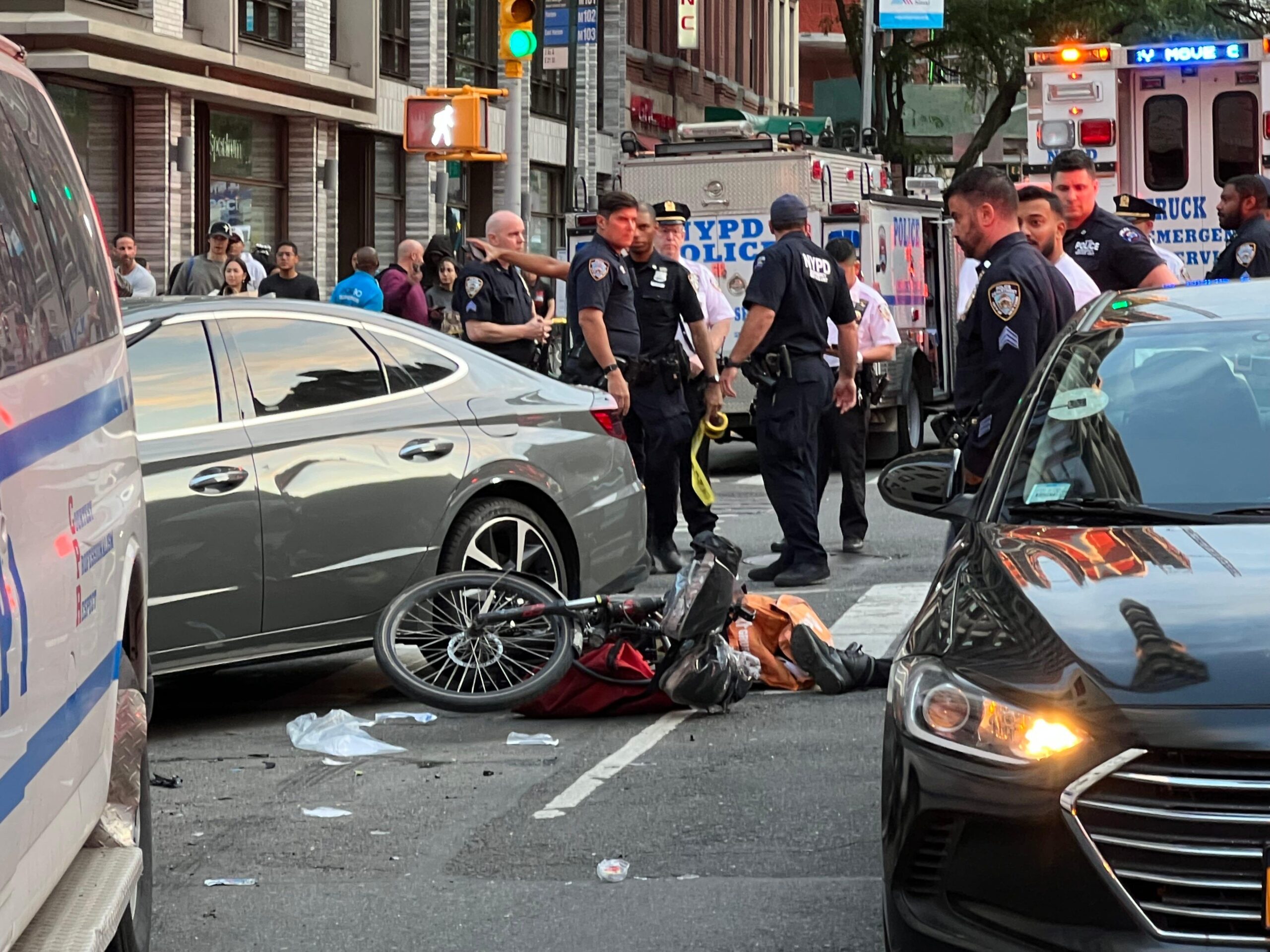
What If a Car Hits an E-Bike Rider?
These accidents can be particularly dangerous because the rider has considerably less physical protection than someone inside a vehicle.
A driver may potentially be responsible when they:
- Fail to yield
- Turn into the path of an e-bike
- Open a vehicle door into the rider’s path
- Speed
- Drive while distracted
- Ignore a traffic signal
- Enter a bike lane improperly
- Fail to watch for cyclists
But again, responsibility depends on the evidence.
A driver might claim the cyclist suddenly entered the roadway, while the cyclist may say the driver failed to yield.
That is why photographs, witness statements, traffic-camera footage, and other evidence can become extremely important.
What If an E-Bike Hits a Pedestrian?
Pedestrian accidents involving e-bikes can result in serious injuries.
If an e-bike rider hits a pedestrian because the rider was speeding, failed to yield, or otherwise acted negligently, the rider could potentially be responsible for the pedestrian’s injuries.
The pedestrian’s actions can also become relevant.
For example, if someone unexpectedly entered a restricted area or crossed against a traffic signal, the facts may support an argument that the pedestrian contributed to the accident.
New York’s comparative-fault principles can affect how damages are ultimately allocated.
Comparative Fault Can Matter
Not every accident has one person who is 100% responsible.
Imagine an e-bike rider is found 70% responsible for a crash while a driver is found 30% responsible.
The final allocation of damages may reflect those percentages.
This is why statements such as “I was riding the e-bike, so it must be my fault” are not necessarily accurate.
The circumstances need to be investigated before responsibility is determined.
What Should You Do After an E-Bike Accident?
The first priority is your health and safety.
1. Get Medical Attention
If you are seriously injured, call 911.
Even injuries that initially seem manageable can become more noticeable later. Keep records of medical appointments, prescriptions, diagnostic testing, therapy, and other treatment.
2. Report the Accident
New York has specific reporting and investigation requirements for accidents involving e-bikes.
Under Vehicle and Traffic Law § 603-a, when an accident involving a motor vehicle, e-bike, or electric scooter results in serious physical injury or death, police are required to investigate when the accident is discovered by police or reported to police within five days.
If you are physically able to do so, report the accident promptly rather than waiting.
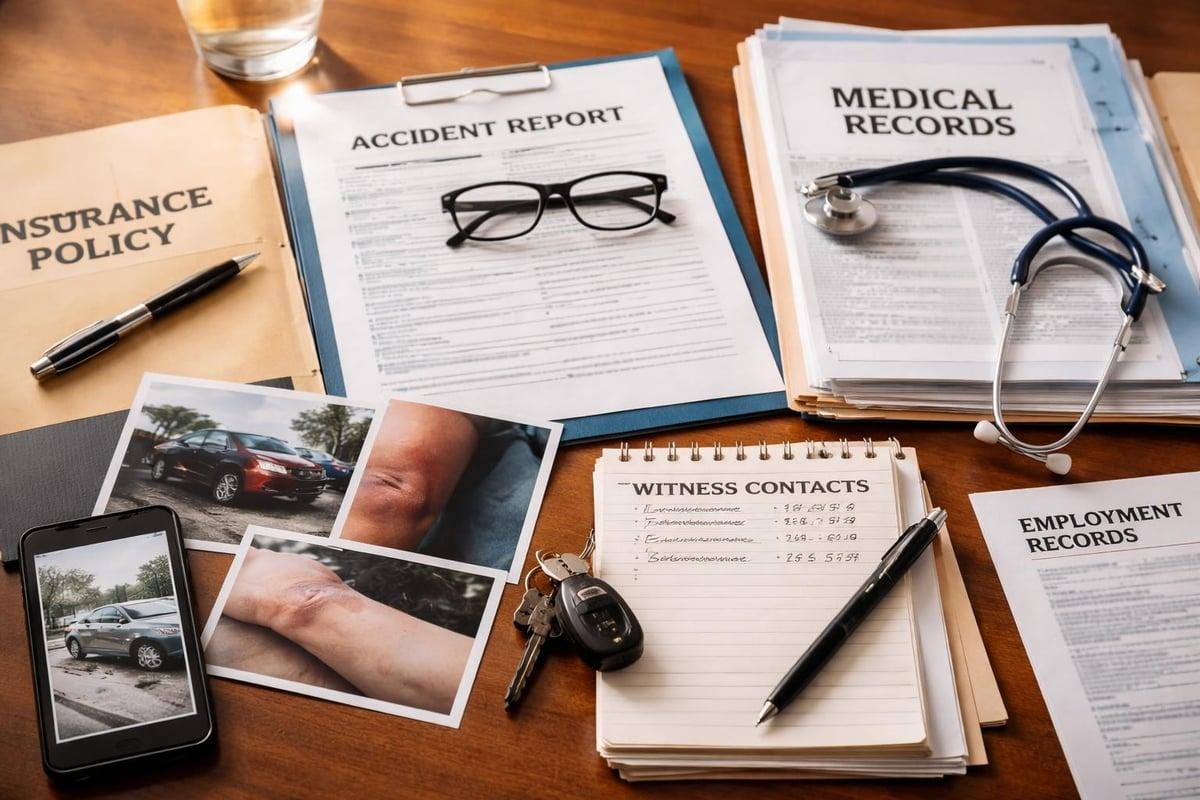
3. Photograph the Scene
Take photographs of:
- The e-bike
- The other vehicle
- Your injuries
- Road conditions
- Traffic signals
- Bike lanes
- Crosswalks
- Street signs
- Debris
- Visible damage
A few minutes spent documenting the scene can be valuable later.
4. Get Witness Information
If someone saw the accident, ask for their contact information.
Witnesses may be able to explain what happened when the accounts of the people involved differ.
5. Preserve Video Evidence
New York City has extensive surveillance and traffic-camera coverage, while businesses and buildings may have their own security systems.
If a nearby camera captured the accident, preserving that footage quickly can be important because recordings may not be kept indefinitely.
What If the E-Bike Rider Was Making Deliveries?
This situation deserves extra attention.
Many e-bike riders in New York work as delivery workers.
If the rider was working when the accident occurred, the employer or another business could potentially become relevant depending on the facts.
For example, if an employee caused an accident while performing work duties, questions may arise about the employer’s responsibility.
A delivery company may also have insurance or other coverage that could become relevant.
The exact legal relationship between the rider, employer, delivery platform, and other parties should be examined rather than assumed.
What If a Defective E-Bike Caused the Crash?
Sometimes the rider may not be the only potential source of the problem.
Suppose an e-bike’s brakes suddenly fail because of a manufacturing defect.
Depending on the circumstances, a product manufacturer, seller, or another party could potentially face a product-liability claim.
Evidence concerning the bicycle itself can therefore be important.
If the e-bike is badly damaged, avoid throwing it away or making unnecessary modifications before the relevant evidence has been preserved.
Can an Injured E-Bike Rider Sue?
Potentially.
The answer depends on who caused the accident, what injuries occurred, what insurance or other coverage exists, and which legal requirements apply.
A claim might involve a negligent:
- Driver
- E-bike rider
- Employer
- Property owner
- Manufacturer
- Other responsible party
The type of accident can also affect which insurance rules apply.
Does New York No-Fault Insurance Cover E-Bike Accidents?
This is an important distinction.
New York’s no-fault system generally applies to covered motor-vehicle accidents, but an e-bike itself is not simply treated the same way as an insured automobile.
There have been legislative proposals seeking to impose additional insurance requirements on e-bikes in New York City, but those proposals are not the same thing as enacted law. For example, a 2026 Senate bill proposing liability insurance requirements for bicycles and e-bikes in New York City is currently listed as active, meaning it is proposed legislation rather than a current requirement.
So it is important not to assume that every e-bike automatically carries automobile-style liability or no-fault insurance.
What If a Car Driver Caused the Accident?
If an e-bike rider is hit by a motor vehicle, New York’s automobile no-fault rules can become relevant.
New York Insurance Law § 5104 generally limits recovery for non-economic losses arising from motor-vehicle negligence unless the injured person has suffered a statutory serious injury.
The circumstances of the accident and the nature of the injuries therefore matter greatly.
What Is a Serious Injury in New York?
New York law identifies several categories of serious injury.
They include conditions such as:
- Death
- Fracture
- Significant disfigurement
- Permanent loss of use of certain body parts or functions
- Permanent consequential limitation
- Significant limitation of use
- Certain medically determined injuries
The exact statutory definition is contained in New York Insurance Law § 5102.
Whether an injury qualifies depends on the medical evidence and the individual circumstances.
What Compensation Could Be Available?
Depending on the facts of the accident, an injured person may potentially seek compensation for losses such as:
Medical Expenses
Hospital visits, diagnostic testing, medication, physical therapy, surgery, and other accident-related treatment may be relevant.
Lost Income
If your injuries prevent you from working, lost wages can become part of the claim.
Future Medical Costs
Serious injuries may require continuing treatment or rehabilitation.
Pain and Suffering
When legally recoverable, compensation may address physical pain and the broader impact of an injury.
Loss of Enjoyment of Life
An injury can affect activities that were previously part of everyday life, including exercise, hobbies, family activities, and social events.
Property Damage
Damage to the e-bike or other personal property can also be relevant.
What Evidence Can Help Prove Responsibility?
E-bike cases can become a classic “your word against theirs” situation if evidence is not preserved.
Useful evidence can include:
- Police reports
- Photographs
- Video recordings
- Witness statements
- Medical records
- E-bike damage
- Vehicle damage
- Traffic-light information
- Cellphone evidence where legally obtainable
- Accident reconstruction
- Bicycle data or electronic records where available
The goal is to reconstruct what happened rather than simply rely on assumptions.
What If the Other Driver Leaves the Scene?
A hit-and-run involving an e-bike can make an already difficult situation even more complicated.
Try to remember or record:
- License plate information
- Vehicle color
- Vehicle make and model
- Direction of travel
- Driver description
- Nearby witnesses
Call the police and seek medical attention if necessary.
New York law contains reporting requirements for certain accidents involving e-bikes and serious injury.
Can You Sue if You Were Partly at Fault?
Possibly.
New York’s comparative-fault rules mean that being partly responsible does not automatically mean an injured person receives nothing.
Instead, the percentage of fault attributed to each party can affect the amount ultimately recovered.
That makes it important to preserve evidence even if you believe you may have made a mistake before the accident.
Frequently Asked Questions
1. Are e-bikes legal in New York?
Yes. New York law recognizes bicycles with electric assist and establishes three classes of e-bikes, subject to statutory requirements.
2. Who is responsible if a car hits an e-bike?
It depends on the circumstances. A driver who fails to yield, speeds, drives distracted, or otherwise acts negligently may be responsible. The e-bike rider’s conduct can also be considered.
3. Can an e-bike rider sue a driver after an accident?
Potentially. If the driver was negligent and the rider suffered legally compensable injuries, a claim may be available. When the accident involves a motor vehicle, New York’s no-fault and serious-injury rules may also become relevant.
4. What should I do after an e-bike accident?
Seek medical attention, report the accident, photograph the scene, collect witness information, preserve the e-bike and other physical evidence, and notify the appropriate insurance carriers.
5. Does an e-bike accident automatically mean the rider is at fault?
No. Responsibility depends on what each person did before and during the accident. Drivers, riders, pedestrians, employers, manufacturers, and other parties can potentially be responsible depending on the facts.
Final Thoughts
An e-bike accident can be more complicated than an ordinary bicycle accident because several different sets of rules may come into play. New York specifically regulates bicycles with electric assist, including their classification and operation.
The person responsible for an accident is not necessarily the person who was riding the e-bike. A negligent driver, rider, employer, manufacturer, or another party may potentially be liable depending on what caused the crash.
If you have been seriously injured, preserve the evidence, get appropriate medical care, report the accident, and avoid rushing into an insurance settlement before you understand your rights.