New York Slip and Fall Laws: When Is a Property Owner Liable?
A slip and fall can happen in seconds. One minute you’re walking into a store, apartment building, restaurant, office, or parking lot, and the next you’re on the ground wondering what just happened. In New York, however, simply falling on someone else’s property does not automatically mean the property owner is legally responsible.
New York premises liability law generally looks at whether a dangerous or defective condition existed, whether the property owner had a responsibility for the area, and whether the owner created the condition or had enough notice of it to reasonably fix it. Recent New York court decisions continue to apply these principles in slip-and-fall cases.
If you’ve been injured, understanding these rules can help you determine whether you may have a legitimate personal injury claim.
What Is a Slip and Fall Accident?
A slip and fall is a type of premises liability accident. It can involve slipping, tripping, or losing your balance because of a hazardous condition on someone else’s property.
Common examples include:
- Wet or slippery floors
- Ice or snow
- Uneven sidewalks
- Cracked pavement
- Broken stairs
- Loose carpeting
- Poor lighting
- Debris on walkways
- Potholes
- Leaking pipes
- Damaged flooring
- Unmarked changes in floor elevation
Not every imperfection creates legal liability. New York courts generally examine the circumstances surrounding the condition to determine whether it was sufficiently dangerous and whether the defendant should be held responsible.
When Can a Property Owner Be Liable?
Generally, a property owner or other responsible party may be liable when the owner created the dangerous condition or had actual or constructive notice of it and failed to take reasonable action.
That’s an important distinction.
You generally need more than proof that an accident happened on the property.
You need evidence connecting the dangerous condition to the property owner’s negligence.
1. The Owner Created the Dangerous Condition
Sometimes the evidence is relatively straightforward.
For example, imagine a store employee spills liquid in an aisle and doesn’t clean it up or warn customers. If a customer slips on that liquid shortly afterward, the circumstances could support an argument that the defendant created the hazardous condition.
New York courts recognize that liability can arise when a defendant creates the dangerous condition that causes the accident.
2. The Owner Had Actual Notice
Actual notice means the property owner or responsible party knew about the dangerous condition before the accident.
For example, a customer might report a puddle to an employee, and the employee does nothing. If someone subsequently slips on that same puddle, the prior complaint could become important evidence.
Other examples might include:
- Previous complaints
- Maintenance records
- Emails or written reports
- Employee testimony
- Prior photographs
- Incident reports
Evidence showing that the owner knew about the problem can strengthen a premises liability claim.
3. The Owner Had Constructive Notice
This is another important concept in New York slip-and-fall cases.
You may not need to prove that the property owner personally knew about the dangerous condition if you can establish constructive notice.
New York courts generally consider a condition to have constructive notice when it was visible and apparent and existed long enough that the property owner had a reasonable opportunity to discover and correct it.
For example, suppose a broken floor tile has been sitting in a building hallway for several days. There may be no evidence that anyone specifically reported it to the property owner.
But if the defect was obvious and existed long enough that reasonable inspections should have discovered it, constructive notice could become an issue.
How Long Did the Condition Exist?
This can become one of the biggest questions in a slip-and-fall lawsuit.
If you slipped on water that appeared moments before the accident, proving constructive notice could be difficult.
On the other hand, if you slipped on a large defect that was visible and had apparently been present for a significant period, the argument may be stronger.
New York courts frequently examine whether the condition was visible, apparent, and present long enough to give the defendant an opportunity to correct it.
What About Snow and Ice Accidents?
Snow and ice cases can be more complicated.
If you fall because of an icy condition, a property owner generally may be liable if the owner created the condition or had actual or constructive notice of it and failed to take appropriate action.
Weather conditions can make these cases particularly challenging because the timing of snowfall, freezing, melting, and refreezing can matter.
Evidence such as:
- Weather records
- Photographs
- Surveillance footage
- Maintenance records
- Witness statements
- Prior complaints
can potentially help establish what happened.
What If You Fell on a Sidewalk?
Sidewalk cases can involve additional questions about who was responsible for maintaining the particular sidewalk.
The responsible party may depend on the location, property type, applicable local rules, and who had ownership, control, or maintenance responsibilities.
This is one reason it’s important not to automatically assume that the city, landlord, store owner, or property owner is responsible.
New York courts emphasize that liability for a dangerous condition generally depends on a party having an appropriate relationship to the property, such as ownership, occupancy, control, or special use.
What Evidence Can Help a Slip and Fall Case?
Evidence can disappear surprisingly quickly.
A puddle gets cleaned.
Snow melts.
A broken tile gets repaired.
A surveillance recording may eventually be overwritten.
That’s why documenting the accident can be extremely important.
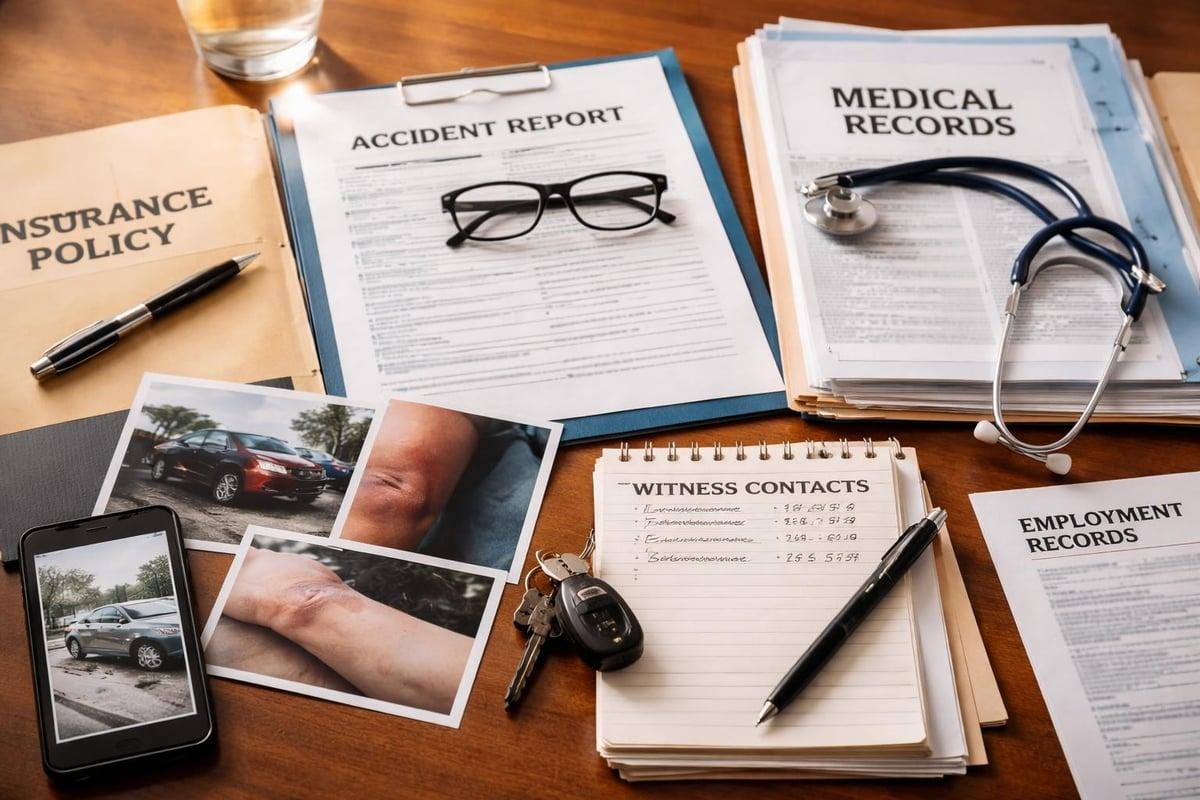
Consider preserving:
Photos and Videos
Take photographs of the exact location where you fell and the condition that caused the accident, if you’re physically able to do so.
Try to capture:
- The entire area
- Close-up photographs of the hazard
- Surrounding signs or landmarks
- Lighting conditions
- Nearby warning signs
- The condition of the floor or sidewalk
Witness Information
If someone saw the accident, get their contact information if possible.
A witness may later be able to describe what they saw and the condition of the area.
Medical Records
Seek appropriate medical attention after an injury.
Medical records can document:
- The injuries
- Treatment
- Diagnostic testing
- Follow-up care
- Physical limitations
Incident Reports
If you fell at a business or other managed property, report the accident according to the property’s procedures and keep documentation of what you reported.
Surveillance Footage
Many stores, apartment buildings, parking garages, and other properties have security cameras.
If surveillance footage captured the accident or the condition beforehand, it could become important evidence.
What If the Property Owner Says the Condition Was Minor?
Not every crack, bump, or uneven surface automatically creates liability.
New York courts generally consider the circumstances surrounding an alleged defect. Even a relatively small defect can potentially be actionable when its surrounding circumstances or characteristics make it difficult to see or safely navigate.
That means there isn’t always a simple rule such as “the defect was too small.”
The location, lighting, visibility, surrounding conditions, and how the defect affected pedestrians can all matter.
Can Your Own Actions Affect Your Case?
Yes.
New York follows comparative negligence principles. If an injured person is found partly responsible for an accident, that person’s recovery can potentially be reduced according to their percentage of fault.
For example, arguments may arise about whether the person:
- Was looking where they were walking
- Was distracted
- Was running
- Ignored a warning sign
- Entered an area that was clearly restricted
These issues don’t automatically eliminate a claim. The facts of the particular accident matter.
How Long Do You Have to File a New York Slip and Fall Lawsuit?
For a typical slip-and-fall personal injury claim, New York Courts lists three years from the date of the accident under CPLR 214(5).
However, don’t assume you can safely wait three years.
Claims involving a municipality or government entity can have different and significantly shorter requirements. The New York Courts’ timetable notes a 90-day notice requirement and a 1 year and 90 days limitation for certain claims against New York City and New York State.
Because deadlines can depend on who is responsible and the specific circumstances, speaking with a New York personal injury attorney promptly can help protect your rights.
What Should You Do After a Slip and Fall?
If you’ve been injured, consider these basic steps:
1. Get medical attention.
Your health should come first.
2. Photograph the accident scene.
Capture the dangerous condition before it changes.
3. Identify witnesses.
Write down names and contact information when possible.
4. Report the accident.
Notify the appropriate property representative and keep documentation.
5. Preserve evidence.
Keep photographs, correspondence, medical records, receipts, and other relevant documents.
6. Avoid guessing about what happened.
Stick to the facts when describing the accident.
7. Consider getting legal advice.
An attorney can review the circumstances and explain whether a premises liability claim may exist.
Frequently Asked Questions
1. Can I sue a property owner for a slip and fall in New York?
Possibly. Generally, you need evidence of a dangerous condition and that the responsible party created the condition or had actual or constructive notice of it.
2. What is constructive notice in a New York slip-and-fall case?
Constructive notice generally means the dangerous condition was visible and apparent and existed long enough that the property owner should reasonably have discovered and corrected it.
3. How long do I have to file a slip-and-fall lawsuit in New York?
A typical slip-and-fall personal injury claim has a three-year statute of limitations from the accident date. However, special rules can apply to claims involving government entities and other circumstances.
4. What if I don’t know exactly what caused me to fall?
That can make a case more difficult. New York courts have held that failing to identify the cause of a fall can be fatal to a claim when determining causation would otherwise require speculation.
5. Should I talk to a lawyer after a slip and fall?
If you suffered a significant injury, have substantial medical expenses, or believe a property owner may have been negligent, getting advice from a qualified New York personal injury attorney can help you understand your options.
Final Thoughts
New York slip-and-fall law isn’t simply about where you fell. The bigger questions are usually what caused the accident, who was responsible for the property, whether the condition was dangerous, and whether the responsible party created or knew—or should have known—about the condition.
Evidence can make a major difference. Photos, witnesses, maintenance records, surveillance footage, incident reports, and medical documentation can all help establish what happened.
If you’ve been injured, don’t assume that a fall was “just an accident” or that you automatically have a lawsuit. The circumstances matter, and getting advice early can help you understand your legal rights.